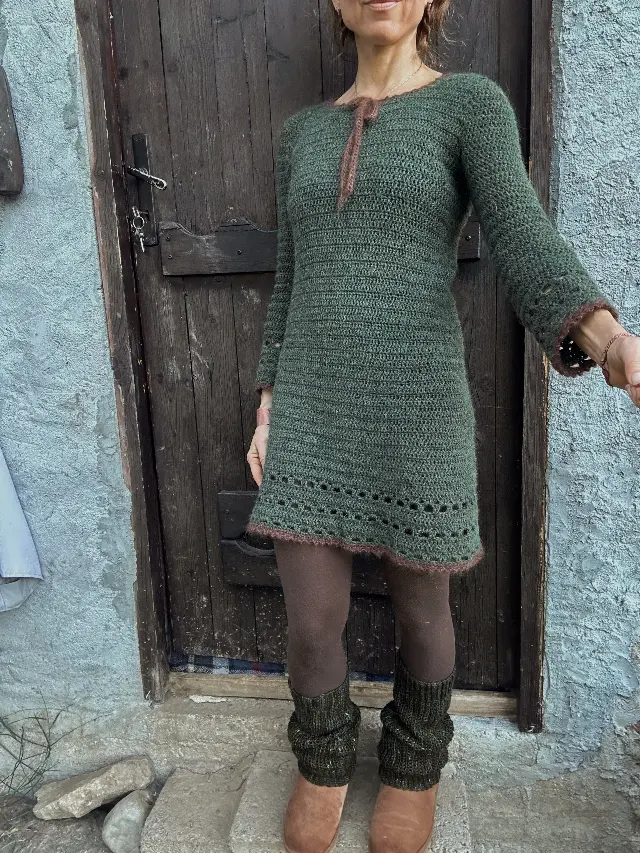
 Crochet Outfit of the Day with Newly Finished Legwarmers
#Crochet Outfit
3 ideas
Crochet Outfit of the Day with Newly Finished Legwarmers
Get new #Crochet Outfit ideas by email
Every Thursday: the week's best ideas, with the newest from #Crochet Outfit.
Related tags
Crochet Outfits: A Guide to Handmade Style
A crochet outfit is any garment or set made from crochet, the craft of building fabric from a single hooked needle and one continuous strand of yarn. Where knitting works many live stitches on two needles, crochet makes one stitch at a time, each built on the loop before it. The result is a fabric with real structure: dense and firm in some stitches, open and lacy in others. That combination of softness and definition is why crochet clothing reads as both handmade and deliberate, and why it keeps returning to wardrobes rather than staying in the craft box.
Where It Comes From
Crochet grew into a popular home craft in Europe, spreading through households as a way to make lace-like trims, shawls and garments. It has always carried a practical streak. Because you can undo a row and start again, and because a small hook and a single ball of yarn travel easily, crochet has long been a way of turning modest materials into something wearable and personal. The word itself comes from an old French term for "small hook" — a fair description of the tool that does all the work.
How an Outfit Is Built
Read more
Most crochet garments are made one of two ways. Seamed pieces are crocheted flat as separate panels — a front, a back, two sleeves — then stitched together, which suits structured shapes like cardigans and fitted tops. Seamless pieces are worked in the round from the neck down or the top down, so the garment grows as one tube, which allows you to try it on as you go. Small motifs add a third route: squares, flowers or circles joined at the edges into a fabric that can be as geometric or as organic as you like.
Styles and Stitches You Will See
Granny-square pieces are the most recognisable, built from repeated motifs in contrasting colours. Lace and mesh work — shells, chains, open fans — gives a lighter, more airy garment that is usually worn over something. Tunic and dress shapes often use simple, repeating stitches such as single and double crochet, letting the texture do the talking. Colourwork, stripes and ombré effects all suit crochet well, because changing yarns at the edge of a row leaves very little to weave in.
Practical Advice for Beginners
- Start with a top or a bag rather than a full dress. Gauge, fit and drape are easier to judge on a small piece.
- Swatch before you commit. The same stitch in a different yarn can produce a fabric that is far looser, heavier or stiffer than you expect.
- Crochet fabric has less stretch than knitted fabric but more weight. Choose drapey fibres for flowing shapes and firmer ones for structured shapes.
- Layering solves most styling questions: an open mesh top over a plain vest, or a crochet waistcoat over a dress, keeps the texture readable without demanding more coverage than the stitch provides.
Wearing and Caring
Crochet garments hold their shape best when washed gently by hand or on a delicate cycle, then dried flat and reshaped while still damp. Fold rather than hang heavier pieces, since the fabric can stretch on a hanger. With a little care, a crochet outfit ages into something closer to a keepsake than a seasonal buy — which is much of its appeal.
#Crochet Outfit: frequently asked questions
How do I start a crochet outfit if I have never crocheted before?
Begin with a small, forgiving project such as a top, a bag or a simple motif square, because gauge and fit are much easier to judge on a small piece than on a full garment. Learn a couple of basic stitches and practise making an even fabric before you commit to a wearable shape. Crochet is easy to undo row by row, so early mistakes cost you time rather than yarn.
What do I need to make a crochet outfit?
You need a hook, a ball of yarn in a fibre and weight that suits the drape you want, and something to mark your place in the work. A tape measure and a blunt needle for joining pieces and tidying ends are also worth having on hand. Everything else is optional, which is part of why crochet travels so well.
Should I choose a seamed garment or a seamless one?
Seamed pieces are crocheted as flat panels and then joined, which gives firm structure and suits cardigans, waistcoats and fitted tops. Seamless pieces are worked in the round so the garment grows as one tube, letting you try it on as you go and making them friendlier to flowing shapes. Motif-based pieces are a third route, built from squares or flowers joined at the edges.
Which stitches give which look in a crochet outfit?
Dense stitches such as single and double crochet create a solid, grounded fabric that shows off texture and works well for tunics and dresses. Shell, chain and open-fan work produces a lighter mesh that is usually layered over something else. Granny squares and other repeated motifs give you colour and geometry, since changing yarns at the edge of a row leaves little to weave in.
How do I care for a crochet garment so it keeps its shape?
Wash gently by hand or on a delicate cycle, then dry flat and reshape the piece while it is still damp. Fold heavier garments rather than hanging them, because the weight of crochet fabric can pull it out of shape on a hanger. Handled this way, a crochet outfit tends to age into something closer to a keepsake than a seasonal buy.
What are the most common mistakes people make with crochet outfits?
Skipping the swatch is the big one: the same stitch in a different yarn can come out far looser, heavier or stiffer than expected. Choosing a fibre without thinking about drape is another, since crochet fabric has little stretch but noticeable weight, so flowing shapes want soft fibres and structured shapes want firm ones. Starting with a full dress instead of a small piece makes all of this harder to judge.
Videos come from YouTube and posts from Instagram; titles and summaries are our own. All rights belong to their creators.