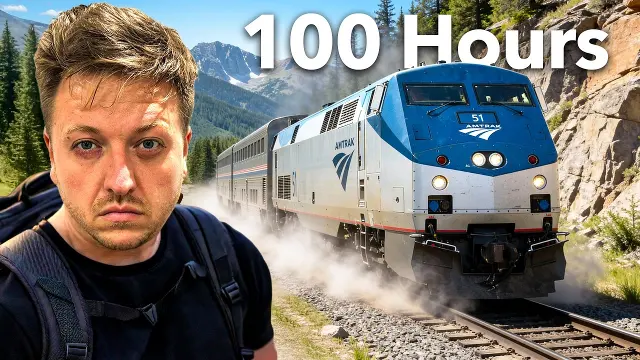
 One Hundred Hour Train Journey Across America
#Cross Country
3 ideas
One Hundred Hour Train Journey Across America
 Taking the Longest Train Ride in America
 Taking the Longest Bus Ride in America
Get new #Cross Country ideas by email
Every Thursday: the week's best ideas, with the newest from #Cross Country.
Related tags
Cross Country Travel: A Guide to Crossing a Country
Cross-country travel means moving from one far edge of a country to another, usually staying within its borders rather than crossing between nations. The idea sits somewhere between a holiday and an expedition: the point is not only the destination but the distance itself, and the long, unhurried hours spent moving through landscapes that change gradually rather than all at once. People take on these journeys to see how a country fits together, to visit friends or family at the other end, to mark a change in their lives, or simply because they want to know what it feels like to go that far without flying over it all.
The main ways to go
The choice of transport shapes everything about the trip, including how much you see and how tired you are at the end.
- Rail. Comfortable, steady, and often the most sociable option. Long-distance trains tend to have generous luggage allowances and let you walk around, and the scenery passes at a readable pace. Journeys are usually measured in days rather than hours, so plan for overnight stretches.
- Road. Maximum freedom: you decide where to stop, and small places off the main routes become possible. It also asks the most of you, since someone has to drive every mile.
- Bus and coach. The most economical approach for many travellers, with frequent stops in towns that trains skip. Seats are tighter, and long legs of the journey can feel slow.
- Cycling and walking. A slow-travel version, done in stages over weeks. Rewarding, but it demands real fitness and careful planning of where you sleep and resupply.
- Air. Fast, but it removes the sense of distance. Some travellers fly one way and return slowly overland, which gives a taste of the scale without using up all their time.
Read more
What beginners should know
The first lesson is that distance is deceptive. A route that looks manageable on a map can take far longer than expected once stops, meals, rest and delays are counted. Decide early whether you are travelling to arrive or travelling to experience, because those two goals lead to very different plans. Build in slack: an unplanned day in the middle of a long trip is not wasted time, it is what keeps the rest of it enjoyable.
Practical tips
- Book the long legs first and work the rest of the plan around them, especially where services are infrequent.
- Pack less than feels comfortable. You will carry everything between connections, often up stairs.
- Carry water, snacks and a layer of warm clothing on travel days, even in mild weather.
- On road trips, share driving and stop before fatigue sets in rather than after.
- Keep paper copies of key bookings, and tell someone at home roughly where you expect to be.
- Bring something to occupy slow hours: a book, a notebook, a map you can follow as you go.
- Expect weather and maintenance to alter timetables, and treat a changed plan as part of the trip rather than a failure.
Above all, give yourself permission to be bored now and then. Long journeys are tiring and occasionally tedious, but they are also one of the few ways to feel the true size of a country, and most people remember the middle of the trip far longer than the arrival.
#Cross Country: frequently asked questions
How do I start planning a cross-country trip if I’ve never done one before?
Start by deciding whether the trip is mainly about getting somewhere or about enjoying the journey itself. Then choose your main transport, book the longest stretches first, and leave room for delays, rest, and unplanned stops.
What do I really need to pack for a long cross-country journey?
Keep your bag light and practical, because you may need to carry it between connections and up stairs. Bring water, snacks, layers for changing weather, and something to read or track the route during slow stretches.
Which type of transport is best for a cross-country trip?
It depends on the experience you want. Rail is steady and scenic, road travel gives the most freedom, buses can be economical, and cycling or walking suits slow, stage-by-stage travel; flying is fastest but skips most of the landscape.
How can I take care of myself during a very long journey?
Pace yourself and treat breaks as part of the trip, not as a disruption. Eat and drink regularly, rest before you feel completely drained, and if you are driving, share the load whenever possible and stop early rather than late.
What are common mistakes people make on cross-country trips?
A common mistake is underestimating how long the journey will really take once meals, delays, and transfers are included. Another is packing too much or planning every minute so tightly that there is no room for changes or quiet time along the way.
Videos come from YouTube and posts from Instagram; titles and summaries are our own. All rights belong to their creators.