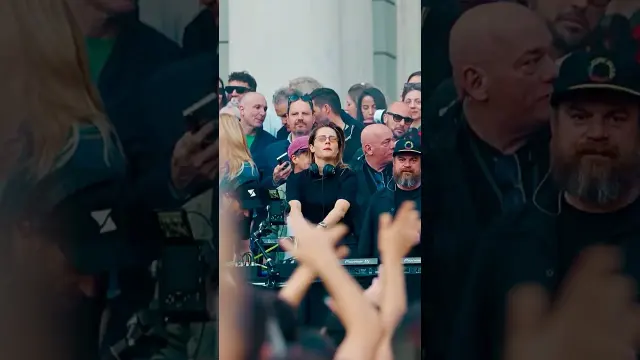
 Massive Outdoor Street Party Gathering in Genova
#Crowds
2 ideas
Massive Outdoor Street Party Gathering in Genova
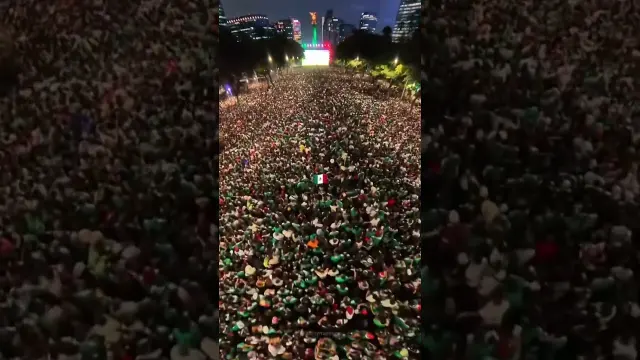 Aerial Footage of a Massive Crowd Celebrating in Mexico City
Get new #Crowds ideas by email
Every Thursday: the week's best ideas, with the newest from #Crowds.
Related tags
Understanding Crowds: Why People Gather in Great Numbers
A crowd is what happens when a large number of people occupy the same place at the same time with a shared focus — a celebration, a ceremony, a protest, a concert, a market day. It is one of the oldest forms of human life. Long before written records, people assembled for seasonal rituals, harvests, funerals and festivals, and the habit has never faded. What changes across centuries is the reason for gathering, the scale, and the way the event is recorded.
Why crowds form
People come together for meaning as much as for entertainment. A crowd gives an individual the sense of belonging to something larger, whether that is a religious festival, a national holiday, a sporting final or a street party in a neighbourhood that has decided to close its own road for the evening. Some gatherings are spontaneous — a crowd that appears around a street performer or a breaking news event — and some are planned years in advance, with stages, barriers and timetables. Both share the same pull: the feeling that something is happening here, and being elsewhere means missing it.
Kinds of gathering
Read more
Ritual and religious crowds gather on fixed dates and often follow processions or routes with deep roots in local history. Festive crowds — carnivals, new year celebrations, street parties — are looser, built around music, food and wandering. Spectator crowds form around an event someone else is staging: a match, a race, a parade. Expressive crowds come to say something publicly, such as a demonstration or vigil. And everyday crowds, the ones we rarely notice, fill transport hubs and shopping streets at predictable hours.
What makes a crowd feel different
Being in a crowd alters behaviour. People pick up tone, pace and mood from those around them far faster than they would alone; laughter and applause spread, and so does impatience. This is ordinary social imitation, not a mysterious force, and it is why a well-organised event with clear stewarding feels calm while an unmanaged one can turn tense in minutes. Knowing this is useful: the mood of a crowd is largely set by how well it is guided.
Practical sense for the beginner
If you are new to large gatherings, a few habits make the experience easier. Arrive early enough to learn the layout and note where the exits are. Agree a meeting point with anyone you came with, since phone signals often fail when thousands of devices share one area. Keep your possessions close and in front of you rather than in a back pocket. In dense moving crowds, stay upright, keep your arms in front of your chest for breathing room, and move with the flow rather than against it. If you feel overwhelmed, step to the edge rather than pushing through the middle. Drink water, wear comfortable shoes, and set a time to leave before you are too tired to enjoy the journey home.
Photographing and observing
Crowds are rewarding to watch and hard to photograph well. A raised viewpoint shows pattern and scale; a low angle shows faces and detail. What tends to last, though, is not the widest shot but the small human moment inside the mass.
Whether you join a crowd or simply pass one, a little patience and awareness go a long way.
#Crowds: frequently asked questions
What actually makes a crowd a crowd?
It is a large number of people sharing the same place at the same moment with a common focus, whether that focus is a ceremony, a concert, a protest or a market day. The shared attention matters more than the headcount — a packed station concourse at rush hour and a festival square both qualify, but for different reasons. People are drawn to it because being present feels like belonging to something larger than themselves.
How should someone new to big gatherings prepare?
Turn up early enough to walk the space and notice where the exits are, rather than arriving when everything is already packed. Fix a meeting point with whoever you came with, because phone signals get unreliable once thousands of devices crowd the same area. It also helps to decide in advance when you plan to leave, so the journey home doesn't become the worst part of the day.
Which type of gathering is right for me?
It depends on whether you want to participate, watch, or simply be present: ritual and religious processions follow fixed routes and dates, festive crowds are loose and built around food and music, and spectator events are staged by someone else. Expressive gatherings are for saying something publicly, while the everyday crowds in transport hubs and shopping streets are the ones most of us never consciously choose. Pick by the mood you want rather than by size.
How do I stay comfortable in a dense, moving crowd?
Stay on your feet, keep your arms loosely in front of your chest so you have room to breathe, and move with the flow instead of fighting it. If it starts to feel like too much, ease towards the edge rather than trying to push through the middle. Comfortable shoes and keeping your belongings in front of you rather than in a back pocket make a surprising difference.
What's the secret to photographing a crowd well?
Shoot from two directions: a raised viewpoint captures pattern, scale and the shape of the mass, while a low angle brings out faces and individual detail. The images that tend to stay with people are rarely the widest shots — they are the small human moments happening inside the bigger scene. Give yourself time to watch before you start framing anything.
What do people most often get wrong about crowds?
The common assumption is that a crowd has a mood of its own, when in fact people pick up tone and pace from those around them through ordinary imitation. That means a guided event with clear stewarding stays calm while an unmanaged one can turn tense quickly. Treating the crowd as something shaped by how it is organised, rather than as a force to be surrendered to, is the most useful shift in thinking.
Videos come from YouTube and posts from Instagram; titles and summaries are our own. All rights belong to their creators.