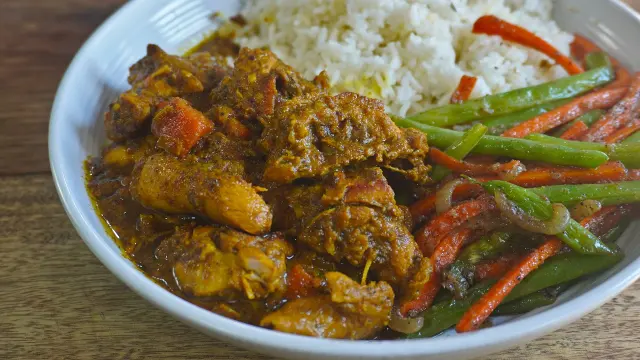
 Why Burning the Curry Powder Matters in Jamaican Curry Chicken
#Curry Powder
1 ideas
Why Burning the Curry Powder Matters in Jamaican Curry Chicken
Get new #Curry Powder ideas by email
Every Thursday: the week's best ideas, with the newest from #Curry Powder.
Related tags
Curry Powder: A Guide to the Everyday Spice Blend
Curry powder is a pre-mixed blend of ground spices, usually built around turmeric, coriander, cumin, fenugreek, chilli, pepper, ginger and sometimes cinnamon, clove or cardamom. It is bright yellow-gold, fragrant and warming rather than purely hot. Almost everywhere outside the Indian subcontinent, it is treated as a single ingredient in its own right, spooned into stews, marinades, rice and dressings the way other kitchens reach for paprika or stock powder.
The blend is often described as a colonial invention. Cooks in India never had one universal "curry powder"; they kept whole spices and mixed their own masalas for each dish. The commercial powder grew out of the spice trade, when blends were milled to imitate Indian cooking for European kitchens — and from there it travelled into British, Caribbean, South African, Japanese and Southeast Asian cooking, where each place made it its own.
The main kinds
There is no fixed recipe, and that is the point. Different blends lean in different directions.
Read more
- Madras-style blends are hotter and more assertive, with more chilli and pepper.
- Mild blends are softer and rounder, with more coriander and turmeric and less heat.
- Caribbean blends, common in Jamaica, tend to be darker, earthier and heavier on turmeric, allspice and pepper, and are often used generously to season meat before browning.
- Japanese curry powder is sweeter and more aromatic, with spices such as cardamom and clove, and is the base of the thick roux-based curry served with rice.
- South African blends are often fragrant with cinnamon and cloves and are used in bobotie and curries.
If you buy one blend and want another character, you can push it in a direction yourself: add chilli for heat, cumin for earthiness, cinnamon for sweetness.
What beginners should know
Buy small quantities. Ground spices lose their aroma within months, and a large jar of a blend you use rarely will go dull before it is finished. Store it in a sealed container away from heat and light, and smell it before you cook: if it is dusty and flat, it needs replacing.
Always cook the powder in fat. Raw curry powder tastes dusty and slightly bitter. Add it to oil, butter or ghee after the onions and aromatics have softened, and stir it for under a minute until it smells fragrant, then add liquid. This brief toasting — sometimes called blooming — is the single biggest difference between a dish that tastes of spice and one that tastes of nothing much.
Add it early for depth, late for brightness. A spoon stirred in at the start of cooking melts into the sauce; a pinch added at the end keeps a fresher edge.
Taste as you go and season further. Curry powder usually contains salt-free spices, so it needs salt alongside it, and a squeeze of lemon or a spoon of yogurt at the end can wake it up. It also needs time: most dishes improve after twenty minutes of gentle simmering.
#Curry Powder: frequently asked questions
What exactly is curry powder, and is it a single spice or a blend?
It is a ready-mixed blend of ground spices rather than one spice, usually built around turmeric, coriander, cumin, fenugreek, chilli, pepper and ginger, sometimes with cinnamon, clove or cardamom. The turmeric gives it the familiar yellow-gold colour, and the overall effect is warm and fragrant rather than simply hot. Outside the Indian subcontinent it is treated as an ingredient in its own right, spooned into stews, marinades, rice and dressings the way other kitchens use paprika.
Which type of curry powder should I pick?
There is no fixed recipe, so choose by the character you want: hotter blends lean on chilli and pepper, milder ones are rounder and heavier on coriander and turmeric, Caribbean-style blends are darker and earthier, and Japanese-style blends are sweeter and more aromatic. South African blends often smell warmly of cinnamon and clove. You can also adjust a blend yourself afterwards, adding chilli for heat, cumin for earthiness or cinnamon for sweetness.
How should I store curry powder so it keeps its flavour?
Buy it in small amounts, because ground spices lose their aroma within months and a big jar of a rarely used blend goes dull before it is finished. Keep it in a sealed container away from heat and light. Before cooking, smell it — if it seems dusty and flat, it is past its best and worth replacing.
Do I have to cook curry powder, or can I stir it in at the end?
Raw powder tastes dusty and slightly bitter, so the usual move is to add it to oil, butter or ghee once your onions and aromatics have softened, stir it briefly until it smells fragrant, and then add liquid. That short toasting, often called blooming, is the biggest difference between a dish that tastes of spice and one that tastes of not much. Adding it early gives depth, while a pinch at the end keeps a fresher edge.
What mistakes do people usually make with curry powder?
The common ones are tipping it into a dry pan or a finished sauce, using too little fat to carry the flavour, and forgetting that most blends contain no salt, so the dish needs seasoning alongside it. Giving the pot time to simmer gently also matters, since most dishes taste better after a slow stretch on the heat. A squeeze of lemon or a spoon of yogurt at the end can lift a blend that seems flat.
What can I make with curry powder besides a standard curry?
It works well as a seasoning for rice, marinades for meat before browning, dressings, roasted vegetables and everyday stews. Caribbean-style cooking in particular uses it generously on meat before it goes into the pan, which is why getting the powder properly toasted in fat matters so much there. Once you have a blend you like, it behaves much like any other warm spice mix in the cupboard.
Videos come from YouTube and posts from Instagram; titles and summaries are our own. All rights belong to their creators.