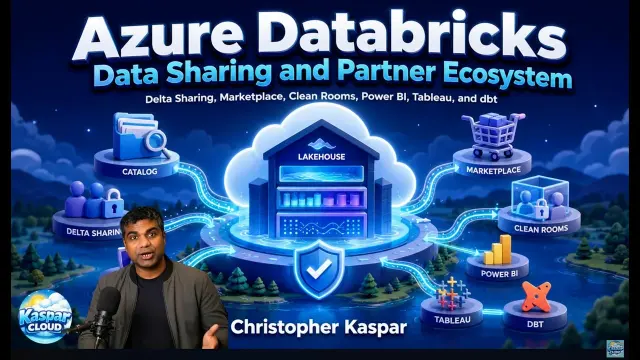
 Azure Databricks Data Sharing Ecosystem and Delta Sharing
#Data Collaboration
1 ideas
Azure Databricks Data Sharing Ecosystem and Delta Sharing
Get new #Data Collaboration ideas by email
Every Thursday: the week's best ideas, with the newest from #Data Collaboration.
Related tags
Data Collaboration: A Practical Introduction
Data collaboration is what happens when two or more people, teams or organisations work from the same information rather than from copies of it. Instead of one group exporting a spreadsheet and emailing it to another, the people involved agree on a shared source, a shared definition of what each field means, and a shared idea of who is allowed to see what. The goal is simple: decisions made with the same numbers, without the delay and error of passing files around.
The practice grew out of ordinary file sharing. Teams once exchanged reports and extracts, then spent their time reconciling versions. As datasets became larger and privacy rules stricter, copying data stopped being practical. Sharing access to data in place, or sharing only the results of a query rather than the raw records, became the more common approach. Alongside this came the idea that no single central team can own every dataset, so ownership sits with the teams that know the data best, while common rules apply across all of them.
The main ways teams share data
- Direct access: colleagues query the same governed dataset inside a shared platform, with permissions set per person or per team.
- Data sharing agreements: one organisation grants another access to a defined set of data, often through a technical mechanism that avoids copying it.
- Clean rooms: two parties match their data in an isolated environment and see only aggregated results, so neither reveals its raw records.
- Open publication: a dataset is published with a documented schema and licence for anyone to use.
- Shared definitions: a common glossary or metric layer, so "active customer" means the same thing everywhere.
Read more
What beginners should know
Start with the question, not the data. Knowing what decision the shared data has to support tells you which fields are needed and which are not. Fewer columns mean fewer arguments and less risk.
Agree on meaning before you agree on format. Most failures in shared data are not technical; they come from two teams using the same column name for different things.
Write down ownership. Every shared dataset should have a named person or team responsible for its accuracy and for answering questions about it.
Assume the data will be used by someone you have never met. Describe fields clearly, record where values come from, and note known gaps.
Practical habits
Share the smallest useful slice. Grant access to what a colleague needs for the task rather than to the whole store.
Keep a change log. When a definition or a field changes, say so where the people who depend on it will see it.
Review access regularly. People change roles; permissions often do not.
Treat governance as a service, not a gate. Rules that are explained and easy to follow get followed.
Done well, data collaboration turns data from something people hoard into something people maintain together.
Videos come from YouTube and posts from Instagram; titles and summaries are our own. All rights belong to their creators.