 SAP Extract Transform and Load Full Course
#Data Engineering
6 ideas
SAP Extract Transform and Load Full Course
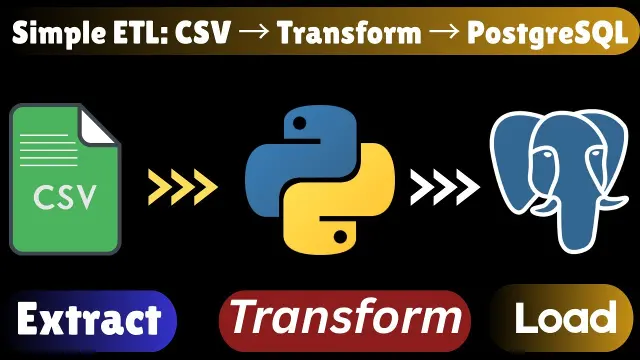 How to Build a Simple ETL Pipeline to PostgreSQL
 Exploring the Best ETL and ELT Tools
 Building ETL Pipelines in Databricks
 Learn ETL Pipelines in Databricks
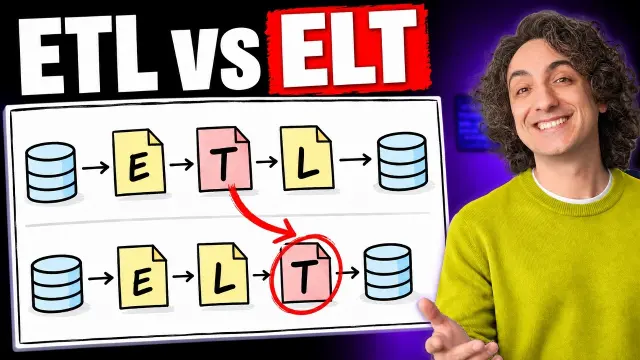 Understanding ETL and ELT in Real Data Projects
Get new #Data Engineering ideas by email
Every Thursday: the week's best ideas, with the newest from #Data Engineering.
Related tags
Data Engineering: A Beginner's Guide to Reliable Data
Data engineering is the work of building and maintaining the systems that move, clean, and organise data so that other people can use it. Analysts, data scientists, product teams, and reporting tools all depend on someone having made the data available, complete, and trustworthy — that someone is usually a data engineer. The discipline sits between software engineering and analytics, borrowing the rigour of the first and the questions of the second.
Where it comes from
The role grew out of an older job: the database administrator and the ETL developer who ran nightly loads between business systems and a reporting warehouse. As companies began collecting data from many more sources — applications, sensors, third-party services, logs — the volume and variety outgrew hand-written scripts, and a distinct profession formed around designing pipelines that could be trusted and repeated.
What a pipeline actually does
Read more
Almost every data system follows the same logic: take data from a source, copy it somewhere safer, reshape it into something understandable, and deliver it to whoever needs it. Two approaches dominate.
- Extract, transform, load (ETL): data is cleaned and reshaped before it reaches its destination. Common when storage was expensive and only refined data was worth keeping.
- Extract, load, transform (ELT): raw data lands first, and transformation happens afterwards inside the destination system. Common now that storage is cheap and teams want to keep the original data intact for future questions.
Alongside these, two delivery patterns matter. Batch processing handles data in scheduled chunks; streaming handles it continuously as it arrives. Many organisations use both.
The parts you will meet
A typical stack includes sources, ingestion, storage, transformation, orchestration, and monitoring. Storage is often organised in layers: a raw zone that holds data exactly as received, a cleaned zone, and a curated zone shaped for reporting. Orchestration decides what runs when and in what order; monitoring tells you when something has quietly stopped working.
What beginners should know
Start with SQL. It remains the language most transformations are written in, and fluency with joins, aggregation, and window functions will carry you further than any single platform. Learn one programming language well enough to move files and call APIs. Understand data modelling — how tables are structured, what a fact table and a dimension are, why duplication causes trouble.
Then build the habits that separate reliable systems from fragile ones:
- Make pipelines repeatable. The same input should always produce the same output.
- Treat data quality as part of the job, not an afterthought. Check row counts, duplicates, and unexpected nulls automatically.
- Document assumptions while they are fresh. Future readers will not have your context.
- Design for failure. Loads will fail, sources will change format, and late data will arrive.
- Keep raw data. You cannot re-derive history you threw away.
A note on tools
Platforms change constantly; the principles do not. Idempotency, clear ownership, sensible layering, and honest monitoring are what make a data system last. Learn the concepts deeply and you will move between tools without starting over.
#Data Engineering: frequently asked questions
How do I start learning data engineering if I’m a beginner?
Begin with SQL and get comfortable with joins, grouping, and window functions, since most data work depends on them. After that, learn one programming language well enough to move data, call APIs, and build simple pipelines, then practice with small end-to-end projects.
What skills do I need to become a data engineer?
A good data engineer needs SQL, basic programming, and a solid understanding of how data is structured and stored. It also helps to know data modelling, pipeline design, and how to monitor jobs so they keep running reliably.
Should I choose ETL or ELT for a data project?
ETL works well when you want to clean and reshape data before it reaches the destination, while ELT is better when you want to land raw data first and transform it later. The best choice depends on how much flexibility you need and how your storage and analytics systems are set up.
How do you keep a data pipeline healthy over time?
Build pipelines so they can run the same way every time, and add checks for missing values, duplicate records, and failed loads. Good monitoring and clear documentation make it much easier to notice problems early and fix them before other teams are affected.
What are the most common mistakes people make in data engineering?
A common mistake is treating data quality as an afterthought and only checking it after problems appear. Other frequent issues are throwing away raw data too soon, assuming sources will never change, and building pipelines that are hard to repeat or debug.
Videos come from YouTube and posts from Instagram; titles and summaries are our own. All rights belong to their creators.