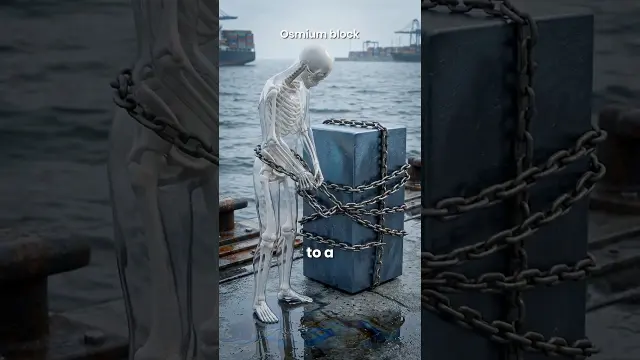
 What Takes You to Reach the Bottom of the Mariana Trench?
#Deep Sea Exploration
1 ideas
What Takes You to Reach the Bottom of the Mariana Trench?
Get new #Deep Sea Exploration ideas by email
Every Thursday: the week's best ideas, with the newest from #Deep Sea Exploration.
Related tags
Deep Sea Exploration: A Guide to the Ocean Depths
Deep sea exploration is the study and discovery of the ocean below the reach of ordinary daylight and diving. It focuses on the vast, dark layers of the sea where pressure is extreme, temperatures are low, and life often looks very different from what you find near the surface. For centuries, these depths were almost unknown, and even now they remain one of the least explored parts of our planet.
What deep sea exploration is for
People explore the deep ocean to understand Earth itself. It helps us learn about undersea geology, ocean circulation, marine life, shipwrecks, and natural resources. It also supports safer navigation, better climate knowledge, and a clearer picture of how life survives in extreme conditions. For scientists, the deep sea is not only a remote place, but also a living laboratory.
Where it comes from
Read more
Early deep sea exploration began with simple tools such as weighted lines, nets, and sounding devices used to measure depth. As technology improved, submarines, remote vehicles, and sonar made it possible to map and observe much deeper areas. Today, deep sea exploration combines science, engineering, and careful observation, but the basic goal is still the same: to see and understand what lies far below the surface.
Main methods and tools
There are several ways to explore the deep ocean, each suited to a different purpose:
- Sonar mapping helps chart the seafloor and reveal mountains, trenches, and valleys.
- Remote-operated vehicles, or ROVs, are tethered machines controlled from a ship.
- Autonomous underwater vehicles, or AUVs, travel without a direct tether and collect data on their own.
- Submersibles carry people into the deep sea for direct observation.
- Cameras, lights, sensors, and sampling tools are used to study animals, water chemistry, and sediments.
Each method has strengths. Some are best for mapping, some for collecting samples, and some for close visual study.
What beginners should know
Deep sea exploration is not about speed or spectacle. It requires patience, planning, and respect for a harsh environment. Pressure increases greatly with depth, so equipment must be built to withstand it. Visibility can be very limited, and many creatures are adapted to darkness, so light and movement must be used carefully.
If you are new to the topic, start by learning how ocean zones are divided and how pressure, temperature, and light change with depth. It also helps to understand the difference between exploration for science, exploration for engineering, and exploration for storytelling or education.
Why it matters
The deep sea covers much of the planet, yet it is still difficult to study. Every survey can add new knowledge about habitats, geological features, and species. Deep sea exploration reminds us that Earth still holds large unknown places, and that careful discovery can deepen our understanding of the natural world.
Practical tips for learning more
- Begin with maps of the ocean floor and major trenches.
- Learn the names of common exploration tools and what each one does.
- Read about deep-sea adaptations such as bioluminescence and pressure tolerance.
- Pay attention to how scientists collect evidence, not just what they find.
Deep sea exploration is both mysterious and methodical. It combines curiosity with careful technology, and it opens a window into one of the most remote environments on Earth.
Videos come from YouTube and posts from Instagram; titles and summaries are our own. All rights belong to their creators.