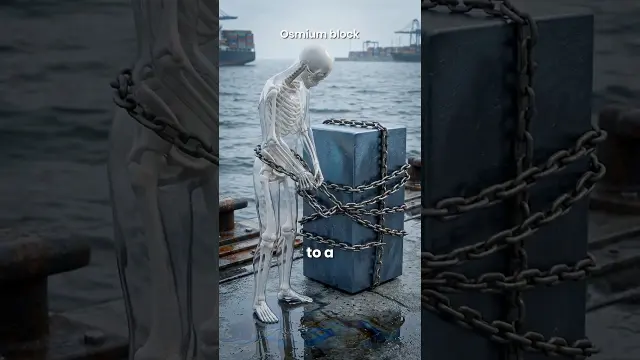
 What Takes You to Reach the Bottom of the Mariana Trench?
#Ocean Depth
1 ideas
What Takes You to Reach the Bottom of the Mariana Trench?
Get new #Ocean Depth ideas by email
Every Thursday: the week's best ideas, with the newest from #Ocean Depth.
Related tags
Ocean Depth: A Guide to the Deep Sea
What ocean depth means
Ocean depth is the measure of how far down the sea extends from the surface to the seafloor. It sounds simple, but it covers a huge range of environments, from shallow coastal waters to the dark, cold depths of the open ocean. These different layers support very different forms of life and create very different conditions for exploration.
The ocean floor is not flat. It includes continental shelves, slopes, ridges, plains, trenches, and underwater mountains. Some areas are relatively shallow and sunlit, while others are so deep that no natural light reaches them at all.
The main parts of the deep ocean
Read more
Ocean depth is often described in zones. Near the surface, sunlight can still penetrate and support marine plants and algae. As depth increases, light fades, temperature drops, and pressure rises. In the deepest parts, conditions become extreme.
Common depth zones include:
- Shallow coastal waters, where many familiar marine plants and animals live
- The open ocean, where light gradually weakens
- The midnight zone, where sunlight no longer reaches
- The abyssal zone, a vast dark region near the seafloor
- Ocean trenches, the deepest natural depressions in the Earth’s crust
Each zone has its own wildlife and its own challenges for observation and exploration.
Why ocean depth matters
Ocean depth shapes climate, currents, habitats, and the movement of nutrients. It influences where fish and other marine creatures live, how sediment settles, and how the seabed is formed over time. Deep water also plays an important role in the larger ocean system, because temperature and circulation patterns are connected from the surface to the bottom.
For people, understanding ocean depth helps with navigation, environmental study, marine conservation, and underwater exploration. It also gives us a clearer picture of how little of the ocean is directly visible from the surface.
How depth is measured
Depth can be measured in several ways, depending on the setting. Simple depth gauges, sonar, and modern mapping systems are used to estimate how far the seafloor lies below the surface. In shallow water, depth may change quickly with tides and seabed shape. In deep water, mapping often reveals features that would otherwise remain hidden.
Because the ocean is always moving, depth is best understood as part of a changing environment rather than a fixed number alone.
What to know if you are curious about the deep sea
If you are new to the topic, it helps to remember a few things:
- The deep ocean is not empty; it is full of adapted life
- Pressure increases greatly with depth
- Light and temperature both decrease as you go down
- The seafloor has many different shapes, not just a single flat bottom
- Much of the deep ocean is still difficult to explore directly
A good way to learn more is to think of ocean depth as a series of environments, not just a measurement. Each layer reveals something different about the sea and the life within it.
A simple way to picture it
Think of the ocean as a landscape turned upright. The surface is only the beginning. Below it are slopes, valleys, plains, and trenches, all hidden under water. That hidden world is one of the most mysterious and enduring parts of our planet.
Videos come from YouTube and posts from Instagram; titles and summaries are our own. All rights belong to their creators.