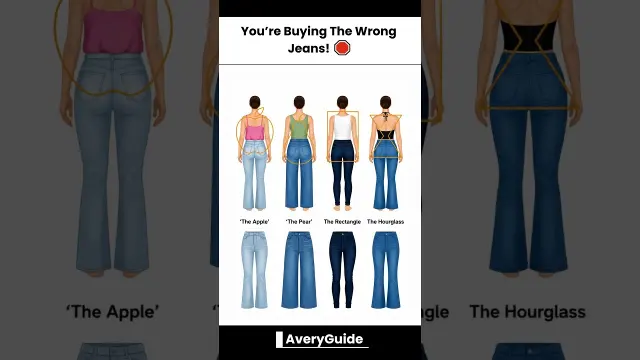
 Best Jeans For Your Body Shape and Denim Styling Guide
#Denim Styling
1 ideas
Best Jeans For Your Body Shape and Denim Styling Guide
Get new #Denim Styling ideas by email
Every Thursday: the week's best ideas, with the newest from #Denim Styling.
Related tags
Denim Styling: A Guide to Wearing Jeans Well
Denim is a sturdy cotton twill woven with a diagonal rib, traditionally dyed indigo on the warp threads so the surface wears into a lighter, personal pattern over time. Its name is tied to the French textile town of Nîmes, and its reputation was built in workwear: durable trousers for miners, farmers and sailors before denim ever became everyday fashion. That history explains a lot about how it behaves — it softens with wear, moulds to the body and shows its age honestly.
Fits and silhouettes
Most styling questions start with cut. Straight-leg jeans fall evenly from hip to hem and suit nearly everyone, which makes them the safest foundation for a first good pair. Slim and skinny cuts follow the leg closely and work best with longer tops or looser jackets to keep the silhouette balanced. Tapered jeans are roomy at the thigh and narrow at the ankle, a shape that flatters athletic builds. Bootcut and flared cuts widen slightly below the knee, balancing broader shoulders or heavier tops. Wide-leg and relaxed fits sit away from the leg entirely and bring an ease that pairs well with fitted knitwear. High-rise waists lengthen the leg and hold the midriff; low and mid rises sit differently on the hip and are worth trying in person rather than guessing.
Washes and finishes
Read more
Raw or dry denim is unwashed, deeply indigo and stiff at first; it fades according to how you wear it. Rinse and stone washes arrive softer and lighter, while distressed and ripped finishes are deliberate style choices — one strong element per outfit is usually enough. Dark, even washes read as smarter and work with tailoring; pale, worn washes feel casual and suit warm weather and relaxed layers.
Styling principles
Balance is the whole game. A voluminous jean asks for a closer top, a cropped jacket or a tucked shirt; a skinny jean leaves room for an oversized blazer, a chunky knit or a long coat. Consider the break at the hem: a clean line over a shoe looks polished, while a slight pool of fabric over a boot reads relaxed. Shoes change everything — trainers, loafers, ankle boots and sandals each pull the same jeans in a different direction. Rolled cuffs shorten the leg visually, so keep them narrow and deliberate.
What beginners should know
Fit at the waist and seat matters more than the number on the label, and sizing varies between makers, so try several. Look for seams that sit flat, a waistband that does not gape when you sit, and pockets placed so they flatter rather than widen. Fabric with a small amount of stretch is comfortable but relaxes with wear; rigid denim holds its shape longer.
Care
Wash jeans inside out, in cold water, and not too often — airing them between wears is often enough. Hang to dry away from direct heat. Denim is one of the few garments that improves with use, so choose cuts you actually enjoy wearing and let them age with you.
#Denim Styling: frequently asked questions
How do I start styling denim if I'm a complete beginner?
Start with one pair of straight-leg jeans in an even, mid-tone wash, since that cut falls evenly from hip to hem and works with almost everything already in your wardrobe. Try several makers in person rather than trusting the size on the label, and check that the waistband doesn't gape when you sit. Once that foundation fits well, add other washes and silhouettes one at a time.
Which denim cut suits my body shape?
Tapered jeans that are roomy at the thigh and narrow at the ankle flatter athletic builds, while bootcut and flared shapes widen below the knee to balance broader shoulders or heavier tops. High-rise waists lengthen the leg and hold the midriff, whereas low and mid rises sit differently on the hip and are best judged in a fitting room. There's no single correct cut — the aim is a line that echoes your proportions rather than fighting them.
What should I look for when choosing a pair of jeans?
Prioritise how the waist and seat actually fit over the number on the tag, since sizing varies widely between makers. Look for flat-lying seams, pockets angled so they flatter rather than widen the hip, and a waistband that stays put when you sit down. A little stretch feels comfortable but relaxes with wear, while rigid denim keeps its shape longer.
How do I care for denim so it lasts?
Wash jeans inside out in cold water and not too often — airing them between wears is usually enough to freshen them. Hang them to dry away from direct heat rather than tumble drying, which stresses the fabric. Denim is one of the few garments that genuinely improves with use, so let it fade and soften on its own.
How can I style denim for a smarter occasion?
Reach for a dark, even wash without distressing, which reads more polished and pairs naturally with tailoring such as a blazer or a fine knit. Keep the hem break clean over a loafer or ankle boot for a sharper line. One strong element per outfit is plenty, so let the jean stay quiet and put the interest in the top half.
What are the most common mistakes people make with denim?
Wearing volume on both halves — a wide or relaxed jean with an oversized top — tends to swamp the silhouette, so balance a roomy leg with something closer to the body. Overdoing distressing or stacking several loud finishes at once muddies the look. Careless cuffing is another easy slip: rolled hems shorten the leg visually, so keep them narrow and intentional.
Videos come from YouTube and posts from Instagram; titles and summaries are our own. All rights belong to their creators.