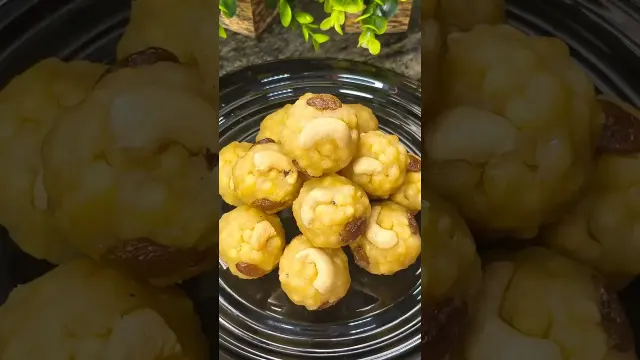
 Perfect Boondi Laddu recipe for Diwali celebrations
#Diwali Recipe
1 ideas
Perfect Boondi Laddu recipe for Diwali celebrations
Get new #Diwali Recipe ideas by email
Every Thursday: the week's best ideas, with the newest from #Diwali Recipe.
Related tags
Diwali Recipes: Sweets, Snacks and Celebration Food
Diwali is a festival of lamps, gatherings and food. Across the regions where it is celebrated, households spend days preparing sweets and snacks to offer to guests, to exchange with neighbours and relatives, and to eat together after the evening prayers and lights. Cooking is rarely a solo task: it is passed around between family members, with one person stirring a pot, another shaping dough, and someone else keeping an eye on the oil. If you are new to it, the good news is that the food is built on a small set of techniques that reward patience far more than skill.
Two families of food
Diwali cooking falls broadly into sweets, known as mithai, and savoury snacks. Sweets are usually made from milk, sugar, ghee, nuts, gram flour, semolina or rice flour, and many are reduced or fried slowly so that the flavour deepens rather than just sweetening. Savoury items are crisp, salty and often spiced — fried doughs, lentil mixtures, stuffed pastries and roasted snack blends. Alongside these sit everyday dishes: rice, breads, lentils and vegetables, often richer than usual because the meal is a celebration. There is no single Diwali menu. What appears on the table depends entirely on where you are and which family recipe you inherited.
Sweets worth learning first
Read more
Round sweets made from gram flour or from tiny fried droplets of batter, milk-based squares set with nuts, semolina and carrot puddings, syrup-soaked dumplings, and rice puddings are all common. Beginners usually do best starting with something that does not depend on split-second timing — a halwa you stir patiently, or a simple nut and milk sweet. Syrup-based sweets are more demanding because the sugar must reach the right concentration, but they become intuitive with practice.
Savoury snacks
Spiral-shaped fried snacks, flaky savoury biscuits, stuffed triangular pastries and spiced mixtures of fried lentils, peanuts and flattened rice are the backbone of the savoury side. Most are made in large batches days in advance, which is exactly why they exist: they keep well and can be offered to whoever arrives.
Practical tips
- Read the recipe through completely before you begin, then measure everything out first.
- Keep frying oil at a steady medium heat. A small piece of dough should sizzle gently, not immediately darken.
- Roast gram flour slowly and stir constantly; the change in smell tells you when it is ready.
- Let fried snacks cool completely before sealing them in airtight containers, or they will soften.
- Shape sweets with slightly greased hands, and work while the mixture is still warm enough to hold.
- Cook with company and divide the tasks; it is faster and far more enjoyable.
- Keep nuts and dairy in mind when preparing boxes for others, and label what you give away.
The point of all this effort is sharing. Make a little more than you need, set some aside for visitors, and let the food travel.
#Diwali Recipe: frequently asked questions
How should someone new to Diwali cooking get started?
Begin with one sweet and one savoury item rather than trying to build a whole spread at once, and pick recipes that rely on slow stirring or gentle frying instead of precise sugar work. Read each recipe end to end, lay out your ingredients before you turn on the heat, and invite someone to cook alongside you so the tasks can be split.
Which Diwali sweets are the easiest for a beginner to make?
Milk-and-nut sweets and slow-cooked puddings are forgiving because they reward patience rather than split-second timing, and you can tell where you are by look and smell. Syrup-soaked sweets are harder since the sugar has to reach the right concentration, so save those until you have handled a few simpler batches.
What is the difference between mithai and the savoury side of a Diwali spread?
Mithai covers the sweets, built on milk, sugar, ghee, nuts, gram flour, semolina or rice flour, and usually cooked slowly so the flavour deepens. The savoury side is crisp, salty and spiced — fried doughs, lentil mixtures, stuffed pastries and roasted snack blends — and is typically made in big batches ahead of time because it keeps well.
How do I keep fried Diwali snacks crisp instead of soggy?
Fry at a steady medium heat so the pieces cook through without darkening on the outside before the centre is done; a scrap of dough should sizzle gently rather than instantly brown. Once fried, let everything cool completely before it goes into an airtight container, because sealing warm snacks traps steam and softens them.
What should go into a box of Diwali food for neighbours and relatives?
Aim for contrast — something sweet, something crisp and savoury, and perhaps a nut-based item — so the box does not taste like one note repeated. Keep nuts and dairy in mind, since these are common things people avoid, and label what you hand out so guests know what they are eating.
What mistakes do people commonly make when cooking for Diwali?
The usual culprits are frying oil that is too hot, roasting gram flour too quickly without constant stirring, and sealing snacks before they have cooled. Shaping sweets with dry hands or letting the mixture go cold also makes the work harder, so a little grease on your palms and a warm mixture will serve you better.
Videos come from YouTube and posts from Instagram; titles and summaries are our own. All rights belong to their creators.