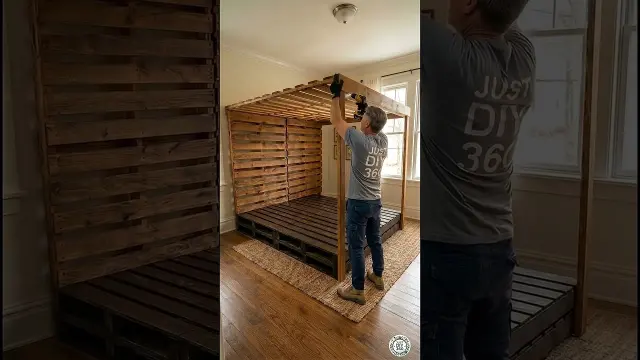
 Luxury Bed Build Using Wooden Pallets
#DIY Bed
1 ideas
Luxury Bed Build Using Wooden Pallets
Get new #DIY Bed ideas by email
Every Thursday: the week's best ideas, with the newest from #DIY Bed.
Related tags
How to Build Your Own Bed: A Beginner's Guide
Building a bed is one of the most satisfying projects a home maker can take on. It is large enough to be a real piece of furniture, yet simple enough that the structure is mostly a frame, a platform and four legs. A bed you made yourself can be sized exactly to the room, finished in the colour you want, and repaired later with the same skills you used to build it.
Where the idea comes from
Making beds at home is an old tradition. Before furniture was something you bought, a bed was a wooden box or a rope-strung frame assembled by the household. The modern DIY version descends from that practicality, and it has been kept alive by people who prefer to reuse timber, keep costs down, or simply enjoy working with their hands.
The main kinds of DIY bed
Read more
- Platform bed. A flat base with slats or a solid top and no box spring. It is the most forgiving design for beginners because the mattress rests directly on the frame.
- Pallet bed. Built from reclaimed wooden pallets, often left partly raw for a rustic look. Pallets need to be clean, dry and free of splinters, and any stamp or treatment should be checked before you bring them indoors.
- Storage bed. A platform with drawers or lift-up compartments underneath. Rewarding, but it needs accurate measuring so the drawers actually run.
- Loft or bunk style. Raised sleeping platforms, usually for children's rooms. These carry the most risk and deserve the most care.
- Upholstered frame. A simple timber frame wrapped in foam and fabric for a softer, hotel-like look.
What beginners should know
Start with the mattress. Its exact dimensions decide everything else, and the frame should support it on all sides with a little room to spare. Sketch the plan, write down every cut, and buy a little more timber than you think you need.
Slats matter more than they look. Spaced closely and supported in the middle, they spread weight evenly and let the mattress breathe. Gaps that are too wide shorten a mattress's life.
Choose your fixings deliberately. Screws hold better than nails, glue adds rigidity, and brackets at the corners prevent the frame from racking sideways. Pre-drill holes in hardwood so it does not split.
Practical tips
- Build in a space where you can move around the whole frame, not a corner.
- Sand every edge that a leg or hand might meet, especially on pallet wood.
- Keep the frame slightly smaller than you imagined: beds always look bigger once assembled in a room.
- Leave room for a headboard now, even if you add it later.
- Test the finished frame with weight before the mattress goes on, and check it again after a few weeks of use.
Whether your bed is a simple slatted platform or an ambitious pallet build, the reward is the same: a piece of furniture that fits your space and your life, made with your own hands.
#DIY Bed: frequently asked questions
How do I get started on a DIY bed?
Begin with the mattress rather than the wood: its exact size decides the footprint of the frame, so measure it and let those dimensions drive every other decision. Then sketch the plan, write out each cut you will need, and pick a build spot where you can walk all the way around the frame. Buying a bit more timber than the plan calls for saves a second trip when something goes wrong.
Which style of DIY bed suits a beginner best?
A platform bed is the friendliest starting point, because the mattress rests straight on a flat slatted base and there is no box spring or complex mechanism to get right. Storage and loft or bunk designs are more rewarding but demand accurate measuring and much more care, especially where children are involved. If you love a rustic look, a pallet build is simple in structure but needs clean, dry, splinter-free wood that has been checked before it comes indoors.
What do I need before I begin building a bed?
You need a mattress to measure against, a written plan with all your cuts listed, timber, and a basic set of cutting and drilling tools. Screws hold better than nails, wood glue stiffens the joints, and corner brackets stop the frame from twisting out of square. It also helps to have a sander on hand, since every edge a hand or leg might meet should be smoothed before the bed goes into a room.
How should I care for a DIY bed once it is finished?
Test the frame with real weight before the mattress goes on, then check it again after a few weeks of ordinary use. Tighten any fixings that have worked loose, and re-glue or re-brace a joint that has started to move rather than waiting for it to fail. Because the bed is yours, repairs are just the building skills used a second time.
What mistakes do people usually make with a homemade bed?
The most common slip is spacing the slats too widely, which lets the mattress sag and shortens its useful life. Other frequent errors are nailing where screws and glue would hold far better, skipping pilot holes in hardwood and splitting it, and building the frame in a corner where it cannot be manoeuvred. Many people also make the frame bigger than the room really wants, so it is worth leaving space for a headboard and a little breathing room around the sides.
Can I get a soft, upholstered look from a DIY bed?
Yes, and it does not require an advanced build. Start with an ordinary timber frame, then wrap the visible parts in foam and fabric to soften the edges and give the bed a hotel-like finish. Keep the structure itself simple and sturdy underneath, since the padding is there for looks and comfort rather than support.
Videos come from YouTube and posts from Instagram; titles and summaries are our own. All rights belong to their creators.