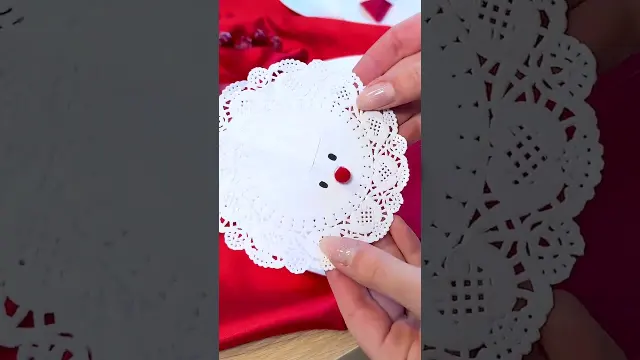
 Turn a Doily and Napkin Into a Santa Christmas Table Decoration
#DIY Holiday Decor
1 ideas
Turn a Doily and Napkin Into a Santa Christmas Table Decoration
Get new #DIY Holiday Decor ideas by email
Every Thursday: the week's best ideas, with the newest from #DIY Holiday Decor.
Related tags
DIY Holiday Decor: Handmade Festive Touches for Your Home
Making your own holiday decorations is one of the quiet pleasures of the festive weeks. It asks for a little time and a few materials, and it gives back something you cannot buy: objects that carry your own hand, your own colours and your own memories of the people you made them with.
An old habit, not a new one
Decorating a home for a celebration is as old as celebrating itself. Long before decorations were something you bought, households used what the season offered — evergreen branches, dried fruit, straw, paper, fabric scraps, beeswax, salt dough, ribbon saved from year to year. The handmade decoration is therefore not a modern craft trend but the original form of the thing. What has changed is that most of us now have to relearn the simple skills our grandparents took for granted, which is exactly what this kind of making is for.
The main kinds of projects
Read more
Most DIY holiday decor falls into a handful of families, and each one is a good place to start depending on how much time and patience you have.
- Wreaths and garlands: built on wire frames, grapevine rings or simple twine, then dressed with greenery, dried flowers, fabric strips or paper shapes.
- Table pieces: centrepieces and place settings made from candles, bowls, branches, fabric and small found objects.
- Ornaments and keepsakes: baubles, stars, hearts and little figures in felt, clay, paper or wood, often the easiest projects for children to join.
- Paper and textile crafts: folded stars, paper chains, cut-paper snowflakes, sewn or glued stockings, cushions and runners.
- Light and warmth: lanterns, candle holders and simple string-light arrangements, which do more for a room than any single ornament.
What beginners should know
Start with one project and finish it before starting the next. Choose materials you can find easily and cheaply, and let the first attempt be a practice piece rather than a gift. Natural materials — cut greenery, dried citrus, cones, branches — are forgiving and cost nothing, but they dry out and drop, so plan to replace them. Paper and felt are the kindest materials for learning on. If you are making something to keep for years, spend your care on the fixing: a well-tied wire, a firm glue joint or a generous stitch outlasts any amount of decoration.
Practical tips
Work on a covered surface with the tools within reach, and keep sharp items and small pieces away from very young children. Check that anything hung overhead is properly secured, and never leave a burning candle unattended or near dried greenery, fabric or paper. Test your arrangements in the room where they will live, in ordinary light, before you commit to them — scale and proportion look different on a table than on a workbench. And when you pack things away, label the boxes and keep a note of what you used, so next year's making begins where this year's left off.
The point of it
A handmade decoration rarely looks perfect, and that is part of its charm. It shows the hand that made it, and it becomes part of the story of your home. Begin small, keep what works, and let the collection grow year by year.
#DIY Holiday Decor: frequently asked questions
How do I get started making my own holiday decorations?
Choose a single project — a simple wreath, a paper star, a felt ornament — and finish it before taking on the next one. Treat the first attempt as a practice piece rather than a gift, and pick materials you can easily and cheaply find around you.
What materials and tools do I actually need?
You don't need a workshop: wire, twine, glue, thread, scissors, paper, felt, fabric scraps and whatever the season offers — cut greenery, dried citrus, cones, branches — cover most projects. Work on a covered surface with your tools within reach, and keep sharp tools and small pieces away from very young children.
Which type of holiday project should I choose?
Wreaths and garlands suit anyone who likes working with natural materials, while table pieces and place settings are quick wins built from candles, bowls, branches and fabric. Ornaments and paper or textile crafts are the kindest starting point for beginners and the easiest for children to join, whereas lanterns and simple light arrangements change a whole room with very little effort.
How do I make handmade decorations last from year to year?
Put your care into the fixing: a well-tied wire, a firm glue joint or a generous stitch outlasts any amount of decoration, and keepsakes are worth the extra attention. Natural materials dry out and drop, so plan to replace greenery and fruit each season, and store everything in labelled boxes with a note of what you used so next year picks up where you left off.
What mistakes do beginners usually make?
The usual ones are starting too many projects at once and decorating before checking how a piece looks in the room where it will live — scale and proportion read differently on a table than on a workbench. Safety is the other: never leave a burning candle unattended or near dried greenery, fabric or paper, and make sure anything hung overhead is properly secured.
Any ideas for decorating a holiday table?
Table pieces are the most forgiving projects: a candle, a bowl, a few branches and some fabric strips can carry a whole centrepiece. Everyday things you already own work too — a doily and a napkin, for instance, can become a small Santa figure for a place setting, costing nothing but time.
Videos come from YouTube and posts from Instagram; titles and summaries are our own. All rights belong to their creators.