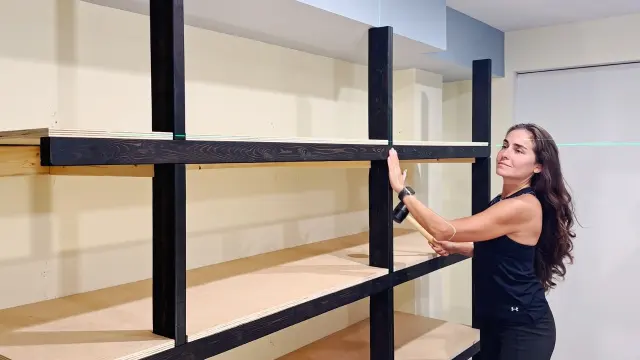
 Heavy-duty DIY basement shelves for extra storage
#DIY Shelving
1 ideas
Heavy-duty DIY basement shelves for extra storage
Get new #DIY Shelving ideas by email
Every Thursday: the week's best ideas, with the newest from #DIY Shelving.
Related tags
DIY Shelving Ideas for Every Room
DIY shelving is one of the most useful home projects you can take on. Shelves help you store things, keep rooms tidy, and make empty walls more practical. They can be simple or decorative, built from wood, metal, or mixed materials, and adapted to almost any room in the house.
What DIY shelving is
At its simplest, shelving is a flat surface fixed to a wall, placed in a cabinet, or built into a freestanding unit. DIY shelving means you make it yourself instead of buying a ready-made piece. That gives you more control over the size, shape, finish, and function. You can build shelves for books, kitchen items, bathroom supplies, baskets, plants, toys, or display pieces.
Shelving has a long history in homes, shops, workshops, and libraries, where storage and display have always mattered. Today, DIY shelving remains popular because it can solve awkward storage problems and make use of space that would otherwise go unused.
Read more
Common types of shelves
There are many kinds of shelving, and the best choice depends on what you want to store and how much support you need.
- Floating shelves sit with hidden supports for a clean, simple look.
- Bracketed shelves use visible supports and are often sturdy and easy to install.
- Built-in shelves are made to fit a specific wall, alcove, or niche.
- Freestanding shelving units stand on the floor and can move with you.
- Corner shelves make use of awkward spaces.
- Heavy-duty shelves are designed for garages, basements, pantries, and storage rooms.
Materials and styles
The material you choose affects both the look and the strength. Wood is the most common choice because it is easy to cut, paint, stain, and finish. Plywood and solid boards are often used for practical shelving. Metal brackets or frames add strength and a more industrial feel. For a lighter decorative look, thinner shelves can work well if they are properly supported.
Styles can range from rustic and handmade to sleek and minimal. A painted shelf can blend into the wall, while stained wood brings warmth. Open shelving creates a sense of space, but it also means your items are visible, so it works best when you enjoy keeping things neat.
What to know before you begin
Good shelving starts with planning. Measure the wall carefully and think about what will sit on the shelf. A shelf for books or storage needs more support than one for a few decorative objects. Check what kind of wall you have, since plaster, drywall, brick, and concrete all require different fixing methods.
It also helps to consider height and spacing. Shelves that are too high can be hard to use, while shelves placed too close together may not fit the items you need to store.
Practical tips for better results
- Choose materials that match the load you expect.
- Use a level so shelves sit straight.
- Anchor shelves securely into the wall or suitable supports.
- Sand rough edges before finishing.
- Leave enough clearance for the items you plan to place on them.
- If you want a neat look, paint the brackets and wall the same color.
DIY shelving is a flexible project that can be simple or more advanced, but the basic idea is always the same: make storage that suits your space and your life. Start with one small shelf if you are new to it, then build from there as your confidence grows.
Videos come from YouTube and posts from Instagram; titles and summaries are our own. All rights belong to their creators.