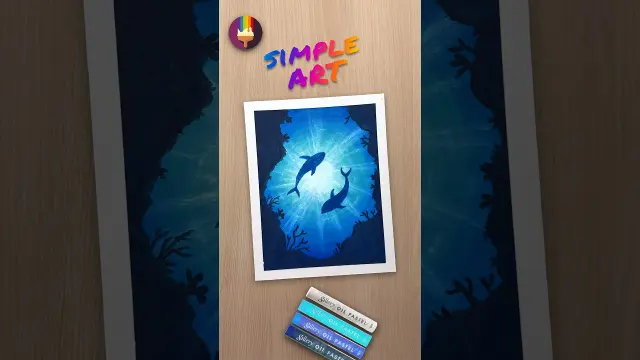
 Deep Sea Dolphin Drawing Tutorial for Beginners
#Dolphin Drawing
1 ideas
Deep Sea Dolphin Drawing Tutorial for Beginners
Get new #Dolphin Drawing ideas by email
Every Thursday: the week's best ideas, with the newest from #Dolphin Drawing.
Related tags
Dolphin Drawing Guide
What dolphin drawing is
Dolphin drawing is the art of sketching one of the ocean’s most recognisable mammals. Dolphins are popular subjects because their shape is graceful, their movement is lively, and their form can be simplified without losing character. You can draw them in many ways: realistic, playful, stylised, or decorative. That makes them useful for beginners as well as experienced artists.
Dolphins live in oceans and some large rivers, and their body shape reflects a life spent moving quickly through water. A typical dolphin has a streamlined body, a curved dorsal fin, flippers, and a tail fluke. When you draw one, those simple shapes are often enough to suggest the animal clearly.
Common styles
Read more
You can approach dolphin drawing in several ways.
- Realistic: focuses on correct proportions, surface details, and the natural curve of the body
- Cartoon: uses simpler shapes, a larger head or eyes, and a friendlier expression
- Minimal line art: relies on clean outlines with very little shading
- Decorative or pattern-based: combines the dolphin shape with flowing lines, texture, or repeating motifs
A realistic drawing can show the dolphin’s body volume and the way light moves over its smooth surface. A cartoon version often works well in journals, children’s art, or crafts because it is easier to simplify.
Basic structure to start with
If you are new to drawing dolphins, begin with a few simple shapes.
- Sketch a long oval or teardrop shape for the body
- Add a smaller curve or rounded wedge for the head and snout
- Mark the position of the dorsal fin on the back
- Place the pectoral fin on the side
- Draw the tail flukes at the end of the body
- Refine the outline so the body looks smooth and streamlined
Keep your first lines light. That makes it easier to adjust the posture before committing to a final outline.
Helpful drawing techniques
A good dolphin drawing usually depends on motion. Dolphins rarely look stiff, so try to show a gentle curve through the body. A slight bend can make the animal feel like it is swimming, leaping, or turning.
Shading can add depth without making the drawing complicated. Use softer shading along the underside, under the fins, or where the body turns away from the light. If you want a clean, simple result, a few well-placed lines can be enough.
Pay attention to the head shape. The snout should feel smooth and balanced, not too sharp or too flat. The eye is usually small, and a tiny detail there can give the dolphin much of its expression.
Tips for beginners
- Use reference images to understand the body from different angles
- Start with a side view before trying a jumping or twisting pose
- Don’t overcomplicate the fins; they are usually simple shapes
- Keep the body smooth and flowing rather than segmented
- Practice quick gesture sketches to capture movement
If your drawing feels awkward, check the proportions first. The body should be long and streamlined, and the fins should support the pose rather than distract from it. With practice, you’ll find that dolphins are a rewarding subject because their form is simple enough to learn, yet flexible enough to draw in many different ways.
#Dolphin Drawing: frequently asked questions
How do I start drawing a dolphin if I have never drawn one before?
Begin with a light sketch made of a few simple shapes: a long teardrop for the body, a rounded wedge for the head and snout, and small marks where the fins and tail belong. Once the posture looks right, refine the outline so the body reads as smooth and streamlined. Keeping the early lines faint makes it much easier to adjust the pose before committing.
What do I need to draw a dolphin?
Nothing specialised — a pencil, paper and an eraser are enough to work through the basic structure and refine the outline. Coloured pencils, ink pens or markers are only worth adding once the shape feels right, since they suit the different styles. A reference image of a dolphin from a few angles helps more than any particular tool.
Which dolphin drawing style should I choose?
It depends on what the drawing is for. Realistic work suits those who want correct proportions and shading, cartoon versions with a rounder head and friendlier expression work well for journals and children's art, and minimal line art or decorative pattern-based designs suit a clean, graphic look. Beginners often find the simpler styles easier to finish confidently.
How do I make my dolphin drawing look like it is really moving?
Motion comes from a gentle curve running through the body rather than from a stiff, straight pose. A slight bend suggests swimming, leaping or turning, and quick gesture sketches are a good way to practise catching that flow. The fins should support the pose instead of pulling attention away from it.
What are the most common mistakes when drawing a dolphin?
The usual problems are awkward proportions, a snout that is too sharp or too flat, and fins that are overworked into fussy shapes. Segmenting the body instead of keeping it flowing, or trying a twisting jump pose too early, also makes the drawing feel wrong. If something looks off, check the proportions before adding detail.
How can I use a dolphin drawing for a craft or occasion?
A simple dolphin outline translates well into cards, journals, kids' craft projects and ocean-themed decorations. A cartoon version is easiest to cut out, colour or repeat as a motif, while a minimal line drawing suits a clean card front. You can also build a pattern by echoing the dolphin shape with flowing lines and repeating elements.
Videos come from YouTube and posts from Instagram; titles and summaries are our own. All rights belong to their creators.