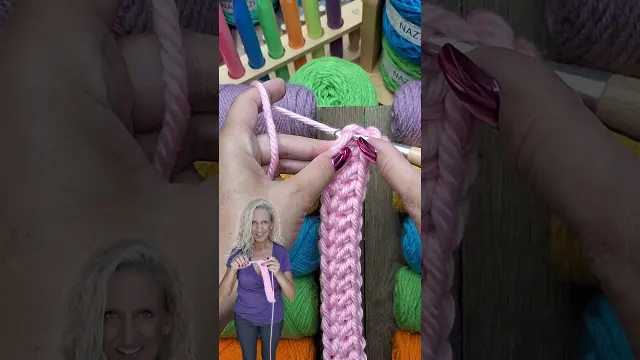
 Foundation Double Crochet: A Neater Way to Start a Project
#Double Crochet
1 ideas
Foundation Double Crochet: A Neater Way to Start a Project
Get new #Double Crochet ideas by email
Every Thursday: the week's best ideas, with the newest from #Double Crochet.
Related tags
Double Crochet: A Complete Guide for Beginners
Double crochet is one of the first stitches anyone learns and one of the last they stop refining. It is tall enough to grow fabric quickly, open enough to look delicate, and flexible enough to become almost anything: a blanket, a hat, a market bag, a lacy shawl. If you can make a chain and a slip stitch, you already have everything you need to start.
What the stitch actually is
In US terms, double crochet is a stitch roughly twice the height of a single crochet. In UK patterns the same stitch is called treble crochet, which is why a pattern's origin matters before you pick up your hook. The difference is purely one of naming, but it changes the whole fabric if you follow the wrong column of a chart.
The stitch is built in steps: wrap the yarn over the hook, insert the hook into the stitch below, pull up a loop, then work off the loops two at a time. That rhythm — over, in, up, two, two — is what gives double crochet its characteristic speed. Once the motion is in your hands, it becomes almost rhythmic.
Read more
Where it comes from
Crochet as a textile craft took shape in Europe in the nineteenth century, growing out of earlier looping and needlework traditions, and double crochet was among its workhorse stitches from the beginning. Because it covers ground quickly and produces a soft, draping fabric, it became the natural choice for household textiles: throws, edgings, shawls, doilies. Those uses have persisted because the stitch genuinely suits them.
The main variations
- Classic double crochet: worked in rows or rounds, the everyday fabric.
- Double crochet in the back loop only: creates ridges and a stretchy, ribbed texture.
- Clusters and shells: several double crochets worked into one point to make fans, petals and bobbles.
- Granny squares: groups of double crochet separated by chain spaces, joined into larger pieces.
- Taller relatives: treble and double treble stitches simply add another wrap and another pair of pull-throughs.
What beginners should know
Tension is the first lesson. Double crochet is tall, so uneven loops show up more than in shorter stitches; keeping the hook steady and the working yarn consistently tensioned matters more than speed.
Count as you go. The turning chain at the start of a row usually stands in for the first stitch, and forgetting it is the most common reason a project narrows without explanation. Many crocheters prefer a starting stitch that does not need one, or a stacked alternative, for a neater edge.
Watch your stitch height. If your fabric pulls in, the first pull-through may be too tight; if it flares, the loops may be too loose.
Practical tips
Choose a hook that lets the yarn slide without splitting, and a light-coloured, smooth yarn while you are learning — you will see your stitches far more clearly. Work in good light. Practise a small square rather than a whole project, and keep it: comparing it with later attempts is the most honest measure of progress you will get.
Videos come from YouTube and posts from Instagram; titles and summaries are our own. All rights belong to their creators.