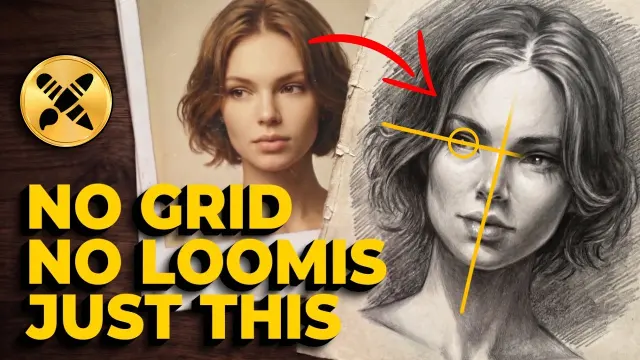
 Alternative Face Drawing Techniques Using Simple Geometry
#Drawing Basics
2 ideas
Alternative Face Drawing Techniques Using Simple Geometry
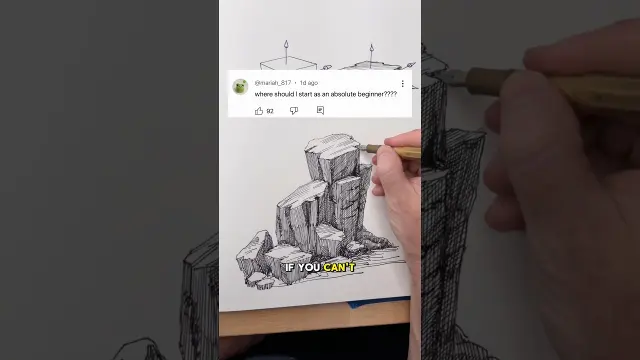 Essential Drawing Drills for Beginner Artists
Get new #Drawing Basics ideas by email
Every Thursday: the week's best ideas, with the newest from #Drawing Basics.
Related tags
Drawing Basics: Where to Start When You Want to Learn
Drawing is one of the oldest and simplest things people make. Long before writing, someone scratched animals onto stone with charcoal and pigment. Today drawing serves just as many purposes: a quick note to yourself, a study for a painting, a design sketch, a portrait, a page in a journal. It is also a skill rather than a gift, which means it can be learned in the same ordinary way you learned to write — slowly, by doing it often, and by being willing to make a lot of unremarkable drawings on the way to good ones.
Start with what you already have
You do not need much to begin. A pencil, a sheet of paper and something to erase with will carry you a long way. Pencils come in grades from soft and dark to hard and light, and a single mid-range pencil is enough while you find your footing. As you go on, you may want a couple of softer and harder pencils, a fine pen, or a sketchbook small enough to carry. Try things before buying a large set of anything; preferences form through use, not through shopping.
Learning to see
Read more
Most beginners assume drawing is about the hand. It is mostly about the eye. Untrained looking jumps straight to labels — that is a nose, that is a chair — and the hand then draws the label instead of the shape in front of it. Practising observation means slowing that jump down: squint until the details blur and only the large shapes remain, compare one distance against another, notice the empty spaces between things as carefully as the things themselves. Drawing upside down, or drawing something you cannot name, are old tricks for quieting the labelling habit.
Line, shape and value
Almost every drawing is built from three things. Line describes edges and movement. Shape reduces complicated subjects to simple forms — a box, a cylinder, an egg — that you can place and check before adding detail. Value is how light or dark an area is, and it is what makes a drawing look solid rather than flat. Beginners often rush to detail and skip value; in practice, a drawing with clear light and shadow and almost no detail reads better than a highly detailed one with none.
Practice that helps
Short, regular sessions work better than rare long ones. Keep a sketchbook and fill it without judging the pages. Draw from life when you can, since objects in front of you teach proportion faster than photographs. Copying drawings you admire is a legitimate way to learn, as long as you are studying how something was done rather than only reproducing it.
Traps worth knowing
Comparing your work to finished drawings by people who have practised for years is the quickest way to give up. Chasing the perfect materials is another. So is erasing every imperfect line — many drawings improve when you leave the searching marks in and build over them. And it helps to finish things, even badly; abandoned drawings teach less than resolved ones.
Finding your direction
Some people are drawn to careful studies of real objects, others to faces, landscapes, imagined worlds or clear technical drawing. All of them rest on the same foundations, so start broad and follow what keeps you coming back to the page.
#Drawing Basics: frequently asked questions
How do I start drawing if I've never done it before?
Begin with the simplest setup you already own: a mid-range pencil, some paper, and an eraser. Spend your first sessions drawing whatever is in front of you rather than worrying about style or finished results, since the skill grows through frequent, ordinary practice. Keep a sketchbook and fill pages without judging them, letting each drawing be a low-stakes exercise rather than a test.
What supplies do I actually need to get going?
Very little — a pencil, paper and an eraser are genuinely enough at the start, and one mid-range pencil will serve you well while you find your footing. Add a softer and harder pencil, a fine pen or a small portable sketchbook only once you notice you want them. Try single items before committing to a large set, because your preferences form through use rather than through shopping.
Why does my drawing look flat, and how do I fix it?
Flatness usually comes from skipping value, which is how light or dark an area is; it is what gives a drawing weight and solidity. Beginners tend to jump straight to fine detail, but a drawing with clear light and shadow and almost no detail reads far better than a highly detailed one with no value structure. Squint at your subject to blur the detail, then block in the large light and dark shapes before adding anything else.
Should I draw from photos or from real objects?
Draw from life whenever you can, since objects actually in front of you teach proportion and spatial relationships faster than photographs do. Photos flatten and distort things in ways that can quietly mislead a beginner's eye. That said, copying drawings you admire is a legitimate way to learn, provided you study how something was made rather than just reproducing the result.
What mistakes slow beginners down the most?
Comparing your work to finished drawings by people who have practised for years is the fastest route to giving up, and chasing perfect materials runs a close second. Erasing every imperfect line is another common trap — many drawings improve when you leave the searching marks in and build over them. It also helps to finish things even when they are going badly, because abandoned drawings teach you less than resolved ones.
Which kind of drawing should I focus on?
Careful studies of real objects, faces, landscapes, imagined worlds and technical drawing all rest on the same foundations of line, shape and value, so it pays to start broad. Try a few directions and notice which one keeps bringing you back to the page. Following that pull is a more reliable guide than picking a specialty before you have any experience to base it on.
Videos come from YouTube and posts from Instagram; titles and summaries are our own. All rights belong to their creators.