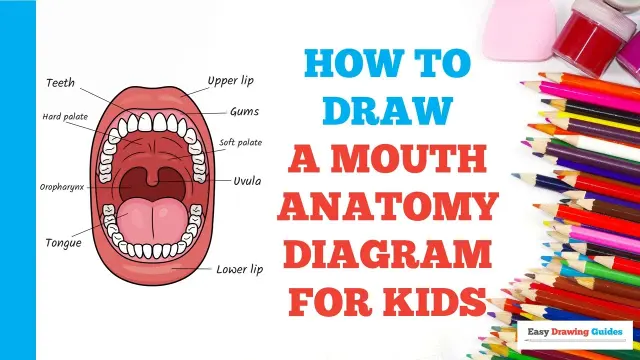
 How to Draw a Mouth Anatomy Diagram Step by Step
#Drawing Guide
3 ideas
How to Draw a Mouth Anatomy Diagram Step by Step
 How to Actually Start Drawing as a Beginner
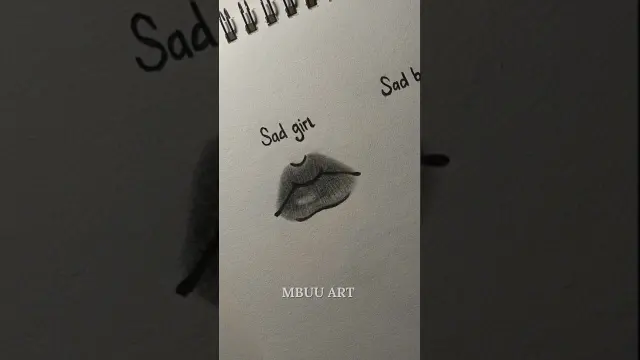 Tutorial on How to Draw Sad Lips for Boys and Girls
Get new #Drawing Guide ideas by email
Every Thursday: the week's best ideas, with the newest from #Drawing Guide.
Related tags
Drawing Guide: Learn to Draw from the Ground Up
Drawing is the practice of making marks on a surface to suggest shape, space and form. It is one of the oldest human activities — people were sketching figures and animals on cave walls long before they wrote anything down — and it remains the most direct way of turning what you see, or imagine, into something visible. What surprises many beginners is that drawing is not a talent handed out at birth. It is a craft with learnable parts, and almost anyone who puts in deliberate practice improves.
What drawing actually trains
Most people assume drawing is about the hand. In practice it is mostly about the eye. Learning to draw means learning to see what is really there rather than what your brain assumes is there: the actual angle of a shoulder, the negative space between two objects, the way a shadow softens as it travels. The hand then records those observations. This is why beginners often draw better when they copy an image upside down — it interrupts the habit of drawing symbols instead of shapes.
The core skills
Read more
- Line: controlling pressure, direction and confidence. A single clean stroke reads better than a hesitant, scratched one.
- Shape and proportion: breaking complex subjects into simple forms — circles, boxes, cylinders — and checking how the parts relate to each other in size.
- Perspective: understanding that parallel lines appear to converge and that objects shrink with distance, which gives a flat page the illusion of depth.
- Value: the range of light and dark. Value does more to make a drawing look three-dimensional than outline ever will.
- Composition: deciding what belongs in the frame and where, so the eye knows where to travel.
Materials worth starting with
You need very little. A pencil with a soft and a hard grade, a sheet of paper with a bit of tooth to it, and an eraser that lifts cleanly will carry you a long way. A sketchbook is useful mainly because it keeps your practice in one place, where you can see progress you would otherwise forget. Resist the urge to buy equipment as a substitute for drawing.
Practical habits for beginners
Draw regularly in short sessions rather than rarely in long ones; frequency builds fluency faster than marathon effort. Keep a sketchbook with you and use idle minutes for small studies of hands, cups, chairs and shoes. When something looks wrong, check it against the subject by holding your pencil at arm's length to compare angles and lengths, or by looking at your drawing in a mirror — reversals expose errors quickly.
Copying is a legitimate way to learn, as long as you are studying structure rather than tracing outlines. And expect the awkward middle stage: every drawing looks wrong before it looks right, and the people who improve are simply the ones who keep going past that point.
#Drawing Guide: frequently asked questions
How do I begin drawing if I’m a complete beginner?
Start with simple subjects and focus on observing shapes, angles, and spaces instead of trying to draw symbols from memory. Short, regular practice sessions work better than occasional long ones, and copying from real objects or reference images is a good way to build confidence.
What basic tools do I need to start drawing?
You only need a few simple supplies: a couple of pencils, paper with some texture, and an eraser that lifts cleanly. A sketchbook is helpful because it keeps your practice together and makes it easier to notice progress over time.
What should I practice first: lips, mouths, or something simpler?
If you are new, begin with basic forms like cups, chairs, hands, and shoes before moving to features like lips or a mouth diagram. Those simpler studies teach proportion, line control, and value, which make more detailed subjects much easier later.
Why do my drawings look flat even when the outline is correct?
Flat drawings usually need better value and perspective, not just a stronger outline. Pay attention to light and dark areas, and remember that objects change size and direction in space, which helps a page feel more three-dimensional.
What are common mistakes beginners make in drawing?
A common mistake is drawing what you think you see instead of what is actually there, which leads to stiff or symbolic shapes. Another is relying on tracing or expensive tools instead of practicing observation, and many beginners also give up during the awkward stage before a drawing starts to look right.
Videos come from YouTube and posts from Instagram; titles and summaries are our own. All rights belong to their creators.