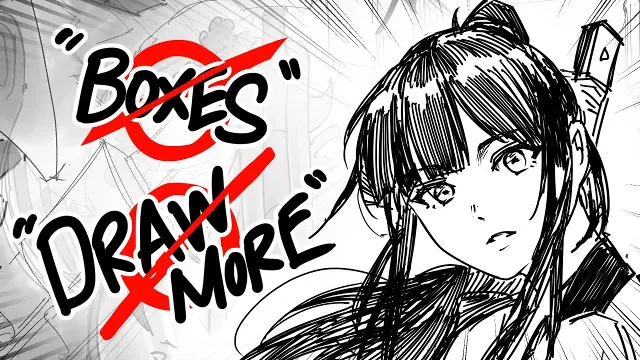
 Practical Advice on How to Actually Improve Your Art
#Drawing Practice
1 ideas
Practical Advice on How to Actually Improve Your Art
Get new #Drawing Practice ideas by email
Every Thursday: the week's best ideas, with the newest from #Drawing Practice.
Related tags
Drawing Practice: Build Skill with Regular Sketching
What drawing practice is
Drawing practice is the steady habit of making marks on paper, screen, or any surface to improve your ability to observe, control line, and express ideas. It is not only about producing finished artwork. It is also about training your eye to see shapes, proportions, light, and movement more clearly, and training your hand to respond with more confidence.
People have practiced drawing for centuries as part of art training, design work, illustration, and personal expression. At its heart, drawing practice is simple: you look, you interpret, and you repeat. Over time, that repetition helps you understand how forms are built and how to simplify what you see.
Common kinds of practice
Read more
Drawing practice can take many forms, and each one develops different skills.
- Gesture drawing: quick sketches that capture pose, motion, and energy
- Observational drawing: careful drawing from real objects, people, or scenes
- Still life studies: arranging simple objects to study shape, shadow, and proportion
- Figure drawing: focusing on the human body, either from life or reference
- Perspective drawing: practicing depth, space, and the way objects change with angle
- Line and shape exercises: repeated marks, contours, circles, boxes, and simple forms
You do not need to choose only one. A balanced routine often combines fast sketches with slower studies.
How to practice effectively
The most useful drawing practice is regular and focused. Short sessions are often better than occasional long ones, especially when you are building confidence. Try to notice one thing at a time: proportions, edges, light, or composition. If you try to fix everything at once, it can feel overwhelming.
A good habit is to start with simple subjects. Cups, shoes, leaves, hands, and everyday objects are excellent practice because they teach you to break complex forms into basic shapes. Drawing the same subject more than once can also help you see progress more clearly.
Helpful habits for beginners
- Use simple tools so you can focus on seeing, not on materials
- Warm up with loose lines and basic shapes
- Draw from life when possible, even for a few minutes
- Compare angles, lengths, and negative space
- Accept imperfect sketches as part of the process
- Keep older drawings so you can look back and notice improvement
Mistakes are useful in drawing practice. They show you what your eye missed and what your hand has not yet learned. Instead of erasing everything, it can help to leave a few errors visible and study them later.
A practical way to begin
If you are new to drawing practice, keep it simple. Choose one small goal for each session, such as drawing ten quick gestures, copying the shape of a plant, or shading one sphere. Rotate between speed, observation, and control. That mix helps you develop both freedom and accuracy.
Most importantly, try to draw often enough that the process feels familiar. Drawing practice works best when it becomes a normal part of your routine, not a special event.
#Drawing Practice: frequently asked questions
How do I start drawing practice if I have never drawn before?
Start small and concrete: pick one everyday object, give yourself a single goal for the session, and draw it rather than trying to make a finished picture. Warm up with loose lines and basic shapes so your hand relaxes before you attempt anything careful. Keeping the session short and repeatable matters far more than drawing something impressive.
What materials do I actually need for drawing practice?
Very little — a pencil, paper, and an eraser are enough, and a screen and stylus work just as well if that is what you already own. Simple tools keep your attention on seeing and on line control instead of on shopping for supplies. Upgrade only when a specific limitation starts getting in the way of what you want to draw.
Which kind of drawing practice should I choose?
You do not have to pick one; a balanced routine usually mixes fast work with slower study. Quick gesture sketches build freedom and a sense of movement, while observational drawing, still life, and perspective work build accuracy and understanding of form. Rotating between speed, observation, and control develops both looseness and precision.
How often should I practise, and for how long?
Regular short sessions beat occasional marathon ones, especially while you are still building confidence. What matters is that drawing becomes a normal part of your routine rather than a special event, so choose a rhythm you can genuinely keep. Even a brief daily sketch of whatever is on your desk counts.
What are the most common mistakes beginners make?
Trying to fix proportion, edges, light, and composition all at once is the usual trap — it feels overwhelming and nothing improves. Drawing only from imagination before your eye is trained, or erasing every imperfect mark, also slows progress. Choose one thing to notice per session and accept messy sketches as part of the process.
How can I tell whether my drawing practice is actually working?
Keep your older drawings and look back at them; progress is easier to see across a stack of sketches than from one day to the next. Drawing the same subject again after some time is another reliable way to notice change. Comparing angles, lengths, and negative space in your own work shows you what your eye has learned.
Videos come from YouTube and posts from Instagram; titles and summaries are our own. All rights belong to their creators.