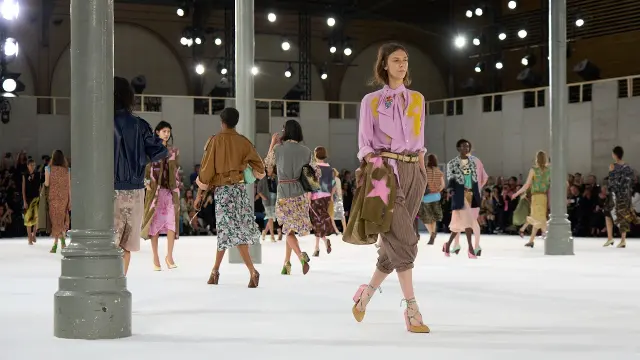
 Dries Van Noten Spring Summer 2027 Womenswear Collection
#Dries Van Noten
1 ideas
Dries Van Noten Spring Summer 2027 Womenswear Collection
Get new #Dries Van Noten ideas by email
Every Thursday: the week's best ideas, with the newest from #Dries Van Noten.
Related tags
Dries Van Noten: Colour, Print and Quiet Extravagance
Dries Van Noten is a Belgian fashion house and the name of the designer who built it. The label comes out of Antwerp, and that matters: it belongs to a generation of Belgian designers who approached clothing with an art-school sensibility rather than a luxury-house one, caring more about fabric, colour and cut than about logos or status. Van Noten grew up inside a family clothing business, and that background shows. His work has always respected the making of clothes — how a seam falls, how a fabric moves — while pushing hard at how they look.
The signature is colour, and plenty of it, but handled with unusual restraint. Deep greens, saffron, rust, lilac and ink blue turn up beside each other in ways that should clash and somehow do not. Prints are layered rather than matched: florals over stripes, geometrics under jacquard, embroidery sitting next to a plain wool. There is a strong botanical streak running through the work, drawn from gardens and from the travel that has long fed the collections — references to India, Japan and North Africa appear as motifs and textiles rather than as costume.
What defines the style
- Contrast as a method: something rich next to something plain, something shiny next to something matte.
- Generous, easy shapes. Very little is tight or body-conscious; trousers are wide, jackets are soft, dresses fall away from the body.
- Sportswear mixed with eveningwear — a track top with a beaded skirt, tailoring worn with something casual underneath.
- Menswear and womenswear that share a vocabulary: the same fabrics, the same prints, the same relaxed attitude.
- Detail used sparingly but memorably: a single embroidered shoulder, a surprising lining, a belt placed where you did not expect it.
Read more
What beginners should know
Start with the idea rather than a specific piece. Look at how many colours one outfit can carry before it falls apart, and notice that the answer is usually "one more than you think." Notice, too, how often the answer to a busy print is a quiet plain fabric next to it, not another print competing with it.
When you handle these clothes, read the labels. Many pieces mix fibres deliberately, and trims and embellishments need gentle care — dry cleaning or hand washing rather than a hot machine cycle. Buy for the fabric first; the print is the pleasure, but the cloth is what makes the garment last.
Practical tips
If you want to try the look yourself, build from one bold piece and keep everything else calm and well cut. Let textures do the work instead of adding more pattern. Wear the good thing on an ordinary day, because these are clothes meant to be lived in rather than saved.
Most of all, treat colour as something personal rather than correct. The house has always stood for dressing with wit and a certain independence, and that is easy to copy: choose the combination that pleases you, then wear it with conviction.
#Dries Van Noten: frequently asked questions
How do I start wearing Dries Van Noten if I'm new to the look?
Begin with a single strong piece — a boldly coloured coat, a printed skirt, a textured jacket — and let the rest of the outfit stay quiet and simply shaped. The house style works when one thing carries the drama and everything around it is calm, well cut and comfortable. Think of it as learning a language: one confident sentence first, then build.
Should I choose a print or a plain piece for my first purchase?
Buy for the fabric before the print, because the cloth is what determines how a garment drapes, wears and lasts, while the pattern is the pleasure on top. If the print attracts you, choose a piece where the fabric itself feels special to the touch. Then let a plain, well-cut companion sit next to it rather than adding another pattern.
How do I combine the colors and patterns without looking messy?
Use contrast as a method and let texture do part of the work — put something rich against something plain, something shiny next to something matte. When a print is busy, the answer is usually a solid fabric beside it, not a second pattern competing with it. Allow one more colour than feels safe, then keep the shapes generous and uncomplicated.
How should I care for Dries Van Noten clothes?
Read the labels first, since many pieces deliberately mix fibres and have trims or embellishments that need gentle handling. Hand washing or professional dry cleaning is usually safer than a hot machine cycle, and embellished or beaded details deserve extra patience. Storing folded, heavier knits and structured pieces carefully also helps preserve shape.
Can these clothes be worn for ordinary days, or only for occasions?
They are made to be lived in, so the happiest way to wear them is on an ordinary day rather than saving them for an event. For a special occasion, put the decorative piece with something casual and easy so the outfit feels relaxed rather than costumed. Sportswear and eveningwear mixing is part of the house's own vocabulary, so a simple top under tailoring is entirely in the spirit.
What is a common mistake people make with this style?
The usual slip is treating colour as a rule to get right instead of something personal, which makes an outfit look cautious and over-planned. Another is piling on pattern and detail when one bold element and good fabric would say more. Choose the combination that genuinely pleases you, then wear it with conviction.
Videos come from YouTube and posts from Instagram; titles and summaries are our own. All rights belong to their creators.