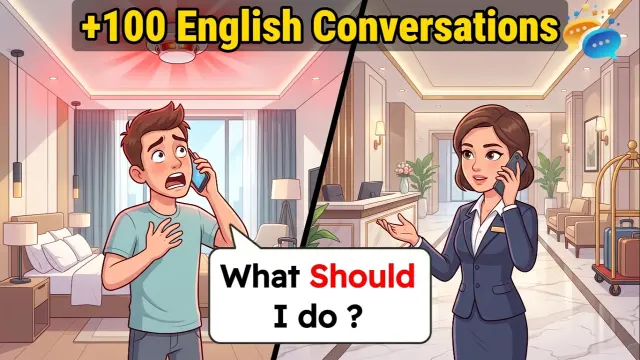
 Simple English Conversations for Daily Life and Beginners
#Easy English
1 ideas
Simple English Conversations for Daily Life and Beginners
Get new #Easy English ideas by email
Every Thursday: the week's best ideas, with the newest from #Easy English.
Related tags
Easy English: A Simple Guide for Learners and Readers
Easy English is English written or spoken in a deliberately simple way so that people who are still learning the language, or who find reading difficult, can follow it comfortably. It is not "bad" or "broken" English. It is careful English: shorter sentences, common words, one idea at a time, and plenty of context so nothing has to be guessed.
The idea appears in several places at once. Teachers of English as a second language have always graded their material, starting learners on simple present tense and everyday vocabulary before introducing anything more complicated. Alongside this, a plain language movement grew up in law, government and public services, arguing that official documents should be understandable to the people who have to use them. A third strand is Easy Read, a format for people with learning disabilities that pairs simple text with pictures. All three share the same belief: if a message matters, the reader deserves to understand it the first time.
What makes a text easy
Easy English follows a few practical rules.
Read more
- Keep sentences short, usually one clause, and avoid joining several ideas with "and" or "because".
- Choose the most common word for a thing: "buy" rather than "purchase", "help" rather than "assist".
- Prefer the active voice, so the reader can see who does what.
- Use the same word for the same thing throughout, instead of varying it for elegance.
- Explain or replace technical terms, abbreviations and jargon.
- Put information in the order the reader needs it, not the order the writer finds it tidy.
- Break text into clear sections, and use lists where lists belong.
Easy English as a learning tool
For someone studying English, easy material is not a crutch but a ladder. Graded readers, simplified news, subtitled programmes and slow, clearly spoken audio all let you meet the language at a level where you can still understand most of it. That is where learning happens: you need to understand enough to guess the rest from context.
A useful habit is to read the same short text twice. The first time, read for the general meaning and let unfamiliar words pass by. The second time, look up only the words that seem to matter. When you speak, aim for clear rather than clever: short sentences, slow pace, and a willingness to repeat or rephrase yourself are far more effective than a large vocabulary used anxiously.
A caution
Easy English is a service to the reader, not an excuse to leave things out. Difficult ideas can almost always be said simply, but if a fact is essential, it still has to be there. Simplifying language should never mean simplifying the truth.
Whether you are writing for a newcomer, a busy reader or a child, the test is the same: read it back and ask whether someone hearing it once, without help, would know what to do next.
#Easy English: frequently asked questions
What exactly is Easy English, and is it the same as bad English?
Easy English is English that has been deliberately simplified so that a learner, a busy reader or someone who finds reading hard can understand it on the first pass. It uses short sentences, everyday words, one idea at a time and enough context that nothing has to be guessed. It is careful, edited English rather than broken English — the point is clarity for the reader, not laziness on the writer's part.
How do I start learning English with easy material?
Begin with texts and audio where you already understand most of what you meet, such as graded readers, simplified news, subtitled programmes or slowly spoken recordings. Read the same short piece more than once: first for overall meaning while letting unknown words go by, then again looking up only the words that seem important. That balance of comfort and a little stretch is where progress actually happens.
What do I need to practise Easy English well?
Mostly patience and material pitched at the right level — nothing costly or complicated. A short text, a notebook for the few words that keep coming up, and a habit of reading aloud slowly will carry you a long way. When you speak, aim for clear rather than clever: short sentences, an unhurried pace, and a readiness to repeat or rephrase yourself.
Which kind of easy material should I choose?
Pick whatever you will genuinely return to, because consistency matters more than the format. If you want everyday conversation, short dialogues and simple audio help most; if you want to read better, graded stories and simplified articles suit you; if you are writing for others, plain-language guides show the rules in action. Choose by the skill you want to build, not by what looks most advanced.
What mistakes do people make when writing or speaking Easy English?
The commonest slip is treating simplification as permission to drop essential facts, which leaves the reader reassured but misinformed. Others are switching to a different word for the same thing partway through, keeping sentences long by chaining ideas together, or hiding who does what by avoiding the active voice. Read your text back and ask whether someone hearing it once, unaided, would know what to do next.
Does Easy English have to look a certain way on the page?
It helps to break the text into clear sections, use lists where a list is genuinely what you have, and put information in the order the reader needs it rather than the order that felt tidy to write. Explanation of jargon and abbreviations belongs in the text itself, not in a footnote the reader may never reach. Layout is part of being understood, not decoration added afterwards.
Videos come from YouTube and posts from Instagram; titles and summaries are our own. All rights belong to their creators.