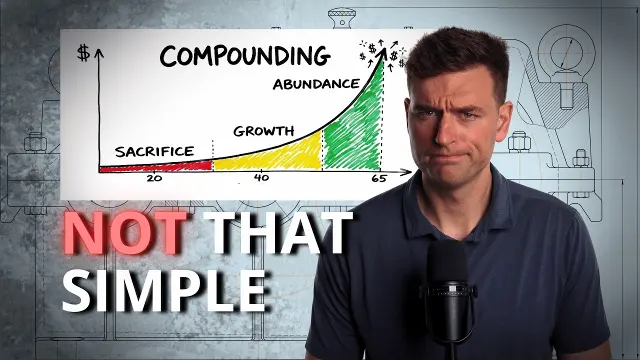
 Debunking the Biggest Myths in Personal Finance
#Economy
1 ideas
Debunking the Biggest Myths in Personal Finance
Get new #Economy ideas by email
Every Thursday: the week's best ideas, with the newest from #Economy.
Related tags
Understanding the Economy
What the economy is
The economy is the way people, businesses, and governments produce, buy, sell, and use goods and services. It includes everything from the food you buy and the job you do to the taxes collected by the state and the goods traded between countries. In simple terms, the economy is the system that helps resources move around a society.
Economies exist because resources are limited, while human needs and wants are not. That means people constantly make choices about what to produce, how to produce it, and who gets it. These choices shape prices, wages, employment, and living standards.
Main parts of the economy
Read more
A helpful way to think about the economy is through three broad areas:
- Households: people who earn money, spend it, save it, and make everyday decisions.
- Businesses: organisations that produce goods or services, hire workers, and invest in equipment or ideas.
- Government: the public sector, which collects taxes, provides services, sets rules, and supports parts of the system.
When these parts work together smoothly, money and goods tend to circulate more easily. When they do not, people may face unemployment, rising prices, or slower growth.
How economies are different
Economies can be organised in different ways. Some rely more heavily on markets, where prices are shaped by supply and demand. Others involve more government direction, especially in areas like healthcare, education, transport, or energy. Most real-world economies are mixed, combining private enterprise with public oversight.
Economies also differ by size and by openness. Some are highly connected to international trade, while others rely more on domestic production and consumption. Local resources, laws, traditions, technology, and geography all influence how an economy develops.
Key ideas to know
A few basic concepts help make sense of economic life:
- Supply and demand: prices often rise when demand is strong and supply is limited, and fall when supply is plentiful relative to demand.
- Inflation: a general rise in prices over time, which can affect how far money goes.
- Employment: the number of people with work, which influences income and confidence.
- Growth: an increase in the production of goods and services over time.
- Productivity: how efficiently labour, time, and resources are used.
These ideas are connected. For example, if businesses grow and hire more people, incomes may rise. If prices rise too quickly, households may feel pressure even if wages increase.
Practical things to understand
If you want to understand the economy better, look at everyday signs around you: job opportunities, rent, food prices, interest rates, and business activity. These often reflect broader economic conditions. It also helps to remember that the economy is not one single thing moving in one direction. Different groups can experience it very differently at the same time.
For a beginner, the most useful habit is to think in systems. Ask what people need, who provides it, what limits exist, and who bears the cost. That simple approach makes economic news and financial decisions much easier to follow.
Videos come from YouTube and posts from Instagram; titles and summaries are our own. All rights belong to their creators.