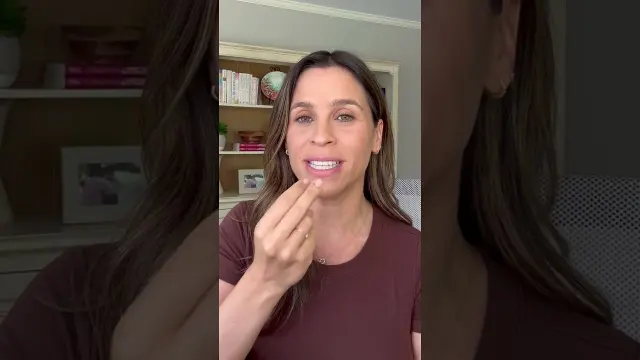
 Fifty Seconds of EFT Tapping to Silence Your Inner Critic
#EFT Tapping
1 ideas
Fifty Seconds of EFT Tapping to Silence Your Inner Critic
Get new #EFT Tapping ideas by email
Every Thursday: the week's best ideas, with the newest from #EFT Tapping.
Related tags
EFT Tapping: A Gentle Guide for Beginners
You have probably seen someone tapping lightly around their eyebrows and collarbone while repeating a sentence out loud and wondered what they were doing. That is EFT — Emotional Freedom Techniques — mostly just called tapping. It is a self-help practice that combines gentle fingertip tapping on a series of points on the face and upper body with spoken words about whatever is on your mind. The aim is simple enough to understand: to name a difficult feeling honestly while giving your body something calm and rhythmic to do at the same time.
Where it comes from
Tapping belongs to a wider family of approaches known as energy psychology. It borrows the map of points from acupressure, the traditional practice of pressing specific places on the body, and mixes it with ideas from talking therapies, especially the habit of describing a problem out loud in specific terms rather than vaguely. What started as a technique used in therapeutic settings spread outward until it became something people do for themselves at home, often after seeing it demonstrated by a friend or a practitioner.
How a round works
Read more
A round is short, usually well under a minute, and follows a predictable shape.
- The setup: you tap the side of your hand while stating the issue and, in the familiar phrasing, accepting yourself despite it — something like "Even though I feel anxious about this, I accept how I feel right now."
- The sequence: you tap gently with two fingers through a set of points — the inner eyebrow, the side of the eye, under the eye, under the nose, the chin, the collarbone, under the arm and the top of the head.
- The reminder phrase: at each point you say a few words that keep the issue in mind, rather than a whole sentence.
- The check-in: you stop, take a breath and notice whether the feeling has shifted, stayed the same or moved.
People usually repeat a few rounds, sometimes adjusting the wording as they go.
Common variations
Some people tap the full sequence and some use a shortened version when time is tight. Many tap on themselves; others work with a practitioner who guides the wording. It gets used for everyday nerves before a meeting, for winding down at night, for physical tension, and for habits like snacking. Others write out a script in advance so they can follow along without thinking.
What beginners should know
Tap lightly. There is no need to press hard, and you should skip any area with broken or sore skin.
You can tap silently, using the points without speaking, which makes it easy to do in a waiting room or on a bus.
Feelings sometimes get stronger before they settle. If a round leaves you more uncomfortable rather than less, stop and do something soothing instead.
Tapping is a coping tool, not a treatment. Research into it is ongoing and the picture is mixed, so treat it as one small habit among many rather than a solution. It is not a substitute for medical or mental health care, and if distress is persistent or heavy, talking to a qualified professional is the better next step.
A few minutes a day is plenty to start.
#EFT Tapping: frequently asked questions
How do I do EFT tapping for the first time?
Start with the setup: tap the side of your hand while saying out loud what is bothering you and that you accept how you feel about it. Then tap gently with your fingertips through the points — inner eyebrow, side of the eye, under the eye, under the nose, chin, collarbone, under the arm, top of the head — repeating a few reminder words at each one. Finish with a breath and a check-in to notice whether the feeling shifted, stayed or moved.
Do I need any equipment or a practitioner to try tapping?
No — your fingertips are the only thing you need, and the whole thing can be done sitting on your own couch. Many people learn it from a friend or a video and then tap solo, while others prefer a practitioner who guides the wording for them. Both routes exist; choosing one is mostly about how much support you want while you get comfortable.
Should I use the full tapping sequence or the shortened version?
The full sequence walks through all the standard points and suits times when you want to slow down and stay with an issue. The shorter version skips some of them, which makes it easier to squeeze in when you are rushed or in public. Many people start with the full round and drift toward the short one as they get familiar.
What mistakes do beginners usually make with tapping?
Tapping too hard is the most common one — light fingertip contact is enough, and sore or broken skin should be avoided altogether. Another is wording the issue so vaguely that nothing really gets named, when specific plain language works better. Beginners also expect a dramatic shift after a single round instead of treating it as a small repeated habit.
What should I do if tapping leaves me feeling worse instead of calmer?
Stop the round and do something soothing instead — the aim is not to push through a feeling that is escalating. You can tap silently on the points without speaking if words are making it heavier, or simply set it aside for another time. Tapping is a coping tool rather than a treatment, so if distress keeps returning or feels heavy, speaking with a qualified professional is the better next step.
When can I use tapping during a normal day?
It fits into the small gaps — before a meeting that has your nerves up, on the bus, in a waiting room, or at night when you want to wind down. Because you can tap without saying anything out loud, it is easy to do quietly around other people. A few minutes now and then is plenty to begin with.
Videos come from YouTube and posts from Instagram; titles and summaries are our own. All rights belong to their creators.