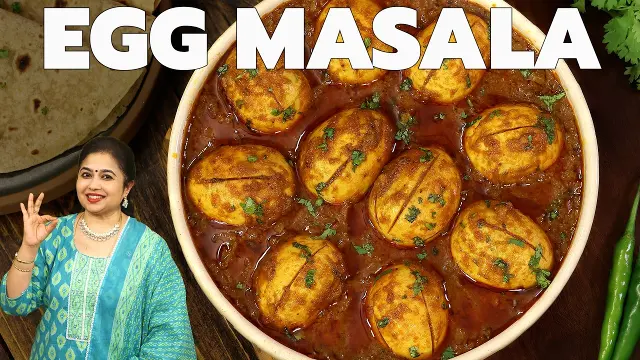
 South Indian Style Egg Masala Curry for Roti or Rice
#Egg Masala
1 ideas
South Indian Style Egg Masala Curry for Roti or Rice
Get new #Egg Masala ideas by email
Every Thursday: the week's best ideas, with the newest from #Egg Masala.
Related tags
Egg Masala: A Guide to the Spiced Indian Egg Curry
Egg masala is one of those dishes that quietly holds a kitchen together. At its heart it is simple: hard-boiled eggs, halved or left whole, simmered in a thick gravy built from onion, tomato, ginger and garlic, and a handful of warm spices. It is Indian home cooking at its most practical — quick enough for a weeknight, generous enough for guests, and made almost entirely from things you already have in the cupboard.
The dish belongs to the broad family of Indian curries where a masala base is cooked down until the oil separates and the raw edge of the spices disappears. That slow-frying stage is the whole secret. Onions go in first and take the longest, turning deep golden before the ginger and garlic follow, then the tomatoes, which need time to collapse and lose their sharpness. Rush it and the gravy tastes flat; give it ten patient minutes and it turns sweet and rounded without your doing anything else.
From there the variations are endless, and most of them come from the region rather than from any rule. A South Indian version often leans on curry leaves, mustard seeds and coconut, sometimes ground into the gravy for a softer, richer body, sometimes left as a tempering spooned over the top at the end. Northern and dhaba-style versions tend to be thicker and more robust, with yoghurt or cream stirred in and a heavier hand on the garam masala. Some cooks add a pinch of sugar to balance the tomato, others a splash of tamarind for sourness, others nothing at all.
Eggs behave differently from meat or vegetables in a curry, and it is worth knowing how. They do not absorb much liquid, so the flavour has to come from the gravy clinging to them. Score the boiled eggs lightly with a few shallow cuts before they go in, or fry them briefly in a little oil until the outsides turn golden and blistered — the blisters hold sauce beautifully and give the dish a nutty note. Add them near the end and let them warm through rather than boil, or the whites turn rubbery and the yolks go chalky at the edges.
Read more
A few things help if you are starting out. Salt the water when you boil the eggs and cool them straight away in cold water so they peel cleanly. Use more onion than you think you need; it is the body of the dish. Keep the heat moderate while the masala fries, and stir often so nothing catches. And taste for salt at the end, once the gravy has reduced, rather than halfway through.
Serve egg masala with rice, roti, paratha or plain bread to mop up the sauce, with something sharp alongside — sliced onion, a wedge of lemon, a little pickle. It keeps well and arguably improves by the next day, which is its own quiet recommendation.
#Egg Masala: frequently asked questions
How do I start making egg masala if I have never cooked an Indian curry before?
Start with the gravy, not the eggs. Cook sliced onion patiently in oil until it turns deep golden, then add ginger and garlic, then tomato, and keep frying until the mixture darkens and the oil begins to separate at the edges. That slow stage is what gives the dish its flavour, so give it your attention before the eggs ever go in.
What do I need on hand to make egg masala?
Eggs, onion, tomato, ginger and garlic form the base, along with a few warm spices you likely already keep in the cupboard. Beyond that, oil and salt are the only essentials. Curry leaves, mustard seeds, coconut, yoghurt or cream are optional extras that shift the dish in different directions depending on what you have.
Should I choose a South Indian version or a northern dhaba-style one?
It depends on the texture and flavour you are after rather than on any rule. A South Indian approach brings in curry leaves, mustard seeds and often coconut for a softer, rounder gravy, while northern styles are thicker and richer, with yoghurt or cream and a stronger hand with garam masala. If you are unsure, pick the one whose ingredients are already in your kitchen.
How do I keep the boiled eggs from turning rubbery in the gravy?
Treat the eggs as a finishing ingredient rather than something to simmer for a long time. Score them with a few shallow cuts or fry them briefly until the outsides blister, then add them near the end and let them simply warm through in the sauce. The blistered surface holds the gravy well and adds a pleasant nutty note without overcooking the whites.
Why does my egg masala taste flat?
The usual culprit is a masala that was rushed, so the raw edge of the spices never disappeared and the tomato never lost its sharpness. Keep the heat moderate, stir often so nothing catches, and let the base cook down properly before adding liquid. Taste for salt at the end, once the gravy has reduced, since the seasoning concentrates as it thickens.
Can I make egg masala ahead of time, and what should I serve with it?
It keeps well and often tastes even better the next day, once the eggs and gravy have had time together, so it works nicely as a make-ahead dish. Reheat it gently rather than boiling hard, so the eggs stay tender. Serve it with rice, roti, paratha or plain bread, plus something sharp on the side such as sliced onion, lemon or pickle.
Videos come from YouTube and posts from Instagram; titles and summaries are our own. All rights belong to their creators.