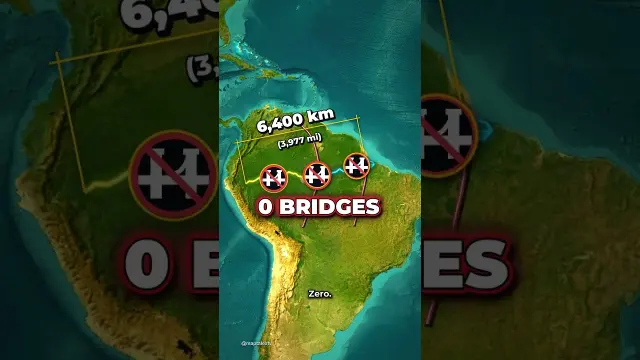
 Why No Bridges Cross The Amazon River
#Engineering
6 ideas
Why No Bridges Cross The Amazon River
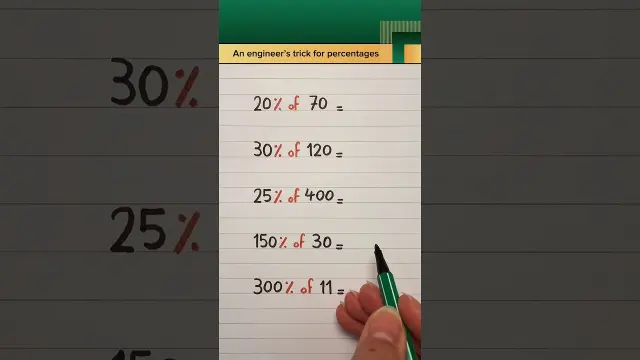 Ingenious Engineer Trick for Calculating Percentages
 The Mathematical Principles Behind Lindy Lee's Ouroboros
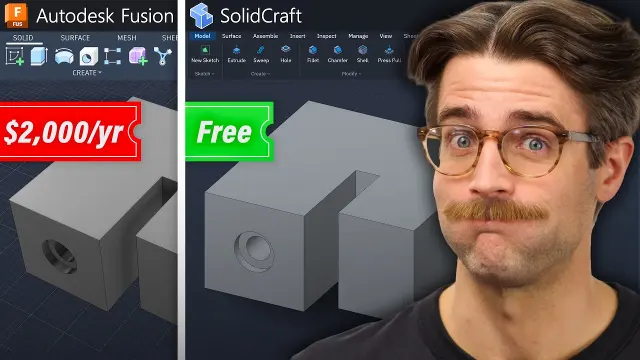 Trying Out AI Cloned Engineering Software Tools
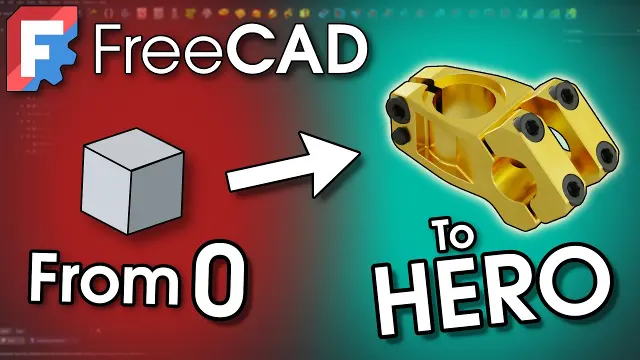 FreeCAD Ultimate Beginner Tutorial to Model a Bike Stem
 The Most Unbelievable Megaprojects and Places
Get new #Engineering ideas by email
Every Thursday: the week's best ideas, with the newest from #Engineering.
Related tags
Engineering: The Art of Building Solutions
Engineering is the practical use of science, mathematics, and creativity to solve real-world problems. Engineers design bridges, buildings, machines, software, medical devices, transport systems, and many other things that shape everyday life. At its heart, engineering is about making ideas work safely, efficiently, and reliably.
What engineering is
Engineering begins with a need: a structure must stand, a machine must move, a system must communicate, or a process must become faster or safer. Engineers study the problem, set requirements, test possible solutions, and refine the design until it meets the goal. This can involve drawing plans, building models, running calculations, testing materials, and checking how a design performs under different conditions.
Engineering has long roots in human history, from ancient water systems and roads to later developments in machinery, buildings, electricity, and digital technology. Today it covers both physical and virtual systems, and many projects combine several branches at once.
Read more
Main branches
- Civil engineering focuses on infrastructure such as roads, bridges, tunnels, dams, and water systems.
- Mechanical engineering deals with moving parts, machines, tools, and energy transfer.
- Electrical engineering works with power, circuits, signals, and electronic systems.
- Structural engineering concentrates on how buildings and other structures carry loads and remain stable.
- Chemical engineering turns raw materials into useful products through controlled processes.
- Software and computer engineering design programs, networks, and digital systems.
- Industrial engineering improves workflows, production, and efficiency in organizations and factories.
These fields often overlap, and many projects require teamwork across several specialisms.
How engineers work
A typical engineering process starts with defining the problem clearly. Then comes research, brainstorming, sketching, modelling, and testing. Engineers compare alternatives, consider cost and safety, and think about how something will be built, used, maintained, and repaired. Good engineering is rarely about one perfect answer. It is usually about balancing constraints and choosing the most practical solution.
Testing is especially important. A design that looks good on paper may fail in use, so engineers use prototypes, simulations, and experiments to find weak points before a final version is built. Documentation also matters, because other people may need to manufacture, inspect, or maintain the result.
What beginners should know
If you are new to engineering, start by learning the basics of math, physics, and problem-solving. Even simple ideas such as force, motion, pressure, electricity, and measurement appear everywhere. It also helps to practice observing how everyday objects are put together and asking why they were designed that way.
A few useful habits:
- Break a problem into smaller parts.
- Sketch ideas before trying to perfect them.
- Measure carefully and check your assumptions.
- Learn from failure instead of treating it as the end of the process.
- Think about safety, durability, and ease of use from the beginning.
Why engineering matters
Engineering turns ideas into useful things that people depend on every day. It supports shelter, transport, communication, health, energy, and many other parts of modern life. Whether you are designing something large or small, engineering is a thoughtful mix of logic, creativity, and practical judgment.
Videos come from YouTube and posts from Instagram; titles and summaries are our own. All rights belong to their creators.