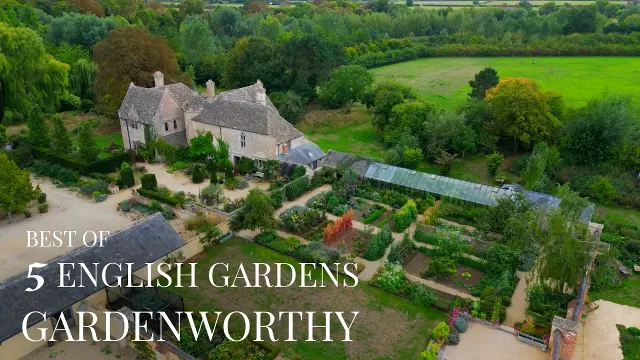
 Five Breathtaking English Cottage and Country Garden Tours
#English Garden
1 ideas
Five Breathtaking English Cottage and Country Garden Tours
Get new #English Garden ideas by email
Every Thursday: the week's best ideas, with the newest from #English Garden.
Related tags
English Garden: A Guide to Its Styles and Spirit
An English garden is less a recipe than an attitude. It is planting that looks as though it arrived by itself, though someone has clearly been thinking about it for years. Roses flop over a path, foxgloves seed where they please, vegetables grow beside flowers, and the whole thing is held together by hedges, walls and a bench in the right place. The pleasure comes from abundance with a little order underneath, not the other way round.
Where the idea comes from
Two traditions meet here. One is the landscape park of the eighteenth century, where designers swept away rigid symmetry in favour of rolling grass, clumps of trees, winding water and views borrowed from the countryside beyond. The other is the cottage garden: a small plot by a door, crammed with flowers, herbs and vegetables because there was no room for anything else. Most gardens people call English sit somewhere between those two poles, part designed view and part happy accident.
The main styles
Read more
- Cottage garden: dense, informal and generous, mixing perennials, annuals, bulbs, herbs and edibles in the same bed.
- Landscape garden: open lawns, specimen trees, water, and long sightlines that make the plot feel larger than it is.
- Formal garden: clipped hedging, symmetry, gravel paths and parterres, providing the bones that the looser planting leans against.
- Woodland and shade garden: ferns, hellebores, bulbs and shrubs for the ground beneath trees.
- Naturalistic perennial planting: grasses and perennials in repeated drifts, close in spirit to a meadow.
What gives it the character
The essentials are layering and repetition. A border usually holds shrubs at the back, perennials through the middle and low plants or bulbs at the front, with the same few species repeated in groups rather than dotted about singly. Structure carries the garden through winter: evergreens, hedges, walls, a good tree. Scent and cutting matter too, which is why so many English plantings include flowers meant to be brought indoors. And a path that curves out of sight is almost obligatory, because the garden should feel like somewhere to wander rather than a room to inspect.
Getting started
Begin with the bones: where you walk, where you sit, where the hedge or fence goes, where the tree will cast shade in ten years. Improve the soil with compost before you fall in love with anything in a pot. Then match plants to the spot, because the right plant in the right place saves more effort than any amount of feeding. Plant in layers, leave gaps for self-seeders, and mulch and water through the first year while roots establish.
Above all, treat the style as portable. An English garden is a way of composing plants, not a promise of soft rain; in a hot, dry or windy place the same ideas work with drought-tolerant plants, thicker mulches and a little more shade. Aim for something in flower in every month, cut back and divide as you go, and let a few plants misbehave. The slight untidiness is not a failure of the design. It is the design.
#English Garden: frequently asked questions
How do I start an English garden from scratch?
Start with the bones of the garden rather than the plants: decide where you will walk, where you will sit, where a hedge or fence will run, and where a tree will eventually cast shade. Improve the soil with compost before you buy anything in a pot, then choose plants that suit the spot you actually have. Plant in layers, leave gaps for self-seeders, and keep watering and mulching through the first year while roots settle.
What does an English garden actually need to look right?
The character comes from layering and repetition more than from any particular plant — shrubs at the back of a border, perennials through the middle, low plants or bulbs at the front, with the same few species repeated in groups instead of dotted about singly. Structure carries it through the quiet months, so evergreens, clipped hedges, a wall and at least one good tree matter as much as the flowers. A path that curves out of sight and a bench in the right place do a surprising amount of the work.
Which style of English garden should I choose?
It depends on the mood you want and the space you have: a cottage garden is dense and generous, mixing flowers, herbs and vegetables in the same bed, while a landscape garden uses open lawn, specimen trees and long sightlines to make a plot feel larger. A formal garden supplies clipped hedging and symmetry as a frame, woodland planting suits ground beneath trees, and naturalistic drifts of grasses and perennials sit closest to a meadow. Many gardens people call English are a blend of two or three of these rather than one pure style.
How much care does an English garden need?
Less than its relaxed look suggests, provided you put the right plant in the right place — matching plants to your soil and light saves more effort than any amount of feeding. After that it is a rhythm of cutting back, dividing crowded clumps, mulching and watering young plants until they are established. Aim for something in flower in every month, and accept a certain amount of self-seeding and flopping as part of the style rather than a failure.
Can I create an English garden in a hot, dry or windy climate?
Yes — the style is a way of composing plants rather than a promise of soft rain, so the same ideas work with drought-tolerant planting, thicker mulches and a little more shade. Keep the layering, the repetition in groups and the structural evergreens, but choose species that genuinely enjoy your conditions. A little shelter from wind and a bench placed out of the worst of the sun will do more for the mood than trying to force plants that struggle.
What are the common mistakes when planting an English-style border?
The usual ones are buying plants before improving the soil, dotting single specimens about instead of repeating groups, and ignoring how big a shrub or tree will eventually become. Another is forgetting winter structure, which leaves the garden empty for months and makes the summer planting look accidental rather than composed. Finally, don't tidy too hard — a few plants allowed to misbehave and seed where they please is what separates this style from a municipal bedding scheme.
Videos come from YouTube and posts from Instagram; titles and summaries are our own. All rights belong to their creators.