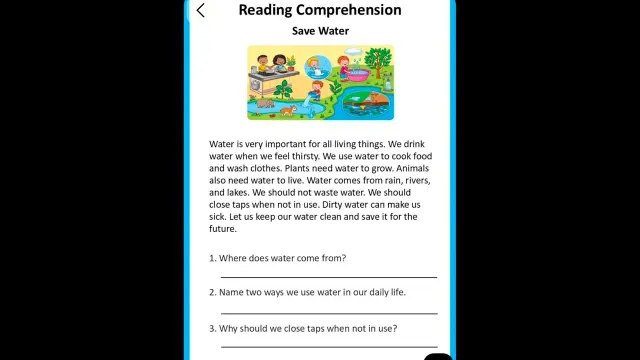
 Comprehension Worksheet Practice for Kids and Beginners
#English Practice
4 ideas
Comprehension Worksheet Practice for Kids and Beginners
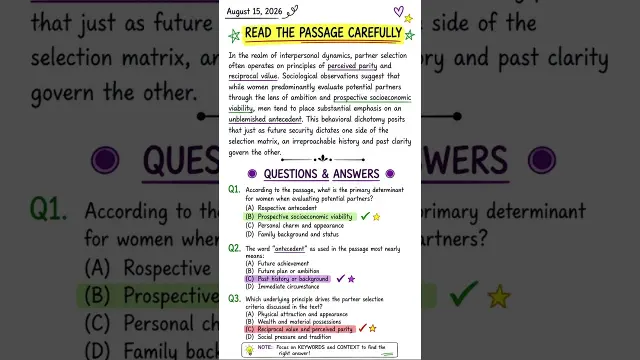 Reading Comprehension Practice: Three Solved MCQs on a Passage
 Band 6.5 IELTS Speaking Simulation With Fluency Feedback
 IELTS Speaking Mock Test at Band 8.0 With Feedback
Get new #English Practice ideas by email
Every Thursday: the week's best ideas, with the newest from #English Practice.
Related tags
How to Practise English Every Day, One Step at a Time
Learning English is less like climbing a single staircase and more like tending a garden: a little attention, often, does more than one heroic effort every few months. Practice means the regular, deliberate work of using the language — not just studying it. You can read every rule about the past tense and still fumble it in conversation, because knowing about a language and being able to use it are two different skills that grow in different ways.
The four doors
English comes in through four doors, and most learners quietly neglect one or two of them.
Speaking is the one people worry about most, and the one that improves fastest with use. You do not need a partner every time. Reading a short paragraph aloud, describing your morning to yourself, or repeating a sentence after a recording you hear — often called shadowing — trains your mouth and ear at the same time. Record yourself occasionally and listen back; it is uncomfortable at first and revealing afterwards.
Read more
Listening builds the ear that makes everything else easier. Short recordings you can replay are more useful than long ones you only half follow. Listen once for the general idea, then again for details, and only then look at a transcript.
Reading gives you vocabulary in context, where words arrive with their neighbours. Choose material slightly above your comfortable level — a few unknown words per paragraph, not a few per line.
Writing slows everything down, which is the point. A short daily entry about what you did, thought or noticed forces you to reach for words you would otherwise avoid.
Build a routine you can keep
Ten focused minutes daily beats two hours on Sunday. Attach practice to something you already do — the walk to work, the coffee you make in the morning — so it stops being a decision.
Keep a small notebook for words you meet more than once. A word you have seen three times in real context will stick far better than a list you memorised once.
Mistakes are information, not verdicts. The learner who speaks imperfectly and keeps going will pass the silent perfectionist within a year. If you can, find one person to talk with regularly, even briefly, and agree not to correct each other mid-sentence — save corrections for afterwards.
A word for beginners
Start with what you can already say. Introduce yourself, describe your family, explain what you did yesterday. Fluency grows outward from familiar ground, not from advanced grammar you cannot yet use in speech. Add a little difficulty when the old material starts to feel easy, and be patient with the plateaus — they are where quiet progress is being stored.
#English Practice: frequently asked questions
How should I start practicing English if I am a beginner?
Start with sentences you already know how to say, such as introducing yourself, talking about your family, or describing what you did yesterday. It helps to begin from familiar topics and slowly add more challenge as those feel easier.
What do I need for effective English practice at home?
You only need a small, repeatable routine and something to notice your progress, like a notebook or a recording app. Short daily practice works better than trying to do everything at once, especially if you attach it to an existing habit.
Which kind of English practice should I choose first: speaking, listening, reading, or writing?
The best choice is usually the skill you need most, but speaking and listening often give quick, practical progress because they support real conversation. Reading and writing are also useful because they build vocabulary, help you notice grammar in context, and make you slow down enough to learn from mistakes.
How can I improve my English speaking if I do not have a partner?
You can practice by reading a short text aloud, repeating sentences from audio, or describing your day out loud to yourself. Recording your voice and listening back is especially useful because it shows you what sounds clear and what needs work.
What are common mistakes people make when practicing English?
A common mistake is focusing only on studying rules instead of actually using the language. Another is waiting for perfect accuracy before speaking; it is usually better to keep going, notice errors, and treat them as part of learning.
Videos come from YouTube and posts from Instagram; titles and summaries are our own. All rights belong to their creators.