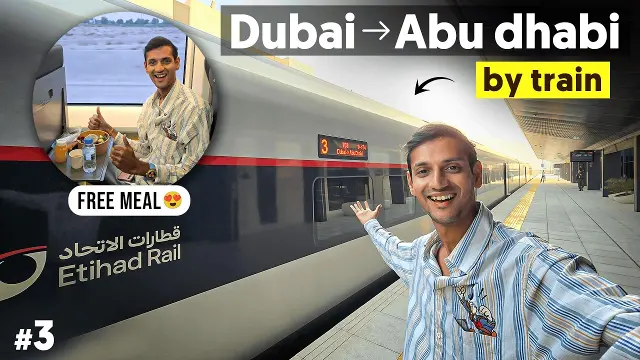
 Riding the UAE's First Passenger Train from Dubai to Abu Dhabi
#Etihad Rail
1 ideas
Riding the UAE's First Passenger Train from Dubai to Abu Dhabi
Get new #Etihad Rail ideas by email
Every Thursday: the week's best ideas, with the newest from #Etihad Rail.
Related tags
Etihad Rail: The UAE's National Railway Explained
Etihad Rail is the national railway network of the United Arab Emirates. The name comes from the Arabic word for union, and it says something about the purpose behind the project: a single set of tracks tying together the seven emirates, which for most of their modern history have been linked mainly by road.
A network built in stages
The railway began as a freight line. Its first task was to move bulk goods — construction materials, containers, industrial and petrochemical loads — across long desert distances by train rather than by lorry, easing pressure on the country's highways. From that backbone the network has been extended outward, reaching the main cities and industrial zones, with a line running toward the Saudi border as part of a wider ambition for rail links across the Gulf.
Passenger services on the same corridors
Read more
Carrying people is the newer chapter, and the one most travellers are waiting for. Passenger trains are planned to run along the same routes laid for freight, joining city to city through terrain that is otherwise crossed by car. For residents this would offer an alternative to driving; for visitors, a different way of seeing the country, one that shows you the space between the cities rather than the road in front of you.
Because the passenger side of the network is still being brought into service, treat what you read or hear about it as the plan rather than the timetable. Which routes are open, how often trains run and what facilities each station offers are things to confirm with the operator before you build a trip around them.
What a journey is expected to be like
The railway has been designed around long-distance comfort: air-conditioned carriages, reserved seating, space for luggage and a calm, unhurried atmosphere on board. The windows do much of the work — pale dunes and gravel plains, scrub and camel fences, the red dunes of the interior, and on some routes the grey ridges of the Hajar mountains. Stations are built to be modern and spacious, with signage in Arabic and English.
Practical tips for planning a first trip
- Check the operator's own information first for routes, departure points and whether services are running on the line you want.
- Book in advance once tickets are on sale, particularly around weekends and public holidays.
- Allow generous time at the station on the day; security checks and finding your way around an unfamiliar station both take longer than you expect.
- Carry photo identification, as you would for any intercity journey.
- Plan how you will continue from your arrival station — stations are not always in the middle of town, and arranging a taxi or onward transport in advance saves trouble.
- Confirm the luggage allowance with the operator and label your bags.
- Bring water and something to eat, and in the hottest months think about the walk to and from the station.
- Etiquette on any long-distance train is simple: quiet phones, headphones for audio, and keep the seats beside you clear for other passengers.
A young network, still growing
Etihad Rail is being built out over time, so routes, timetables and station facilities change as new sections open. Before you travel, confirm the current schedule and service details with the operator, and treat any journey time you hear secondhand as a rough guide rather than a promise.
#Etihad Rail: frequently asked questions
How do I actually plan a first trip on Etihad Rail?
Start with the operator's own information rather than travel blogs or secondhand reports, since routes and service details are still being added as the network grows. Confirm that the line you want is running, where it departs from, and whether the station you plan to use is the one serving your destination. Build the rest of your day around that confirmed information, not around a journey time you heard from someone else.
What should I bring and have ready before boarding?
Carry photo identification, as you would for any intercity journey, and bring water and something to eat for the ride. Confirm the luggage allowance with the operator beforehand and label your bags so they are easy to identify. If you are travelling in the hottest months, think about the walk to and from the station and dress for that stretch of the day.
How do I choose between the train and driving?
The train is designed around long-distance comfort, with air-conditioned carriages, reserved seating and space for luggage, so it suits people who would rather not drive the desert stretches between cities. Driving still makes sense if you need a car at the far end, since stations are not always in the middle of town. Either way, plan how you will continue from your arrival point and arrange onward transport in advance.
Are passenger services running yet, and can I trust what I read about timetables?
The passenger side of the network is still being brought into service, so treat anything you hear about routes and frequency as a plan rather than a fixed timetable. Which lines are open, how often trains run and what each station offers are all things to confirm with the operator directly. Because the network is being built out in stages, even recently published details can change as new sections open.
What is the etiquette on board, and what are common mistakes first-timers make?
Etiquette is the same as on any long-distance train: keep phone calls quiet, use headphones for audio, and leave the seats beside you free for other passengers. The most common mistakes are cutting it fine at the station, arriving without confirmed onward transport, and assuming the station sits in the centre of town. Give yourself generous time for security checks and for finding your way around an unfamiliar station.
What will I actually see out of the window?
The route shows you the country between the cities rather than the road in front of you, with pale dunes and gravel plains, scrub and camel fences, and the red dunes of the interior. On some stretches the grey ridges of the Hajar mountains come into view. It is a different way of seeing the place for visitors, and a calmer alternative to driving for residents.
Videos come from YouTube and posts from Instagram; titles and summaries are our own. All rights belong to their creators.