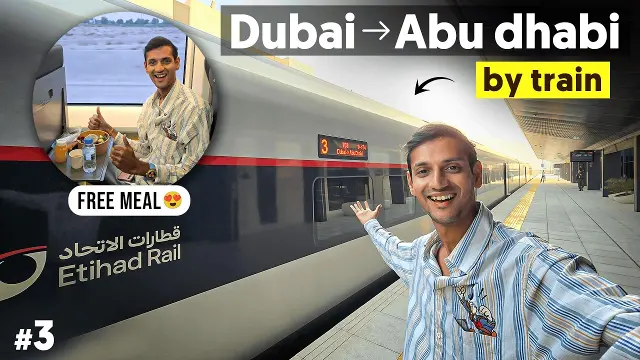
 Riding the UAE's First Passenger Train from Dubai to Abu Dhabi
#United Arab Emirates
1 ideas
Riding the UAE's First Passenger Train from Dubai to Abu Dhabi
Get new #United Arab Emirates ideas by email
Every Thursday: the week's best ideas, with the newest from #United Arab Emirates.
Related tags
United Arab Emirates: A Guide to Culture, Land and Life
The United Arab Emirates is a federation of seven emirates on the Arabian Peninsula, sitting where the desert meets the Gulf. Abu Dhabi is the capital and the largest emirate by area; Dubai is the most populous and the best known abroad; Sharjah, Ajman, Umm Al Quwain, Ras Al Khaimah and Fujairah complete the union. Fujairah is the odd one out geographically, facing the Indian Ocean rather than the Gulf, with a greener, more mountainous hinterland.
The country formed when the seven emirates joined together as a single state, and each one keeps its own ruler and its own character while sharing a federal government, currency and armed forces. This dual structure explains a lot about how the place feels: a national identity on top, strong local identities underneath.
Land and climate
Most of the country is desert — sand dunes, gravel plains and salt flats — with the Hajar Mountains rising in the east and a long coastline of beaches, lagoons and mangrove creeks. Summers are extremely hot and humid; winters are mild and pleasant, which is when most outdoor life happens. Rain is rare and falls in short bursts. The desert is not empty: oryx, gazelles and camels live there, and the oasis towns of Al Ain are known for their date palms and traditional irrigation channels.
Read more
People and traditions
Emirati society is built on hospitality. Offering coffee and dates to a guest is a gesture with real weight behind it, and the coffee is poured and served in a particular way — small cups, held in the right hand. Traditional dress reflects the climate and modesty: the white kandura for men, the black abaya for women, often worn with considerable personal style. Islam shapes daily rhythm, and during Ramadan the pace of the day changes, with fasting observed from dawn to sunset and public life shifting toward the evening.
The population is overwhelmingly made up of expatriates from South Asia, the wider Arab world, Africa, Europe and beyond, so the everyday culture of the cities is more cosmopolitan than the traditional image suggests.
Architecture and the modern cities
Older settlements were built from coral stone, gypsum and palm fronds, with wind towers that caught the breeze for cooling. Modern cities went a different way, with glass towers, vast malls and engineered islands. The most striking heritage survives in restored districts, forts and museums, and in the falconry, pearl-diving and boat-building traditions that predate oil.
Practical things to know
Dress modestly in public buildings and religious sites, and more conservatively outside the big cities. Public behaviour is regulated more than in many Western countries — alcohol is served in licensed places, and public drunkenness or disrespectful conduct carries consequences. Fridays are the main day of prayer, with a different weekend rhythm from much of the world. Summers demand serious heat precautions: drink water, avoid midday sun, plan indoor activities.
English is widely spoken, taxis and metro systems are easy to use, and the country is generally very safe. The main adjustment for a visitor is cultural rather than practical: learn a few greetings, accept the coffee, and let the place set the pace.
#United Arab Emirates: frequently asked questions
What should I know before a first visit to the United Arab Emirates?
Expect a country that mixes a modern, cosmopolitan city life with a strongly traditional layer underneath, so a little preparation goes a long way. Plan heavy outdoor sightseeing for the cooler months and keep the hotter season for indoor activities like museums and markets. English is widely spoken and getting around is straightforward, so the real adjustment is cultural rather than practical.
How should I dress and behave in public?
Choose loose, modest clothing that covers shoulders and knees, and dress more conservatively away from the big cities and inside religious sites and public buildings. Public behaviour is regulated more than many visitors are used to, so keep displays of affection low-key and reserve drinking for licensed venues. Learning a few greetings and accepting offered coffee politely will get you a long way.
Which part of the country should I choose for my trip?
The better-known cities suit travellers who want towers, malls and engineered waterfronts, while the smaller emirates offer forts, heritage districts and a slower pace. One emirate faces the ocean rather than the Gulf and has a greener, mountainous hinterland, which makes a good contrast to the desert. Many people combine both, using a city as a base and taking day trips out.
How do I handle the heat and the desert climate?
Drink water constantly, avoid the midday sun and shift outdoor plans to early morning or evening. Light layers, a hat and sun protection make a real difference, and indoor attractions are a sensible fallback on the hottest days. Rain is rare and comes in short bursts, so it rarely disrupts a trip.
What are the common mistakes visitors make in the UAE?
The most frequent slip is treating it as a beach resort and ignoring the local culture, from dress to behaviour in public. Another is underestimating how much the weekly prayer day and the fasting month reshape opening hours and daily rhythm. Finally, many people pack for an idealised climate rather than the real one, so bring clothing that works for extreme heat and modest settings alike.
What traditions are worth looking out for during a visit?
Hospitality is central to Emirati life, and being offered coffee and dates is a genuine gesture rather than a formality. Look for the heritage side of the country too: restored coral-stone districts, wind towers, forts, and the falconry, pearl-diving and boat-building crafts that long predate the modern skyline. Souks and oasis towns with date palms and old irrigation channels are a good place to see this living history.
Videos come from YouTube and posts from Instagram; titles and summaries are our own. All rights belong to their creators.