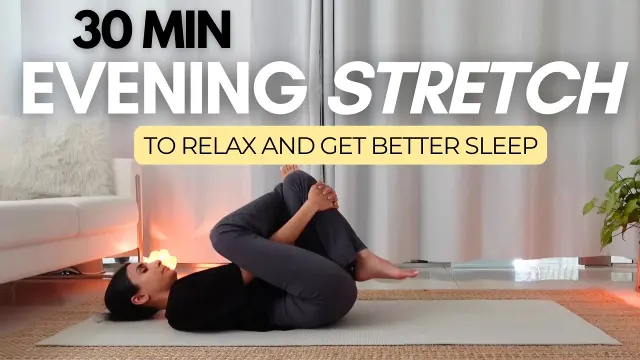
 30 Minute Evening Yoga to Melt Away Tension
#Evening Yoga
1 ideas
30 Minute Evening Yoga to Melt Away Tension
Get new #Evening Yoga ideas by email
Every Thursday: the week's best ideas, with the newest from #Evening Yoga.
Related tags
Evening Yoga for Calm and Restful Sleep
Evening yoga is a gentle practice designed to help you transition from the busyness of the day into a quieter, more restful state. It usually focuses on slow movement, steady breathing, and simple stretches that ease tension in the body. For many people, it becomes a calming ritual before bed, helping create a clear boundary between daytime activity and evening rest.
Yoga itself comes from ancient traditions in India, where it developed as a broad discipline involving movement, breath, meditation, and self-awareness. In modern use, evening yoga is less about effort and more about softness. It is often adapted to suit the needs of the moment: releasing tight shoulders, loosening the hips, calming the nervous system, or simply giving yourself a few unhurried minutes.
What evening yoga is for
The main purpose of evening yoga is relaxation. After a long day, the body may feel stiff from sitting, standing, lifting, or hurrying between tasks. Gentle yoga can help you become more aware of those physical patterns and respond to them with slow, mindful movement. It can also support a peaceful mental shift by encouraging you to breathe more deeply and move more deliberately.
Read more
People often use evening yoga to:
- unwind after work or family responsibilities
- ease general tension in the neck, back, and hips
- quiet a busy mind
- create a bedtime routine
- prepare for rest or meditation
Common styles and approaches
Evening yoga is usually based on slower styles rather than energizing or challenging ones. You might see elements of:
- restorative yoga, which uses long-held, supported poses
- gentle hatha yoga, with simple postures and unhurried pacing
- yin yoga, which emphasizes stillness and deeper stretching
- yoga nidra or guided relaxation, which focuses more on rest than movement
You do not need to follow one strict method. A good evening practice is one that feels calming, comfortable, and easy to sustain.
Useful poses and sequences
A short evening practice often includes movements that are easy to do on a mat or even beside the bed. Good options include child’s pose, seated forward folds, gentle spinal twists, legs-up-the-wall, and soft cat-cow movements. These poses can help lengthen areas that often feel compressed during the day.
For beginners, it helps to:
- move slowly and avoid forcing any stretch
- keep the breath smooth and natural
- use pillows, blankets, or cushions for support
- stop if a position feels sharp or uncomfortable
- keep the practice short if you are tired
Practical tips for a calming practice
Try to keep your evening yoga simple. Dim lighting, quiet surroundings, and comfortable clothing can make it easier to settle in. It also helps to avoid turning the practice into a workout. The goal is not to achieve perfect alignment or flexibility, but to create a sense of ease.
If you practice close to bedtime, choose gentle movements rather than intense sequences. Give yourself a few minutes at the end to lie still, breathe, and notice how your body feels. Over time, this kind of routine can become a reassuring signal that the day is coming to a close.
#Evening Yoga: frequently asked questions
How do I start an evening yoga practice if I have never done yoga before?
Begin with a very short, simple session built from comfortable poses you can hold without strain, and let the breath stay smooth the whole time. Choose a quiet moment when you are not rushed, and repeat the same small routine for a while so it starts to feel familiar. There is no need to learn a full sequence first — a few unhurried stretches beside the bed is a real practice.
What do I actually need for evening yoga at home?
Comfortable clothing and a little floor space are enough, with a mat only if you find the surface too hard. Pillows, blankets and cushions do most of the work in a slow practice, since they let you settle into a pose instead of holding yourself up. Dim light and a quiet room matter more than any equipment.
Which style of yoga suits the evening best?
Slower approaches tend to fit — restorative poses held with support, gentle hatha pacing, stillness-focused yin, or guided relaxation that involves little movement at all. What they share is low effort and a soft, steady rhythm rather than heat or challenge. Pick whichever one leaves you feeling calmer than when you started, and feel free to mix elements instead of committing to a single method.
What mistakes should I avoid when practicing yoga before bed?
The most common slip is turning the session into a workout, which leaves you alert instead of settled. Forcing a stretch or pushing toward a perfect shape also works against the point, and sharp or pinching sensations are a signal to come out of a pose rather than breathe through it. Skipping the quiet moment at the end, where you simply lie still and notice your body, gives up the most restful part.
How can I make evening yoga a routine I actually keep?
Anchor it to something you already do at that hour, such as changing clothes or brushing your teeth, so the practice rides along with an existing habit. Keep it short enough that a tired evening does not become a reason to skip it, and use the same calming setting each time. Repeated this way, the routine itself begins to signal that the day is winding down.
Videos come from YouTube and posts from Instagram; titles and summaries are our own. All rights belong to their creators.