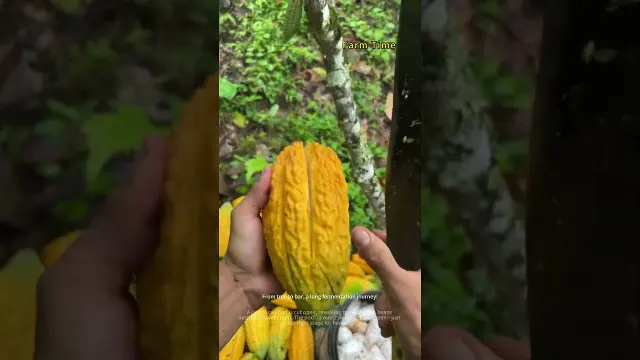
 Opening a Ripe Cacao Pod Filled with White Beans
#Farm to Bar
1 ideas
Opening a Ripe Cacao Pod Filled with White Beans
Get new #Farm to Bar ideas by email
Every Thursday: the week's best ideas, with the newest from #Farm to Bar.
Related tags
Farm to Bar: How Cacao Becomes Chocolate
Farm to bar describes the whole arc a cacao bean travels — from the tree that grew it to the finished chocolate bar — with the same people or a small company often involved at more than one stage. It stands apart from the more familiar "bean to bar" phrase by stretching the story further back, to the farm itself: the variety grown, the shade it grew under, the way the pods were opened and the beans fermented. The idea is traceability you can taste, and it has become the guiding principle of small-scale chocolate making.
Where chocolate begins
Cacao grows on a small evergreen tree in warm, humid regions near the equator. Its fruit is a pod, ridged and roughly melon-shaped, hanging directly from the trunk and thicker branches. Inside sit seeds wrapped in a pale, tangy pulp; the seeds are what become chocolate, though the pulp matters too, because it feeds the fermentation that follows. Growers cut ripe pods by hand, open them carefully to avoid damaging the seeds, and scoop out the contents. Harvesting is skilled, seasonal work, and much of it happens on smallholdings rather than plantations.
Fermentation and drying
Read more
Fresh cacao seeds taste bitter and astringent, nothing like chocolate. The flavour is built in the days after harvest. Seeds and pulp are piled into boxes, baskets or heaps and covered, and naturally occurring yeasts and bacteria go to work. Turning the mass keeps air moving through it. This stage develops the chocolate's precursors — the fruity, floral, nutty notes that will later appear — so it is arguably the most important step on the whole journey. The beans are then spread out and sun-dried until their moisture drops enough for safe storage and shipping.
From bean to bar
At the maker's end, the dried beans are sorted, roasted and cracked to remove their shells. What remains is nib, which is ground until it turns into a dark, fluid mass — cocoa liquor. Sugar and, for milk chocolate, milk powder are added, and the mixture is refined until it feels smooth on the tongue. Conching, a long period of gentle kneading and warming, rounds off harsh edges and deepens flavour. Finally the chocolate is tempered: heated and cooled in a controlled way so the cocoa butter sets in a stable crystal form, giving a glossy surface and a clean snap.
What beginners should know
- Judge a bar by aroma, snap and the way it melts, not by percentage alone; cocoa percentage tells you how much comes from the bean, not how good it is.
- Store chocolate somewhere cool, dry and away from strong smells; sudden temperature swings cause pale streaks called bloom, which affect looks more than flavour.
- If you want to try making chocolate at home, start small: buy well-fermented, well-dried beans, roast in small batches, and keep notes so you can repeat what worked.
- Chocolate is a pleasure food rather than a staple; enjoy it in modest amounts as part of a varied diet.
Whether you are tasting or making, farm to bar is simply a reminder that every bar is an agricultural product first — grown, harvested and fermented long before it was ever melted.
#Farm to Bar: frequently asked questions
How is farm to bar different from bean to bar?
Bean to bar starts with the dried, fermented bean and follows it through roasting, grinding and tempering. Farm to bar reaches further back, to the tree, the pod and the fermentation that shaped the flavour before the maker ever touched the crop. In practice it means the people finishing the chocolate know something about how it was grown and handled.
What do I need to start making chocolate at home?
You need well-fermented, well-dried cacao beans, a way to roast and crack them, and a grinder that can take the nib down to a smooth dark mass before sugar goes in. After that it is patience: refining, conching and careful tempering. Start with small batches and keep notes so you can repeat what worked.
How do I choose a good bar?
Judge it by aroma, the snap when you break it, and the way it melts on the tongue rather than by the figure printed on the label. That number tells you how much of the bar came from the bean, not whether the bean was good or the fermentation went well. A well-made bar tastes of fruit, flowers or nuts rather than of harshness.
How should I look after chocolate once I bring it home?
Keep it somewhere cool, dry and away from strong smells, since chocolate readily picks up the aromas around it. Sudden swings in temperature can pull cocoa butter to the surface as pale streaks called bloom, which changes how the bar looks far more than how it tastes. Wrap it well and let it come back to room temperature slowly before eating.
What mistakes do beginners usually make?
The most common ones are rushing the roast, skipping good fermentation and drying in the beans, and not writing anything down. Another is buying on label alone and expecting a high figure to guarantee flavour. Small batches, careful notes and slow tempering solve most of it.
Any ideas for serving chocolate at a gathering?
Treat it like a tasting: set out a few bars from different origins or makers and let people compare aroma, snap and melt side by side. Plain water and simple bread or fruit between tastes keep the palate clear. A little goes a long way, so small pieces served thoughtfully are more enjoyable than a large spread.
Videos come from YouTube and posts from Instagram; titles and summaries are our own. All rights belong to their creators.