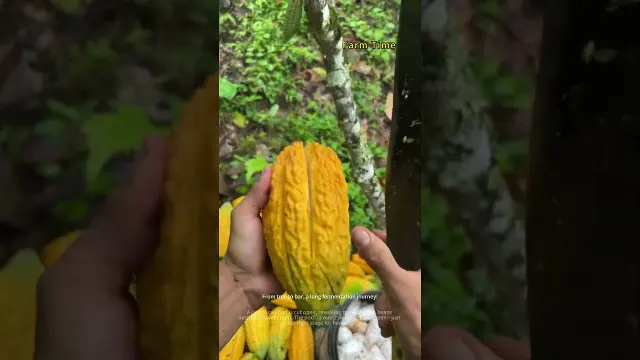
 Opening a Ripe Cacao Pod Filled with White Beans
#Tropical Fruit
1 ideas
Opening a Ripe Cacao Pod Filled with White Beans
Get new #Tropical Fruit ideas by email
Every Thursday: the week's best ideas, with the newest from #Tropical Fruit.
Related tags
Tropical Fruit: A Guide to Varieties, Ripeness and Uses
Tropical fruit is the produce of plants that grow in the warm, humid belt around the equator, where frost never comes and rainfall is generous. The category is loose rather than botanical: it gathers fruits from palms, vines, trees and shrubs alike, and what they share is a climate rather than a family tree. Because these plants evolved without cold seasons, many of them ripen on the plant and spoil quickly once picked, which shapes both how they are traded and how they are eaten.
A few families worth knowing
Broadly, tropical fruits fall into a handful of groups. There are the sweet, soft fruits eaten fresh — mango, papaya, banana, pineapple, guava, passion fruit, lychee. There are the rich, creamy ones, such as avocado, sapote and jackfruit, whose flesh is dense enough to stand in for dairy or meat. There are the pod and palm fruits, including coconut and cacao, valued for oil, milk, chocolate and sugar. And there are the acidic, aromatic fruits — tamarind, calamansi, some citrus — used more for flavour and sourness than for eating by the handful.
Some fruits carry their seeds on the outside, like the strawberry, but among tropical fruits the more striking oddity is the cacao pod, whose white pulp surrounds the beans that eventually become chocolate. Others, like the jackfruit, are enormous and fibrous; still others, like the lychee, hide a single glossy stone under a thin, leathery shell.
Read more
Judging ripeness
Tropical fruits rarely ripen well once chilled, so the skill is in choosing them at the right moment. Smell is the most reliable guide: a ripe mango, guava or passion fruit is fragrant at the stem end, while an underripe one smells of nothing. Gentle pressure should yield slightly, not give way. Colour helps, but it can mislead — some varieties stay green when perfectly ripe. Coconuts should feel heavy for their size and slosh when shaken, which tells you the water inside is still fresh.
Buying, storing and using
Buy firm fruit if you plan to eat it in a few days, and leave it at room temperature to finish ripening, away from direct sun. Once cut, most tropical fruits belong in the refrigerator and are best eaten within a day or two; whole, many keep longer in a cool, ventilated place than in the cold, where their texture can turn mealy.
For preparation, handle with care where juice stains and skins irritate. Pineapple and papaya contain enzymes that break down protein, which makes them useful in marinades but awkward in set jellies. Mango and banana suit smoothies and chutneys, passion fruit lifts dressings and desserts, plantain and breadfruit are treated as vegetables and cooked. Ripe fruit needs little: a squeeze of lime, a pinch of salt, or a brief turn on a grill is often enough to bring out what is already there.
Start with one fruit you have never cooked with, buy it ripe, and taste it plain before you dress it up. That is the surest way to learn the difference between good tropical fruit and great.
#Tropical Fruit: frequently asked questions
How do I start eating more tropical fruit if I've never cooked with it?
Pick one fruit you have never tried, buy it ripe, and taste it plain before adding anything to it. Once you know what it tastes like on its own, you can start pairing it with a squeeze of lime, a pinch of salt, or a quick turn on the grill. Building up one fruit at a time teaches you far more than buying a whole basket at once.
How can I tell when a tropical fruit is ripe?
Smell is the most dependable clue: a ripe mango, guava or passion fruit is fragrant near the stem end, while an underripe one smells of almost nothing. The fruit should give slightly under gentle pressure rather than feeling hard or collapsing. Colour can help but is not reliable, since some varieties stay green even when perfectly ripe.
Should I keep tropical fruit in the fridge?
Buy firm fruit and leave it at room temperature, out of direct sun, to finish ripening, since chilling too early spoils the texture. Once it is cut, move it to the refrigerator and eat it soon. Whole fruit often keeps better in a cool, ventilated spot than in the cold.
Which tropical fruit should I choose for a particular dish?
Think about texture and acidity rather than the fruit's exotic reputation. Soft, sweet fruits like mango, banana and passion fruit suit smoothies, chutneys, dressings and desserts, while starchy ones such as plantain and breadfruit are treated like vegetables and cooked. Creamy fruits like avocado and jackfruit are dense enough to stand in for dairy or meat.
What are the common mistakes people make with tropical fruit?
The usual ones are buying underripe fruit and hoping it will catch up, and refrigerating it too early, which turns the flesh mealy. Another is over-preparing it: ripe fruit rarely needs more than a little lime, salt or heat to taste its best. Also be careful with juice and skins, which can stain or irritate, and remember that pineapple and papaya break down protein, so they work in marinades but not in set jellies.
Videos come from YouTube and posts from Instagram; titles and summaries are our own. All rights belong to their creators.