 Faroe Islands Travel Guide for Your Next Trip
#Faroe Islands
1 ideas
Faroe Islands Travel Guide for Your Next Trip
Get new #Faroe Islands ideas by email
Every Thursday: the week's best ideas, with the newest from #Faroe Islands.
Related tags
Faroe Islands: A Guide to the North Atlantic Archipelago
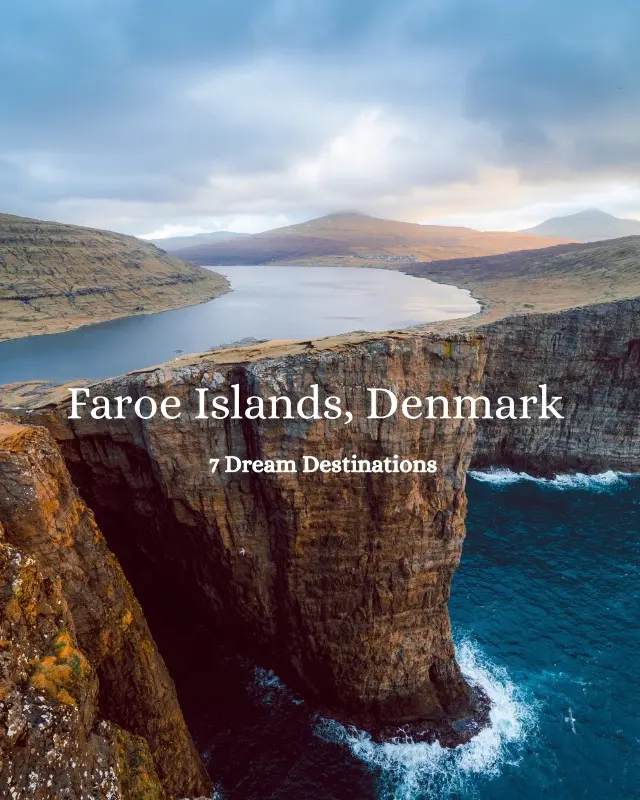
The Faroe Islands are a group of islands in the North Atlantic, lying roughly halfway between Iceland and Norway. They form an archipelago of eighteen islands, of which most are inhabited, and they are a self-governing nation within the Kingdom of Denmark, with their own language, flag and parliament. Faroese, a West Norse language related to Icelandic, is spoken alongside Danish, and it carries a strong oral tradition of ballads and chain dances that still survive in village halls.
The islands were shaped by volcanic activity and then by ice and sea. The result is steep basalt cliffs dropping straight into the ocean, narrow sounds, sea stacks, and mountain ridges cut by deep valleys. Trees are few; the landscape is grass, moss, rock and water. The Gulf Stream keeps the climate milder than the latitude suggests, but weather changes quickly, and wind and rain arrive without much warning. Summer brings long daylight, and in high summer the sun barely sets; winter brings short, dim days.
Villages and daily life
Small settlements cluster in sheltered bays or on flat strips of grass between mountains. Many traditional houses carry turf roofs, a practical insulation that has become one of the most recognisable features of Faroese scenery. Sheep graze widely and outnumber people considerably; wool and knitted garments are part of the everyday economy and craft tradition, along with fishing, which has long anchored the islands' livelihood.
Read more
What to see and do
Hiking is the main way to experience the islands: coastal paths lead to lighthouses, bird cliffs and abandoned hamlets. Seabirds nest in great numbers on the cliffs, among them puffins, guillemots and fulmars. Boat trips run to sea arches and grottoes, and ferries link the larger islands, while subsea tunnels connect several of the rest. The capital, Tórshavn, has a small old town of timber houses and a harbour that still works for a living.
Food and traditions
Fish, lamb and root vegetables are central, and older methods of preservation — drying, salting and fermenting — are still used and still divide opinions. Local food is often simple and seasonal rather than elaborate.
Practical advice for a first visit
Bring waterproof clothing and layers rather than one heavy coat, and plan more than one option for each day, since conditions can turn. Wear proper walking boots for grass and scree. Some popular hikes cross private land, where a small fee is customary; follow marked routes and close gates. Book ferries and tunnel passages if you travel in busy periods, and remember that distances look short on a map but take longer on winding mountain roads. Drive with care for sheep, and treat the weather as part of the experience rather than an obstacle.
#Faroe Islands: frequently asked questions
What do I need to know before planning a first trip to the Faroe Islands?
The islands sit in the North Atlantic between Iceland and Norway, and the weather shifts fast, so build flexibility into your plans rather than a fixed schedule. Pack waterproof outer layers and warm mid-layers instead of one heavy coat, and line up more than one option for each day in case wind or rain closes a route. Distances look small on the map but take longer on winding mountain roads, so allow generous travel time.
How should I choose which islands and villages to visit?
Ferries link the larger islands and subsea tunnels connect several of the rest, so the practical choice is usually a loop based on one or two hubs rather than trying to see everything. Small settlements sit in sheltered bays or on flat grass strips between mountains, and many of the most rewarding stops are quiet places reached on foot. Book ferry and tunnel passages ahead if you travel in busy periods.
What kind of footwear and clothing works best for hiking there?
Coastal paths lead to lighthouses, bird cliffs and abandoned hamlets over grass, scree and uneven ground, so proper walking boots with good grip matter more than anything else you pack. Layers beat a single heavy coat because conditions change within a day, and a waterproof shell is worth carrying even on a bright morning. Treat the weather as part of the experience rather than an obstacle to work around.
How do I hike responsibly when paths cross private land?
Some of the popular routes pass over private land where a small fee is customary, and paying it keeps those paths open for everyone. Stay on marked routes, close gates behind you, and give grazing sheep plenty of room, since they roam widely and outnumber people. If a route looks faint or conditions are poor, turning back is a perfectly good decision.
What food and craft traditions should I look out for?
Fish, lamb and root vegetables are the backbone of local cooking, and older preservation methods such as drying, salting and fermenting are still in use, though they divide opinion. Meals tend to be simple and seasonal rather than elaborate, which suits the landscape. Wool and knitted garments are part of everyday life and craft here, so the small turf-roofed houses and working harbours are worth seeking out alongside the scenery.
What are the most common mistakes visitors make?
The usual ones are over-scheduling, underestimating how long mountain roads take, and dressing for the forecast instead of for four seasons in one afternoon. Driving without care for sheep and leaving bookings for ferries and tunnels to the last minute are also easy slips. Slow down, keep plans loose, and the islands reward you far more.
Videos come from YouTube and posts from Instagram; titles and summaries are our own. All rights belong to their creators.