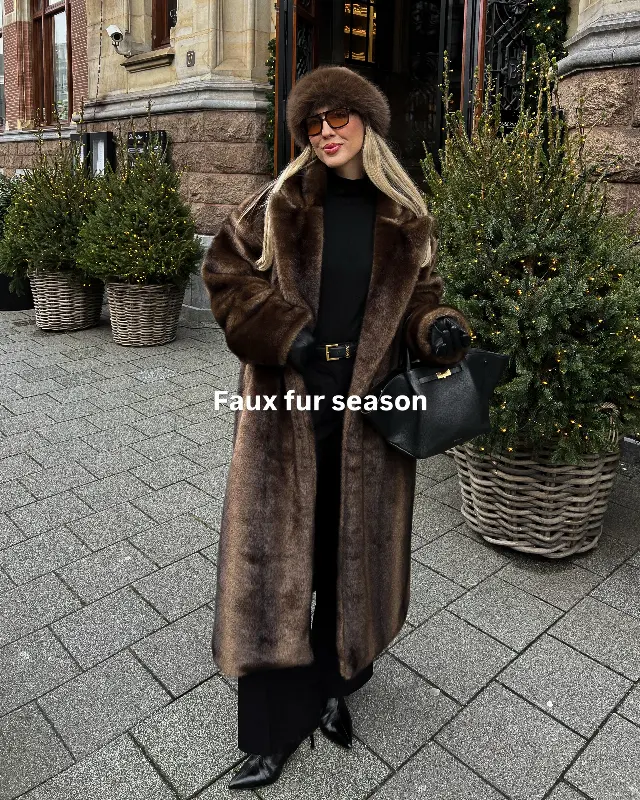
 Faux Fur Outfit Inspiration for the Cold Season
#Faux Fur
1 ideas
Faux Fur Outfit Inspiration for the Cold Season
Get new #Faux Fur ideas by email
Every Thursday: the week's best ideas, with the newest from #Faux Fur.
Related tags
Faux Fur: A Guide to Styles, Sewing and Care
Faux fur is a textile built to imitate the look and feel of animal fur. It is a pile fabric: a dense forest of long synthetic fibres — often acrylic, modacrylic or polyester — anchored in a knitted or woven backing. Unlike velvet or fleece, where the surface fibres lie relatively flat, the fibres here stand upright, and that height is what gives faux fur its depth, its shadow and its softness under the hand.
People have imitated fur with textiles for a very long time, but the modern synthetic version arrived with twentieth-century fibres, and it grew out of two very different worlds: theatre and costume, where a convincing fur trim had to be light, cheap and replaceable, and everyday dressing, where many people wanted the warmth and texture of fur without using animal skins. Because the fibres can be dyed, printed and cut to almost any length, faux fur also escaped imitation entirely and became a material in its own right — in bright colours, animal prints, pastel teddy coats and interiors.
The main kinds
- Short pile: close-cropped and dense, the closest to a mink or shearling look. The easiest to sew and the most forgiving to wear.
- Medium pile: the classic coat weight, warm and structured enough to hold a collar.
- Long pile or shag: long, loose fibres with a lot of movement. Dramatic, but bulky in seams.
- Curly and teddy types: knitted surfaces with a nubby, borg-like texture, softer and stretchier than woven faux fur.
- Tipped and printed: fibres with two tones, or pattern printed onto the pile, used for leopard, tiger and ombré effects.
Read more
Before you buy
Look at the backing, not just the surface — a firm, closely woven backing is what keeps the pile from shedding and sagging. Rub the fabric against a dark sleeve to see how much it loses, and check that the pile springs back when you brush it with your hand. Cheaper faux fur often feels dry and sheds at the cut edges.
Sewing it
Cut with the pile running in one direction and lay out all your pieces the same way, or the panels will look like different colours in the light. Keep pins inside the seam allowance, where the holes will be hidden, and cut the backing only with sharp scissors rather than chopping through the pile. Trim bulky seam allowances, line the garment so the back of the fabric never shows, and afterwards tease the pile out of the seams with a pin so the joins disappear. A longer stitch and a little patience go a long way.
Wearing and care
One faux fur piece is usually enough; keep the rest of the outfit matte and simple so the texture reads clearly. Shake the garment out after wearing, brush the pile in its natural direction, and spot clean rather than washing when you can. If the care label allows, wash by hand in cool water, never wring, and dry flat away from radiators. Do not tumble dry and do not press with a hot iron. Store it hanging with a little breathing room.
Faux fur is synthetic, so it lasts longest when it is bought sparingly and repaired rather than replaced.
#Faux Fur: frequently asked questions
How do I get started with faux fur if I've never worn or sewn it before?
Start with a small piece rather than a full coat — a collar, a scarf, a cuff or a bag trim lets you get used to the pile without committing to a big project. Short pile is the friendliest starting point because it is close-cropped, dense and forgiving to cut and sew. Once you are comfortable handling it, move on to a medium-weight coat fabric.
What do I need to have on hand before I begin a faux fur project?
Sharp scissors you reserve for fabric, pins you keep inside the seam allowance, a needle suited to heavier material and lining for the inside of the garment will cover most of it. A comb or soft brush is worth having too, so you can lift the pile out of the seams as you go. A little patience matters more than any tool, since faux fur rewards slow, deliberate work.
Which kind of faux fur should I choose for a coat, a costume or a soft accessory?
Medium pile is the classic coat weight — warm and structured enough to hold a collar — while long pile or shag gives drama for costume and statement pieces, at the cost of bulk in the seams. Curly and teddy types are knitted, softer and stretchier, so they suit cosy everyday pieces rather than tailored shapes. Short pile is the closest to a mink or shearling look and the easiest to wear and sew.
How should I care for faux fur so it keeps looking good?
Shake the garment out after wearing, brush the pile in its natural direction, and spot clean rather than washing whenever you can. If the care label permits washing, do it by hand in cool water, never wring it, and dry it flat away from radiators. Skip the tumble dryer and a hot iron, and store the piece hanging with a little breathing room.
What's the best way to build an outfit around a faux fur piece?
One faux fur piece is usually enough — let the rest of the outfit stay matte and simple so the texture reads clearly instead of competing with itself. Smooth knits, denim, wool and plain leather give the pile something calm to sit against. Keep the silhouette relaxed rather than layering several bulky textures at once.
What mistakes should I avoid when buying and sewing faux fur?
Buying on surface looks alone is the commonest slip — check the backing is firm and closely woven, since that is what stops the pile shedding and sagging. Rub the fabric against a dark sleeve to see how much it loses, and brush the pile with your hand to confirm it springs back. When sewing, cut every piece with the pile running the same way, or the panels will read as different colours in the light.
Videos come from YouTube and posts from Instagram; titles and summaries are our own. All rights belong to their creators.