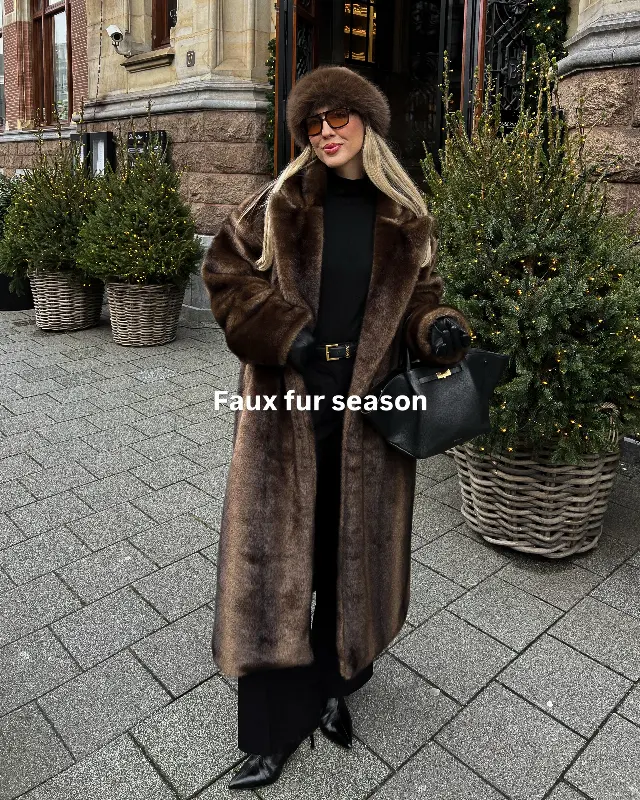
 Faux Fur Outfit Inspiration for the Cold Season
#Faux Fur Coat
1 ideas
Faux Fur Outfit Inspiration for the Cold Season
Get new #Faux Fur Coat ideas by email
Every Thursday: the week's best ideas, with the newest from #Faux Fur Coat.
Related tags
Faux Fur Coat: A Guide to Styles, Care and Styling
A faux fur coat is an outerwear piece made from synthetic fibres — typically acrylic, modacrylic or polyester — engineered to imitate the look and feel of animal fur. Unlike real fur, it is made entirely from manufactured materials, which is why it appeals to people who want the warmth and drama of a fur coat without the animal cost. Faux fur has existed in various forms for over a century, but it improved dramatically as fibre technology advanced, and today's versions can look remarkably close to the real thing, with defined guard hairs, varied pile height and a convincing sheen.
How faux fur is made
Most faux fur is produced by knitting or weaving a pile yarn onto a backing fabric, then brushing and sometimes heat-setting the fibres so they stand upright and flow in one direction. The density of the pile, its length and the quality of the backing determine how plush the coat feels and how well it holds its shape. A dense, heavier fabric generally drapes better and looks more convincing than a thin, shiny one.
Main styles and lengths
Read more
The most common silhouettes are the longline coat, which falls to the knee or lower and reads as formal and dramatic; the cropped jacket, easy to wear with high-waisted trousers or skirts; and the mid-length car coat, the most versatile option for everyday wear. Colour and pattern range widely: natural-looking tones such as camel, cream and chocolate are the classics, while bold shades, animal prints and two-tone piles are used for statement pieces. Teddy coats, with their shorter, curly pile, are a related style that looks more casual and textured.
What to look for
Check the pile by hand: it should spring back when pressed and lie in a consistent direction. Look at the seams and lining, which should be neat and generous enough to slide over sleeves. Try sitting and raising your arms — faux fur has little stretch, so a coat that feels tight across the back will stay tight. Since the material can be heavy, a lighter weight is often more comfortable for daily wear.
Wearing it
Faux fur is a textural piece, so balance it with simpler companions: fine knits, denim, tailored trousers, smooth leather. A voluminous coat tends to work best over a slim base. Keep the rest of the outfit relatively quiet in colour if the coat is patterned, and let a neutral coat carry a bolder dress or scarf underneath.
Care
Most faux fur should be dry cleaned, or washed cold and gently according to the care label, then hung to dry away from direct heat. Never iron the pile. Brush it lightly with your fingers or a soft brush to restore the direction of the fibres, and store it on a padded hanger rather than folded, so the pile does not crush. Avoid prolonged friction from bag straps, which can mat the surface. Treated with a little care, a good faux fur coat can serve for many winters.
#Faux Fur Coat: frequently asked questions
What is a faux fur coat actually made of?
It is a synthetic material, usually acrylic, modacrylic or polyester fibres knitted or woven into a backing fabric to mimic the look of real fur. The pile is then brushed, and sometimes heat-set, so the fibres stand up and flow in one direction. Because nothing animal-based goes into it, it gives you the warmth and drama of fur without the animal cost.
How do I choose a faux fur coat that looks convincing?
Go by feel first: press the pile and see whether it springs back, and check that the fibres lie in a consistent direction rather than looking flat or overly shiny. A dense, heavier fabric drapes better and reads more like real fur, while a thin shiny one tends to look cheap. Also look at the seams and lining — the lining should be generous enough to slide easily over sleeves.
Which length or style should I start with?
A mid-length car coat is the most versatile choice for everyday wear, since it works over both trousers and dresses. If you want something more formal and dramatic, a longline coat falling to the knee or lower does that well; a cropped jacket is easier to pair with high-waisted pieces. Teddy coats, with their shorter curly pile, are the casual, textured alternative.
How should I style a faux fur coat without looking overdressed?
Treat the coat as the textural statement and keep everything else smooth and simple — fine knits, denim, tailored trousers or leather. A voluminous coat sits best over a slim base, so avoid bulky layers underneath. If the coat is patterned or brightly coloured, quiet down the rest of the outfit; if it is a neutral tone like camel, cream or chocolate, you can carry a bolder dress or scarf under it.
How do I care for a faux fur coat so it lasts?
Follow the care label: most faux fur is dry cleaned, or washed cold and gently, then hung to dry well away from direct heat. Never iron the pile — brush it lightly with your fingers or a soft brush to reset the direction of the fibres. Store it on a padded hanger rather than folded so the pile does not crush, and watch for prolonged friction from bag straps, which mats the surface.
What mistakes should I avoid when buying one?
Don't buy on looks alone — sit down and raise your arms in the coat, because faux fur has almost no stretch and a tight back will stay tight. Skipping the size-up question is common too, since the material can be heavy and a lighter weight is often more comfortable for daily wear. And check the pile and seams in person rather than trusting a photo, where lighting hides shine and thinness.
Videos come from YouTube and posts from Instagram; titles and summaries are our own. All rights belong to their creators.