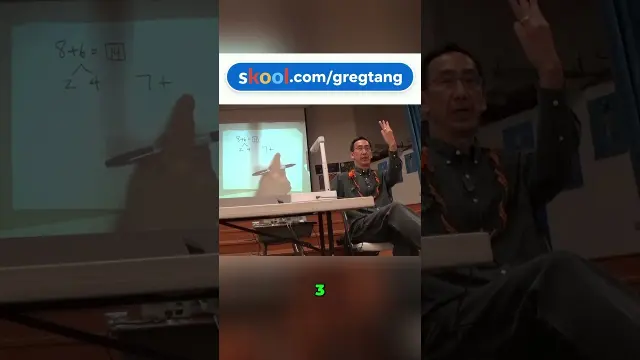
 Teaching Kids Math Strategy for Breaking Down Numbers
#First Grade Math
3 ideas
Teaching Kids Math Strategy for Breaking Down Numbers
 First Grade Math Homework Help and Counting Compilation
 Fabulous First Grade Math and Counting with Numberblocks
Get new #First Grade Math ideas by email
Every Thursday: the week's best ideas, with the newest from #First Grade Math.
Related tags
First Grade Math Skills and Activities
First grade math is where children begin to build a stronger, more organized understanding of numbers. It moves beyond simply recognizing and counting and starts connecting numbers to quantities, patterns, and everyday problem solving. At this stage, children are usually learning to think about how numbers work, not just to name them.
The main topics in first grade math often include counting, number sense, addition, subtraction, shapes, measurement, and simple data. Children may work with tens and ones, compare numbers, and learn to solve basic word problems. They also begin to see how math appears in daily life, from sharing snacks to telling time in a simple way.
What children usually learn
A strong first grade math foundation often includes:
Read more
- Counting forward and backward within a reasonable range
- Recognizing, reading, and writing numbers
- Understanding place value with tens and ones
- Adding and subtracting small numbers
- Comparing groups using words like more, fewer, and equal
- Identifying basic shapes and their features
- Measuring with informal tools
- Sorting objects and making simple graphs
At this stage, it helps if children can explain their thinking in a simple way. For example, they might use objects, drawings, fingers, or number sentences to show how they solved a problem.
Common ways to practice
First grade math is easier to understand when it is hands-on. Children often learn well through:
- Counting everyday objects such as blocks, buttons, or fruit
- Using pictures to match numbers to amounts
- Making sums and take-away stories with toys
- Comparing two groups and talking about which has more or less
- Building numbers with tens and ones
- Drawing shapes and finding them in the room
Short, regular practice is usually better than long sessions. Many children do best when math feels playful and connected to real life.
Helpful skills for beginners
If your child is just starting, it is useful to focus on a few key ideas:
- Counting with one-to-one matching
- Recognizing numbers without needing to recite them all
- Understanding that a number can stand for a group of things
- Seeing that addition puts groups together and subtraction takes away
- Learning that mistakes are part of learning
Patience matters here. Some children need time to move from counting every object one by one to understanding numbers more quickly. That change is an important step.
Practical tips
You can support first grade math by weaving it into ordinary routines. Count steps, sort laundry, compare spoonfuls, or ask how many plates are needed at the table. When you talk about numbers in everyday situations, children begin to see math as useful and familiar.
Keep the language simple and encouraging. If a problem feels hard, invite your child to use objects, drawings, or a number line. Different strategies are helpful, and there is often more than one right way to solve a question.
Most of all, first grade math is about building confidence. When children feel comfortable exploring numbers, they are better prepared for more advanced math later on.
Videos come from YouTube and posts from Instagram; titles and summaries are our own. All rights belong to their creators.