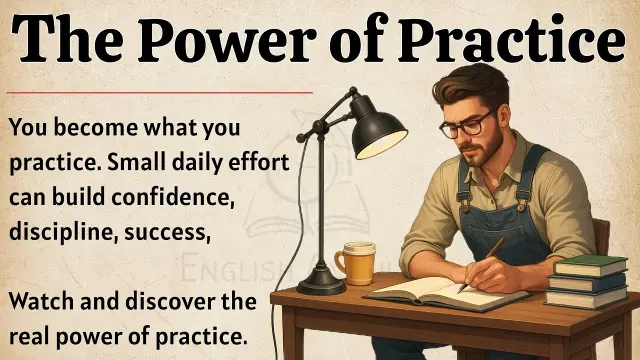
 The Power of Practice Graded Reader for English Fluency
#Fluency
2 ideas
The Power of Practice Graded Reader for English Fluency
 Advanced English Listening Practice for C1 and C2 Fluency
Get new #Fluency ideas by email
Every Thursday: the week's best ideas, with the newest from #Fluency.
Related tags
Understanding Fluency in a Language
What fluency means
Fluency is the ability to use a language smoothly and with confidence. It does not mean speaking perfectly or knowing every word. Instead, it means you can understand, respond, and express yourself with less hesitation. A fluent speaker can keep a conversation moving, even if small mistakes still happen.
People often think fluency is only about speaking fast, but speed is only one part of it. Real fluency also includes listening well, finding words quickly, using natural sentence patterns, and feeling comfortable in different situations. You can be more fluent in one setting, such as everyday conversation, and less fluent in another, such as formal discussion or writing.
Where fluency comes from
Read more
Fluency grows through repeated exposure and use. You learn it by hearing and reading enough language to notice common patterns, then using those patterns yourself until they feel familiar. This is why regular practice matters more than occasional long study sessions. The more often you meet the language in meaningful ways, the more automatic it becomes.
Fluency is closely connected to memory and confidence. When words and structures are easy to access, you spend less energy searching for them. That leaves more attention for meaning, tone, and response. Over time, this helps language feel more natural.
Main kinds of fluency
There are several ways to think about fluency:
- Speaking fluency: how smoothly you can talk and respond in conversation
- Listening fluency: how easily you understand spoken language at natural speed
- Reading fluency: how quickly and accurately you can follow written text
- Writing fluency: how readily you can put thoughts into clear sentences
Each kind supports the others. Reading and listening give you more language to draw from, while speaking and writing help you use it actively.
What helps you become more fluent
A useful approach is to combine input and output. Listen and read widely, then speak and write using what you have learned. Repetition is valuable, but it works best when it is varied. Try hearing the same structures in different contexts, and using them in your own words.
Some practical habits can help:
- Practice regularly, even for short periods
- Speak before you feel completely ready
- Repeat useful phrases until they become familiar
- Read and listen to material you can mostly understand
- Focus on meaning first, not perfect grammar
- Learn chunks of language, not only single words
It also helps to slow down when needed. Pausing to think is normal. Fluency is not the absence of pauses; it is the ability to continue without losing your thread. If you get stuck, use simpler words, rephrase your idea, or describe what you mean in another way.
What beginners should know
If you are just starting, do not compare yourself to native speakers or advanced learners. Fluency develops in stages. At first, you may understand more than you can say. That is normal. Keep building a base of everyday words, common phrases, and basic sentence patterns.
Try to learn language in context. A phrase you hear in a conversation, story, or dialogue is easier to remember than a word list alone. Over time, these patterns become the building blocks of more natural speech.
A final tip
Fluency is a gradual process, not a finish line. Aim for clear communication, steady progress, and comfort with imperfection. The more you use the language in real ways, the more fluent you become.
Videos come from YouTube and posts from Instagram; titles and summaries are our own. All rights belong to their creators.