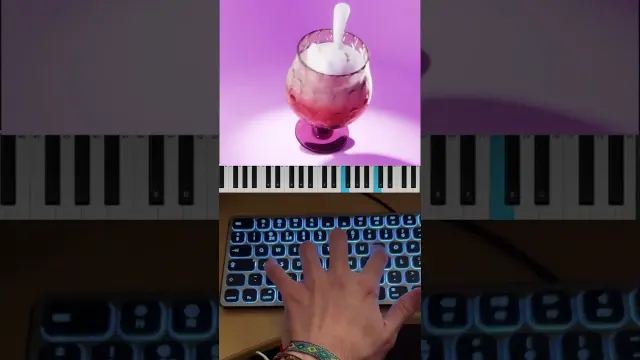
 Live Streamed Sound Design Process for Animation and Foley
#Foley
1 ideas
Live Streamed Sound Design Process for Animation and Foley
Get new #Foley ideas by email
Every Thursday: the week's best ideas, with the newest from #Foley.
Related tags
Foley Sound: The Hidden Craft Behind Everyday Film Noise
Foley is the craft of performing everyday sounds live in a studio and recording them to match the action on screen. A door closing, a coat rustling, a cup set down on a table: in a finished film, most of what you hear in those moments was never captured on set. It was performed later by a Foley artist standing in front of a screen, watching the picture and moving in time with it.
Where it comes from
The technique grew out of early sound cinema, when microphones on set could capture dialogue but little else — footsteps vanished into carpet, cloth made no impression, props were too quiet or too noisy to use. Rather than accept the thinness, studios began recreating those sounds in a dedicated room, and the practice became a craft of its own. The name honours one of the Hollywood sound editors who developed it; today Foley stages exist in film, television, animation and games.
Why it matters
Read more
Foley is not just repair work. It gives a scene clarity, so the audience knows what a character is doing even when the frame is crowded. It gives weight, so a walk feels tired or a bag feels heavy. It gives emotion, because a sound performed with intention reads differently from a library effect dropped in. And it gives perspective: a sound heard close, from across the room, or through a wall tells you where you are standing.
The main kinds of Foley
Most Foley falls into a few broad families:
- Footsteps, matched to surface, shoe and gait
- Cloth and movement, following the body as it turns, sits, shifts
- Props and handling, for objects picked up, opened, poured or set down
- Specific effects, custom-built for a single scene with whatever material works
How the work is done
An artist performs on a Foley stage: a studio with areas of different flooring — wood, concrete, gravel, grass, tile — plus a pit of loose material and shelves of props sorted by sound rather than purpose. A recordist captures the performance, and the editor syncs it to picture. Two people often work together, splitting the job between footsteps and everything else, so the tracks can be balanced separately later.
If you want to try it
Start with a quiet room and any recorder. Watch a short clip with the sound off and perform along with it, matching your movements to the picture rather than to a rhythm. Walk in place behind a pair of shoes held in your hands — it gives you far more control over the sound than walking normally. Keep the microphone at a consistent distance so the perspective doesn't drift. Collect materials and note what they sound like: a cracker snapping, a worn leather glove flexing, a bag of rice settling.
Above all, listen differently in ordinary life. The best Foley artists are simply people who have trained themselves to notice what everything around them actually sounds like.
#Foley: frequently asked questions
What exactly is Foley, and why do films need it?
Foley is the craft of performing everyday sounds live in a studio and recording them so they line up with the action on screen — footsteps, cloth movement, a cup set down, a door closing. Films need it because microphones on set capture dialogue well but miss most of the small physical sounds that make a scene feel real. Done well, it adds clarity, weight and emotion rather than simply patching holes in the soundtrack.
How can I start practicing Foley if I have no studio?
Begin in the quietest room you have with whatever recorder is available, and play a short clip with the sound off while performing along to the picture. Match your movements to what you see rather than to a beat, and keep the microphone at a steady distance so the sense of perspective doesn't shift. The real training is learning to notice how ordinary objects actually sound, so collect materials and pay attention to them in daily life.
What gear do I actually need to get going?
A quiet space, a recorder, and a microphone are enough to begin — the rest is material. Useful starting points are a few different floor surfaces, a box of loose material to walk or dig in, and a shelf of props chosen for how they sound rather than what they are. Holding shoes in your hands and walking in place gives you far more control over footstep sound than walking normally does.
Should I perform footsteps and everything else at the same time?
It is usually better to split the work: one pass for footsteps and a separate pass for cloth, props and handling. Splitting lets each layer be balanced independently afterward, so a heavy bag doesn't drown out the walk that carries it. Working with someone else makes this easier, since each person can concentrate on one family of sounds.
How do I pick the right material for a particular sound?
Choose by ear, not by what the object is supposed to be — the point is the sound it makes, which is why Foley shelves are sorted by texture rather than purpose. Test candidates close to the microphone and compare them against the picture, since a cracker snapping or a worn glove flexing can read as something completely different on screen. Keep notes on what each material does so you can reach for it again later.
What do beginners most often get wrong?
The usual trap is performing to a rhythm instead of to the picture, which makes the sound drift out of sync with the action. Another is letting the microphone distance wander during a take, so the perspective jumps between shots and the illusion collapses. Beginners also tend to reach for big, obvious sounds when restraint and consistency usually sell a scene better.
Videos come from YouTube and posts from Instagram; titles and summaries are our own. All rights belong to their creators.