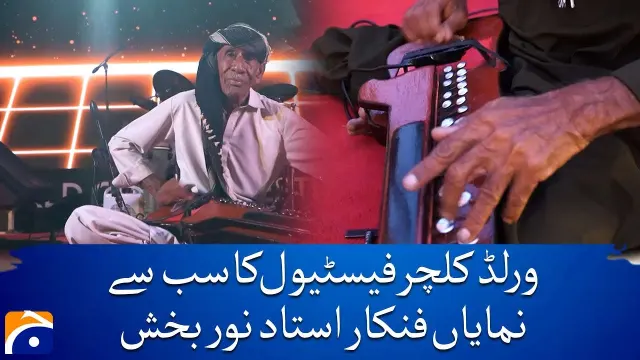
 Ustad Noor Bakhsh performs Balochi music at the World Culture Festival
#Folk Music
1 ideas
Ustad Noor Bakhsh performs Balochi music at the World Culture Festival
Get new #Folk Music ideas by email
Every Thursday: the week's best ideas, with the newest from #Folk Music.
Related tags
Folk Music: A Beginner's Guide
Folk music is the music a community makes for itself. It is not usually written down, not usually sold, and not usually attributed to a single author. Instead it lives in memory and in performance, travelling from one singer to another, from one village to the next, changing a little each time. That slow, collective shaping over generations is what gives folk music its character: it sounds like the place it comes from.
Where it comes from
Every culture with a musical tradition has a body of folk song. Work songs timed the strokes of rowers and harvesters; lullabies carried children to sleep; laments marked deaths; dance tunes kept weddings and festivals moving. Because these songs were useful, they were repeated, and because they were repeated, they survived. When collectors and scholars began writing folk songs down and recording them, they were documenting something that had already been alive for a very long time.
The main kinds
Read more
Folk traditions vary enormously, but some categories appear almost everywhere:
- Ballads: long narrative songs that tell a story, often of love, betrayal, war or disaster.
- Work songs and sea shanties: rhythm designed to coordinate effort.
- Laments and mourning songs, sung at funerals and partings.
- Dance tunes: jigs, reels, polkas, and countless local forms played on fiddle, pipe, accordion or drum.
- Lullabies and children's rhymes.
- Lyric songs, short and personal, about love, homesickness or the seasons.
Instrumentation follows the landscape: string instruments where wood and gut were available, flutes made from cane or bone, drums from hide, and the human voice above all, since it costs nothing.
What beginners should know
You do not need training to enter folk music, but a little orientation helps. Listen first to a single tradition rather than a sampler of the world; folk styles reward familiarity. Pay attention to the ornamentation, the small decorations around a melody, because that is often where a singer's identity lives. Note that pitch and tuning may not match the equal-tempered scale you are used to, and that is not a flaw. Learn a few songs by ear rather than from notation, since that is how the tradition itself works. In group playing, the session matters more than the performance: the point is to take part.
Practical tips
If you want to sing or play folk music, start with what is close to you. Local songs, family songs, songs in a language you speak, carry more conviction than borrowed ones. Record yourself, and learn from recordings of older singers where you can find them. When you borrow from a tradition that is not your own, credit it honestly and learn its context, not just its melodies. And remember that folk music is not a museum piece: it has always absorbed new instruments and new circumstances. The tradition stays alive precisely because each generation makes it slightly its own.
#Folk Music: frequently asked questions
How do I start learning folk music if I have no musical training?
Start by listening closely to one tradition rather than sampling many at once, because folk styles reward familiarity and repetition. Then learn a couple of songs by ear instead of from notation, since that is how the music has always passed between people. Pick songs close to you — local, family, or in a language you actually speak — as they carry more conviction than borrowed ones.
What do I need to begin singing or playing folk music?
Very little beyond your voice and a willingness to take part; the voice is the one instrument every tradition shares. If you play, choose something that fits where you live and what you can find around you, and let the tunes you learn shape what you pick up next. Recording yourself as you practise is one of the most useful habits, since it lets you hear what a listener hears.
Which kind of folk song should I learn first?
Think about the occasion and the function: narrative ballads suit long listening, work songs and shanties suit group effort, laments belong to partings, and dance tunes keep celebrations moving. Short lyric songs and lullabies are often the easiest entry point because they are small and memorable. Choose the kind that matches what you actually want to do with the music, whether that is singing alone or joining others.
How do I take part in a folk session without making a mistake?
In group playing the session matters more than the performance, so the aim is participation rather than a polished showcase. Listen before you play, keep the rhythm steady, and follow the ornaments and phrasing of the people around you instead of adding your own straight away. Nobody expects brilliance from a newcomer; they expect presence and courtesy.
What are the common mistakes people make when approaching folk music?
The usual ones are treating the music like a museum piece, expecting it to be fixed and unchanging, and judging unfamiliar tuning or pitch as a flaw rather than a feature. Another is borrowing melodies from a tradition that is not your own without learning its context or crediting it honestly. Skipping the ornamentation is also a loss, since those small decorations are often where a singer's identity lives.
Can folk music be used for a wedding or other family occasion?
Yes — dance tunes have always kept weddings and festivals moving, and laments and lyric songs mark the more reflective moments of family life. Choose songs from your own region or language where possible, since they read as sincere rather than performed. Live voices and a few acoustic instruments usually suit a family gathering better than anything elaborate.
Videos come from YouTube and posts from Instagram; titles and summaries are our own. All rights belong to their creators.