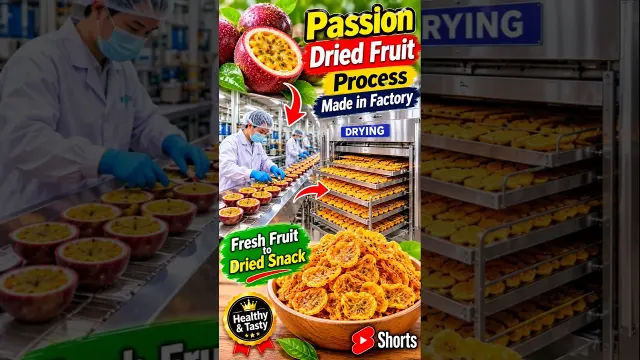
 Passion Fruit Drying: From Fresh Fruit to Packaged Snack
#Food Factory
5 ideas
Passion Fruit Drying: From Fresh Fruit to Packaged Snack
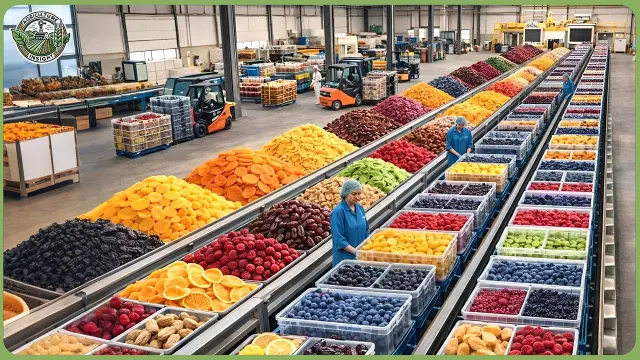 Inside Modern Dried and Frozen Fruit Factories at Industrial Scale
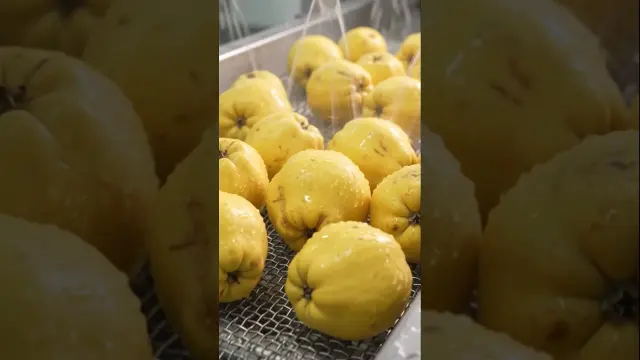 How Fresh Quince Is Sliced and Dried into Golden Fruit Slices
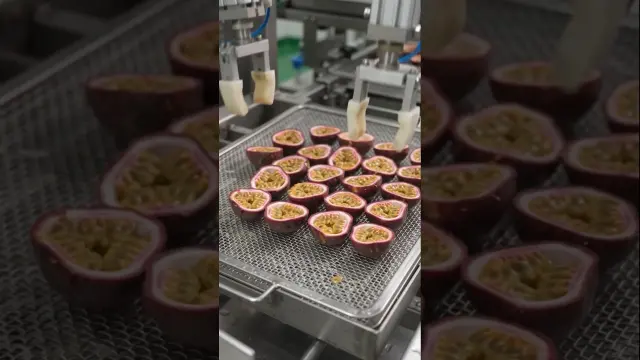 Inside a Factory: How Fresh Passion Fruit Becomes Dried Fruit
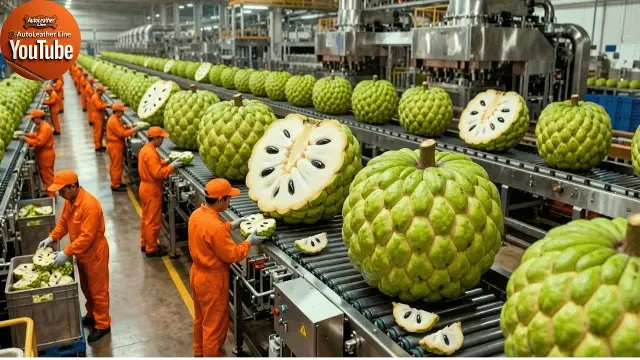 Inside the Commercial Custard Apple Factory Process
Get new #Food Factory ideas by email
Every Thursday: the week's best ideas, with the newest from #Food Factory.
Related tags
Food Factory: How Industrial Food Production Works
A food factory is a building designed around a single purpose: turning raw ingredients into safe, consistent, shelf-stable food at a scale no kitchen could match. Where a home cook adjusts by taste and eye, a factory relies on measured inputs, controlled conditions and repeatable steps, so that the thousandth batch resembles the first. That shift — from craft to process — is what defines the category, and it explains both its strengths and its limits.
What happens inside
Most production lines follow the same broad arc, whatever the product. Ingredients arrive and are checked, then cleaned, sorted and prepared — washed, peeled, cut, milled or mixed. They pass through a transformation step: cooking, baking, freezing, drying, fermenting, extruding or pasteurising. Finally the product is filled, sealed, labelled, cased and moved to storage or dispatch.
Between those stages sit the systems that make consistency possible: stainless steel vessels, conveyors, temperature-controlled rooms, weighing and dosing equipment, and packaging machines that form, fill and seal in one motion. Air quality, humidity and cleaning routines are managed as carefully as the recipe itself, because a factory's real product is repetition without variation.
Read more
The main kinds of production
- Batch production: a set quantity is made, then the line is cleaned and reset for something else. Common for sauces, baked goods and seasonal items.
- Continuous production: the line runs without stopping, suited to high-volume staples such as flour, milk, oil or soft drinks.
- Assembly-style production: components made separately are combined and packed, typical of ready meals, sandwiches and confectionery.
- Contract and co-packing sites: factories that produce or pack on behalf of another business, often for several clients on the same equipment.
Safety, quality and traceability
Food factories work to formal systems rather than individual judgement. Hazard analysis identifies where contamination could occur and sets controls at those points. Materials are tracked in and out so a finished pack can be traced back to its ingredient lots, and recalls — when needed — can be targeted rather than sweeping. Hygiene is designed into the building: separate zones for raw and cooked goods, controlled airflow, washable surfaces, strict rules on clothing and movement between areas.
If you're curious or starting out
Understand the difference between a recipe and a process. A recipe describes what to make; a process describes how to make it the same way every time, including what to do when something drifts.
Learn the vocabulary of preservation — heat treatment, chilling, freezing, drying, acidification, fermentation — since almost every product depends on one of them.
Respect the cleaning regime. In food production, cleaning is not downtime between runs; it is part of the run.
Visit or study a small producer before a large one. Scale hides the fundamentals, and the fundamentals are the same in a two-person kitchen as on a kilometre of conveyor.
#Food Factory: frequently asked questions
How do I start a food factory business from scratch?
Start by choosing one product and defining the process clearly, from raw ingredient handling to packing and storage. Then build around food-safe workflow, cleaning routines, traceability, and equipment that can repeat the same result every time.
What equipment is usually needed in a food factory?
Most food factories need systems for receiving, cleaning, preparing, processing, filling, sealing, and storing products. Stainless steel surfaces, conveyors, temperature-controlled areas, weighing tools, and packaging machines are common because they support hygiene and consistency.
Which type of food factory should I choose for my product?
Choose batch production if you need flexibility for different recipes or seasonal items, and continuous production if you are making a steady high-volume product. Assembly-style production works well when separate components are combined, while contract or co-packing sites suit brands that want another factory to make or pack for them.
How do you keep food factory products safe and consistent?
Food factories rely on controlled conditions, separate zones, and strict cleaning to reduce contamination risks. They also use measured inputs, monitored temperatures, and traceability systems so each pack can be linked back to its ingredients if needed.
What are common mistakes when setting up or running a food factory?
A common mistake is treating factory production like home cooking and leaving too much to judgement. Other problems include weak cleaning routines, poor separation between raw and cooked foods, and not designing the process to stay repeatable from one batch to the next.
Videos come from YouTube and posts from Instagram; titles and summaries are our own. All rights belong to their creators.