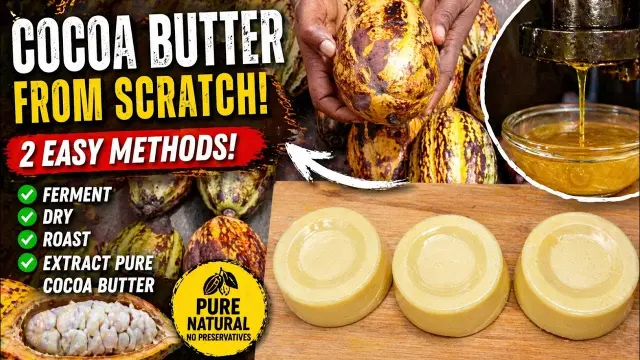
 How to Make Pure Cocoa Butter from Scratch Using Fresh Cocoa Pods
#Food Processing
1 ideas
How to Make Pure Cocoa Butter from Scratch Using Fresh Cocoa Pods
Get new #Food Processing ideas by email
Every Thursday: the week's best ideas, with the newest from #Food Processing.
Related tags
Food Processing Basics: Methods, Safety and Simple Techniques
Food processing is any deliberate step that changes a raw ingredient into something that keeps longer, tastes different or is easier to use. It sounds industrial, but it starts in the simplest places: drying herbs over a warm window, fermenting cabbage in a jar, grinding grain into flour, cooking tomatoes down into sauce. Once you understand what each method is actually doing, the whole subject stops feeling like factory territory and starts looking like a set of skills you can learn.
Why processing exists
Fresh food is alive in a sense, and it spoils. Microbes need moisture, warmth and time; enzymes soften and discolour; oxygen turns fats rancid. Every traditional method works by removing one of those conditions. Drying takes away water. Salting and sugaring bind the water that remains. Heating kills microbes and shuts down enzymes. Acidifying makes the environment hostile. Fermenting invites helpful microbes to crowd out the harmful ones. Freezing slows everything down without stopping it. Once you see processing as managing those levers, choosing a method for a glut of produce becomes a decision rather than a guess.
Main methods
Read more
- Drying and dehydrating: sun, air, oven or a dedicated dehydrator; good for fruit, herbs, mushrooms, chillies and meat.
- Fermenting: vegetables in brine, sourdough, yoghurt, vinegar, miso; flavour and preservation come from controlled microbial activity.
- Salting, sugaring and smoking: old methods that both preserve and season.
- Heat processing: boiling, pasteurising, water-bath canning and pressure canning, each suited to different kinds of food.
- Freezing and chilling: the gentlest option, though texture suffers in some produce.
- Milling and refining: turning grain, nuts and seeds into flour, meal, butter or paste.
- Extracting: pressing oil, rendering fat, straining juice, making stock.
What beginners should know
The most important distinction in home food processing is between methods that only improve flavour and methods that preserve food for storage. Fermenting a jar of vegetables for the fridge is forgiving. Putting the same vegetables in sealed jars at room temperature is not. Anything you intend to keep on a shelf depends on getting acidity, salt concentration and heat treatment right, and those are not things to improvise.
Follow tested recipes from a reliable source rather than adapting them, especially for canning and curing. Keep your hands, tools and surfaces clean before you start. Work in batches small enough to handle calmly. Label everything with the contents and the date. Store finished jars and packages somewhere cool and dark, and check them before use: a bulging lid, a strange smell, mould or fizzing where there should be none means it goes out.
Practical habits
Start with one method and repeat it until it feels routine. Keep notes on what you did and how it turned out, because processing rewards small adjustments over time. Buy good ingredients, since no technique rescues tired produce. And remember that processing is not only about shelf life: it is how butter, cheese, bread, chocolate, pickles and olive oil came to exist in the first place.
#Food Processing: frequently asked questions
How do I start food processing at home if I've never done it before?
Pick a single simple method that doesn't require shelf-stable results, such as drying herbs or fermenting a jar of vegetables for the fridge, and repeat it until it feels routine. Keep short notes on what you did and how it turned out, since small adjustments build skill faster than jumping between techniques.
What equipment do I actually need to begin?
Most methods need little beyond basic kitchen tools: clean jars, a decent knife, a scale for weighing salt, and a pot for heating. Add specialised gear like a dehydrator or pressure canner only once the method you've chosen genuinely calls for it and you've learned the safety rules that go with it.
How do I decide which method to use for a glut of produce?
Think about what you're trying to remove or control — water, warmth, oxygen or microbial competition — and choose the method that targets it. Drying suits herbs, fruit and chillies, freezing is the gentlest for most vegetables, and fermenting works well for firm vegetables you want to keep in the fridge.
What's the difference between processing for flavour and processing for storage?
Flavour-led processing, like a quick ferment kept in the fridge or a sauce made to eat this week, is forgiving and easy to improvise. Anything meant to sit on a shelf depends on getting acidity, salt concentration and heat treatment exactly right, so it should follow a tested recipe without substitutions.
How should I store finished jars and packages, and how do I know if something has gone wrong?
Keep them somewhere cool and dark, and label each one with the contents and the date so you're never guessing later. Before using anything, check it: a bulging lid, mould, a strange smell or unexpected fizzing means it should be thrown out rather than tasted.
What mistakes do beginners make most often?
The common ones are improvising quantities in preserving recipes, working in batches too large to handle calmly, and skipping basic cleanliness of hands, tools and surfaces. Processing also can't rescue tired ingredients, so starting with good produce matters more than any technique.
Videos come from YouTube and posts from Instagram; titles and summaries are our own. All rights belong to their creators.