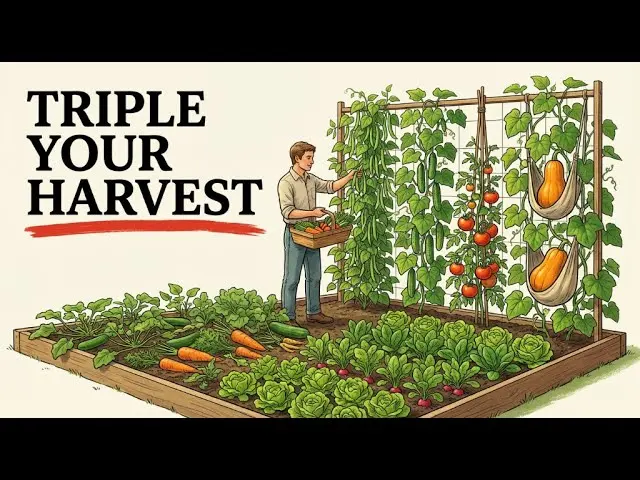
 Grow Food Vertically Using the Trellis Method to Triple Space
#Food Security
1 ideas
Grow Food Vertically Using the Trellis Method to Triple Space
Get new #Food Security ideas by email
Every Thursday: the week's best ideas, with the newest from #Food Security.
Related tags
Food Security: A Practical Guide to Feeding Yourself Well
Food security is one of those phrases that sounds like it belongs in a policy document, but it describes something very ordinary: knowing that you will have enough good food to eat, and that you can get it. The idea is usually unpacked in four parts. Food must be available. You must be able to reach and afford it. It must be nutritious and safe to prepare. And all of that has to hold steady, not just this week but through a bad month or a difficult year.
The term came into wide use in the twentieth century, when governments and international bodies needed a way to talk about hunger that went beyond simple scarcity. Over time the focus widened from producing enough food to making sure people can actually obtain it. A country can grow plenty and still have households that struggle, if prices rise, shops are far away, or income disappears. That shift in thinking is why food security is now discussed alongside income, transport, housing and community support rather than as a farming question alone.
What it looks like at home
For most households, food security is built from small, repeatable habits rather than one big plan.
Read more
- A stocked pantry of staple foods you actually eat, rotated so nothing sits forgotten at the back.
- A freezer used well: cooked batches, bread, produce at its peak, labelled with what it is.
- Basic preservation skills such as pickling, drying, fermenting and jam making, which stretch a harvest or a good bargain.
- A budget that separates everyday food from stock-up shopping, so a tight week does not empty the cupboard.
- Some growing, even a few pots of herbs or a windowsill of salad leaves, which adds freshness and a little resilience.
- Knowing your neighbours. Shared shopping trips, garden swaps and cooking in bulk with others solve problems money cannot.
Growing as part of the picture
A garden, allotment or balcony will rarely feed a family completely, and that is not the point. Growing some of your own food teaches you how seasons work, what a poor year feels like, and how much labour good food takes. It also gives you something to fall back on and something to share. Start with crops that are forgiving and expensive to buy: salad greens, herbs, beans, courgettes, chard. Learn to save seed and to preserve a glut, because abundance and scarcity arrive in the same year.
If money is the problem
Access matters more than availability. If your budget is stretched, community food projects, food banks, subsidised markets and school meal schemes exist precisely for that gap, and using them is not a failure of planning. Building relationships with local growers, butchers and shopkeepers often stretches a budget further than any list of tips.
What beginners should know
Start with what you already cook. Security built around unfamiliar ingredients tends to collapse. Keep a simple inventory you update, learn two or three preservation methods well, and practise cooking from what you have rather than shopping for a recipe. Food security is not about hoarding. It is about a calm, stocked kitchen and the skills to use it, so that a bad week is inconvenient rather than frightening.
#Food Security: frequently asked questions
How do I start building food security at home without overhauling everything?
Begin with the meals you already cook and stock the staples those meals depend on, so the pantry is useful rather than decorative. Add one habit at a time, such as rotating what you store or freezing a double batch, and let each one become routine before you take on the next. The aim is a calm kitchen you understand, not a stockpile you forget about.
What do I actually need for a household food plan to work?
The essentials are a stocked pantry of familiar staples, a freezer you use deliberately, a loose budget that separates everyday shopping from stocking up, and a simple inventory you keep current. Some basic preservation skills and a little contact with neighbours or local growers fill the gaps money cannot. None of it requires special equipment; it requires habits you repeat.
Should I focus on growing my own food or on buying and storing it?
For most people the answer is a bit of both, weighted toward storing and cooking because a garden rarely feeds a household completely. Growing is worth doing for the things that are costly to buy and easy to raise, like herbs, salad leaves and beans, since it teaches you how seasons and labour shape supply. Treat growing as a supplement and a skill, not as the foundation.
How do I keep stored food from going to waste?
Rotate whatever you keep, using the oldest first and putting new purchases behind it, so nothing drifts forgotten to the back of a shelf. Label anything you freeze with what it is, and cook from what you have rather than shopping for a recipe you saw. Learning a couple of preservation methods well, such as pickling or drying, turns a glut or a bargain into something that keeps.
What if the problem is money rather than not having enough food around?
Access is often the real obstacle, so it helps to know what exists locally: community food projects, food banks, subsidised markets and school meal schemes are there for exactly that gap, and using them is not a failure of planning. Building relationships with local growers, butchers and shopkeepers also tends to stretch a budget further than any list of tricks.
What mistakes do beginners make with food security?
The most common one is stocking up on unfamiliar ingredients, which leaves a cupboard that looks prepared but never gets cooked. Another is treating it as hoarding rather than as skills, so the food sits while the cook still buys takeaway. Learn a few preservation methods properly and practise cooking from what is already there, and a difficult week becomes inconvenient instead of frightening.
Videos come from YouTube and posts from Instagram; titles and summaries are our own. All rights belong to their creators.