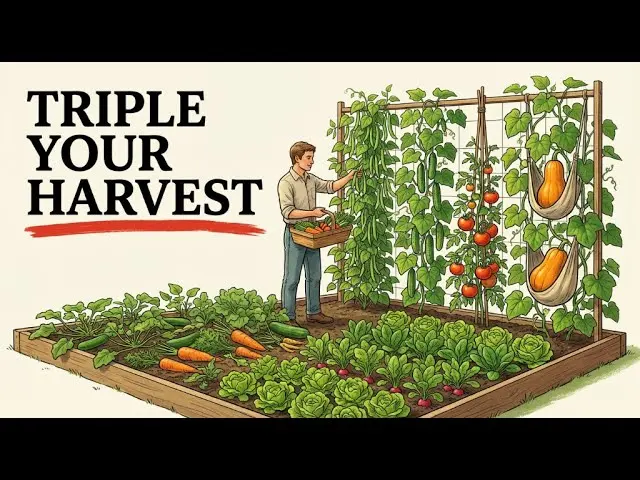
 Grow Food Vertically Using the Trellis Method to Triple Space
#Trellis
1 ideas
Grow Food Vertically Using the Trellis Method to Triple Space
Get new #Trellis ideas by email
Every Thursday: the week's best ideas, with the newest from #Trellis.
Related tags
Trellis Gardening: A Beginner's Guide to Growing Upward
A trellis is a simple frame — of wood, metal, bamboo or stretched wire — built to give climbing plants something to hold on to. The word comes from the Latin *trilicem*, meaning "three-ply," a nod to the woven texture of early latticework. For centuries gardeners have used these frames to coax vines upward instead of letting them sprawl, and the idea has changed remarkably little: give a plant a structure, and it will find its way.
Why grow upward
Vertical growing solves a practical problem. Many climbing plants — tomatoes, beans, peas, cucumbers, grapes, clematis, jasmine — take up far less ground when they are trained on a frame, which makes a trellis useful on a balcony, against a bare wall or in a small plot. Raising foliage off the soil also keeps leaves drier and the fruit easier to reach. And a well-placed trellis turns a flat wall or a dull fence into something worth looking at.
The main kinds
Read more
- Wall-mounted trellises fix flat against a house or boundary wall and suit compact spaces.
- Freestanding panels or screens stand on their own feet and can divide one part of a garden from another.
- Arches and obelisks add height and a focal point, often over a path or doorway.
- Tripods, teepees and simple stakes made from canes or branches are the cheapest option and work well for beans and peas.
- Netting and wire grids are the least visible choice, useful where you want the plant to do the decorating.
- Espalier frames train woody plants into deliberate flat patterns along a wall.
Choosing materials
Wood blends into planting and is easy to fix to, but soft woods weather quickly. Metal is strong and long-lasting, though it heats up in strong sun. Bamboo and coated wire are light and inexpensive. Whatever you choose, think about the weight of a mature plant loaded with foliage and fruit — a flimsy frame will sag or pull away from its fixings.
Getting started
Put the support in before you plant, not after; threading a frame around an established vine is awkward and often damages roots. Set it a little away from a wall so air can move behind the leaves, and anchor it firmly at the base as well as the top. Choose a spot that matches the plant's love of sun or shade, and match the trellis to how the plant climbs: twiners wrap around supports, tendrils grip thin wires, and plants with clinging roots or long scrambling stems need a flat surface or gentle tying.
Practical habits
Tie stems loosely, in a figure-eight, so they are held without being strangled, and check ties as stems thicken. Guide young shoots early, while they are still flexible, rather than forcing woody growth later. Prune to keep the frame from turning into a solid mass, which shades the plant's own lower leaves. Finally, check fixings now and then, and be cautious with vigorous climbers near gutters, windows or fences — some will happily find their way into anything within reach.
#Trellis: frequently asked questions
How do I get started with a trellis?
Set the frame in place before you plant, since weaving a support around an established vine is fiddly and can disturb the roots. Give it a little breathing room from the wall so air can pass behind the leaves, and anchor it at both the base and the top. Then pick a position that suits whether your plant wants sun or shade.
Which kind of trellis should I choose for my space?
It depends mostly on where it will sit and what you want it to do. A flat wall-mounted frame suits narrow spots against a house or boundary, a freestanding panel divides one part of a garden from another, and an arch or obelisk gives height and a focal point over a path or doorway. Simple cane tripods and netting are the lightest, least visible options when you mainly want the plant to do the decorating.
How do I pick a material that will hold up?
Think first about the weight of a mature plant full of leaves and fruit, because a flimsy frame will sag or tear away from its fixings. Wood blends into planting and is easy to attach to, though softer timbers weather faster, while metal is strong and long-lasting but gets hot in strong sun. Bamboo and coated wire are light and cheap, which makes them handy for lighter crops.
How do I match the trellis to the way my plant climbs?
Different climbers grip in different ways, so the support needs to suit the plant rather than the other way round. Twiners wind themselves around a support, tendrils need something thin like wire to wrap, and plants with clinging roots or long scrambling stems want a flat surface or a little gentle tying. Watching how a plant reaches before you buy saves a lot of fiddling later.
What mistakes do people make with trellises?
The common one is waiting until the vine is already growing, which makes the frame hard to install and risky for the roots. Another is tying stems tightly or forcing stiff woody growth into place instead of guiding young shoots while they are still bendy. Leaving the frame to become a solid mass of foliage is also worth avoiding, since it shades the plant's own lower leaves, and fixings should be checked now and then, especially with vigorous climbers near gutters or windows.
Can a trellis work on a balcony or against a plain wall?
Yes, and that is often where it earns its keep. Many climbing plants take up far less ground when trained upward, and lifting the foliage off the soil keeps leaves drier and fruit easier to reach. A well-placed frame also turns a flat wall or dull fence into something worth looking at.
Videos come from YouTube and posts from Instagram; titles and summaries are our own. All rights belong to their creators.