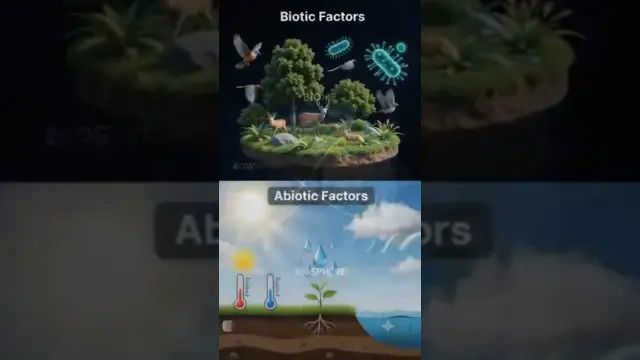
 Ecology and Ecosystems Explained Food Webs and Energy Flow
#Food Web
2 ideas
Ecology and Ecosystems Explained Food Webs and Energy Flow
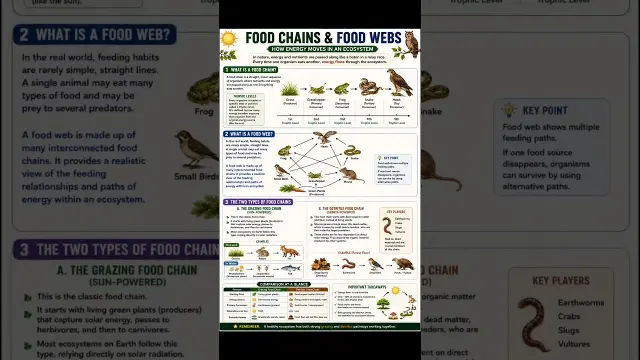 Food Chains and Food Webs How Energy Moves in an Ecosystem
Get new #Food Web ideas by email
Every Thursday: the week's best ideas, with the newest from #Food Web.
Related tags
What Is a Food Web? A Guide to How Nature Feeds Itself
Every living thing needs energy, and in nature that energy almost always arrives by being eaten. A food web is the map of those feeding relationships: a diagram or description of who eats whom within a particular place, from the smallest insect to the largest predator. Where a food chain shows a single straight line of eating, a food web shows the whole tangle of lines at once, because most creatures do not eat just one thing and are not eaten by just one thing.
Producers, consumers and decomposers
At the base of every food web sit the producers: plants on land, algae and other small organisms in water. They make their own food from sunlight, and everything else depends on them. Above them come the consumers, usually sorted into levels. Herbivores eat producers. Predators eat herbivores, and larger predators eat smaller ones. Many animals ignore these tidy categories and eat at several levels at once, which is exactly why a web is a better picture than a chain.
Decomposers do the quiet, essential work. Fungi and bacteria break down dead plants, animals and waste, returning nutrients to the soil and water so producers can use them again. Without them the whole system would stall.
Read more
Energy flows one way, matter goes round
Energy moves in a single direction: from the sun to producers, then to whatever eats them, and so on. At each step a great deal of it is lost as heat and used up in simply staying alive, so far less energy reaches the top than the bottom. This is why food webs tend to have few top predators and enormous numbers of small producer-level organisms.
Matter behaves differently. The atoms in a leaf that a deer eats may later become part of a wolf, then a fungus, then a new leaf. Nutrients cycle; energy does not.
Types of food web
Ecologists often distinguish between grazing webs, which start with living plants being eaten, and detrital webs, which start with dead material and the organisms that feed on it. A woodland floor is dominated by the second kind, while a meadow in summer is dominated by the first. Freshwater and marine webs usually begin with microscopic algae rather than rooted plants, but the same logic applies.
What beginners should keep in mind
Start with a small, familiar place: a garden, a pond, a patch of woodland. List what grows there, then what you have seen eating it, then what might eat that. Draw the arrows from the food to the eater, and accept that your map will be incomplete.
Not every species matters equally. Some hold a web together because many others depend on them, and removing them causes ripples far beyond their own numbers. That is the practical value of thinking in webs rather than chains: it shows that protecting one creature usually means protecting the connections around it.
#Food Web: frequently asked questions
How do I start drawing a food web?
Pick a small place you actually know well, such as a garden, a pond or a corner of woodland, and begin by writing down what grows there. Then add what you have seen eating those plants, and finally what might eat those animals, drawing each arrow from the food to the creature that eats it. Your first map will be incomplete, and that is normal — a food web is meant to grow as you notice more.
What is the difference between a food chain and a food web?
A food chain follows one straight line of eating, from a plant through whatever eats it to whatever eats that. A food web puts all of those lines together at once, because most creatures eat several different things and are themselves eaten by more than one predator. That tangle is a more honest picture of what actually happens in a habitat.
What do I need to include in a food web besides animals?
Producers belong at the base, since plants on land and algae in water make their own food from sunlight and everything else depends on them. Decomposers such as fungi and bacteria matter just as much: they break down dead material and waste and return nutrients so producers can use them again. Leaving either group out leaves the picture with nothing holding it up.
Should I map a grazing web or a detrital web?
It depends on the place you are looking at. A sunny meadow is dominated by a grazing web, which starts with living plants being eaten, while a woodland floor is mostly detrital, starting with dead leaves and the creatures that feed on them. Water habitats usually begin with microscopic algae rather than rooted plants, but the same logic of who eats whom still applies.
What mistakes do beginners usually make?
The common slip is sorting everything into neat levels and assuming each animal eats at only one of them, when many creatures feed at several levels at once. Another is pointing arrows the wrong way — they should run from the food to the eater, following the direction energy travels. It also helps to accept that some species hold the whole web together, so removing one can affect far more than its own numbers.
Videos come from YouTube and posts from Instagram; titles and summaries are our own. All rights belong to their creators.