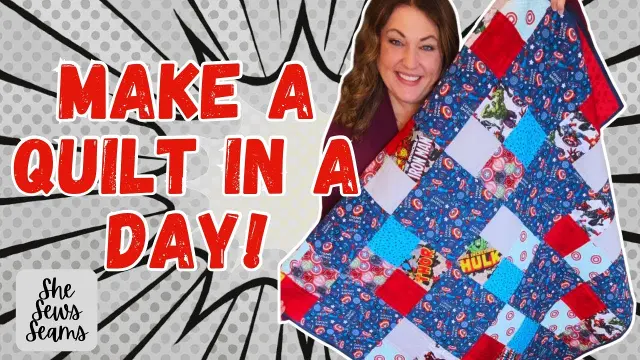
 Fast Four Patch Baby Quilt Tutorial for New Sewists
#Four Patch Quilt
1 ideas
Fast Four Patch Baby Quilt Tutorial for New Sewists
Get new #Four Patch Quilt ideas by email
Every Thursday: the week's best ideas, with the newest from #Four Patch Quilt.
Related tags
Four Patch Quilt Guide
A four patch quilt is one of the simplest and most familiar patchwork quilt designs. It is built from blocks made of four smaller fabric squares sewn together in a 2-by-2 arrangement. Because the block is easy to understand and repeat, it is a favourite choice for beginners, baby quilts, scrap quilts, and traditional bed quilts alike.
The idea of patchwork quilts comes from very old sewing traditions in which small pieces of fabric were saved, reused, and combined into useful coverings. A four patch block follows that practical spirit. It can be made quickly, uses fabric efficiently, and creates a clear grid that works well with many different fabrics. The block can stand alone as the main design or be combined with plain squares, sashing, borders, or other block types.
How a four patch block works
At its core, the block is made from four equal squares. These can all be the same fabric for a calm, orderly look, or they can alternate between two or more fabrics for stronger contrast. Once several blocks are joined together, the smaller squares line up to create a larger pattern across the quilt.
Read more
There are many ways to use this basic structure. Some quilts repeat the same four patch over and over. Others mix fabrics in a scrappy way so no two blocks look exactly the same. You can also combine four patch blocks with larger plain blocks to give the eye room to rest.
Common styles and variations
The four patch is simple, but it can be adapted in many ways:
- Scrappy four patch quilts use leftover pieces in a lively, relaxed style.
- Two-fabric four patch quilts create a neat, graphic look.
- Controlled color palettes give the quilt a more coordinated feel.
- Nested layouts place the blocks so the seams create secondary patterns.
- Alternate blocks and sashing can make the quilt appear more open and balanced.
Because the design is so flexible, it suits both traditional and modern tastes. The same block can feel rustic, sweet, bold, or understated depending on the fabrics you choose.
Tips for making one
If you are new to quilting, a four patch is a good place to start. Careful cutting and accurate seams matter, but the block is forgiving enough to help you build confidence.
- Use fabrics that are easy to distinguish from one another, especially at first.
- Press seams neatly as you sew so the blocks lie flat.
- Keep each square the same size for easier matching.
- Chain piecing can help you sew several blocks more efficiently.
- Try laying out the blocks before sewing the quilt top together so you can adjust the balance of light, dark, and color.
Finishing the quilt
Once the top is assembled, add batting and backing as you would with any quilt. The quilting can be simple or more decorative. Straight-line quilting often suits the grid of a four patch, while free-motion or patterned quilting can add texture and movement. A binding in a solid or coordinating fabric usually finishes the quilt cleanly.
A four patch quilt is a timeless project because it is both simple and adaptable. Whether you make it from carefully chosen fabrics or from a basket of leftovers, it gives you a classic patchwork look with a clear, satisfying structure.
#Four Patch Quilt: frequently asked questions
What exactly is a four patch quilt, and how is the block put together?
It is a patchwork quilt built from small square blocks, each made of equal fabric squares sewn together in a simple grid. Repeating that one unit across the quilt top produces the clear, even pattern the design is known for. Because the structure is so straightforward, it works equally well as a first project and as a traditional bed quilt.
What do I need to gather before I start my first one?
You need quilting cotton for the blocks, a way to cut it accurately — a rotary cutter with a mat and ruler, or good scissors — plus a sewing machine, thread, pins, and an iron for pressing. To finish, add batting, backing fabric, and binding. A design wall or a large floor space is helpful for laying blocks out before you sew them together.
How do I decide between a scrappy look and a two-fabric one?
A scrappy version uses up leftovers and gives a lively, relaxed result, while limiting yourself to two fabrics produces a cleaner, more graphic effect. Think about where the quilt will live and what mood you want before you cut. If you are unsure, a controlled palette of a few coordinated fabrics sits comfortably between the two extremes.
How should I wash and care for a finished four patch quilt?
Wash it gently in cool water with a mild detergent, and avoid harsh bleach or very hot settings that can fade and shrink the fabrics. Check that your fabrics are colourfast before the first wash, since light and dark patches sit side by side. Dry it flat or on a low setting, and store it folded away from direct sunlight.
What kinds of occasions suit this quilt design?
Its simple grid makes it a natural for baby quilts, lap throws, and gifts, because the pattern reads clearly even in a small size. It also scales up comfortably into a full bed quilt or a scrappy picnic quilt made from leftovers. Many makers use it for charity sewing since the blocks come together quickly.
What mistakes should a beginner watch out for?
The most common problems come from cutting squares unevenly and letting seam allowances drift, which throws off how the corners line up. Pressing seams as you go, rather than at the end, keeps the blocks flat and easier to match. Try laying all the blocks out before joining them so you can balance light, dark, and colour across the top.
Videos come from YouTube and posts from Instagram; titles and summaries are our own. All rights belong to their creators.