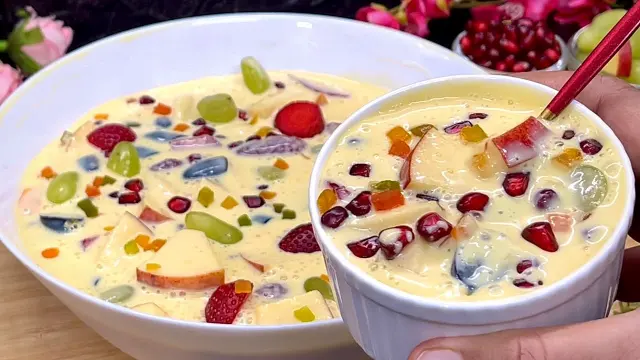
 Ramzan Special Creamy Fruit Custard Recipe
#Fruit Custard
2 ideas
Ramzan Special Creamy Fruit Custard Recipe
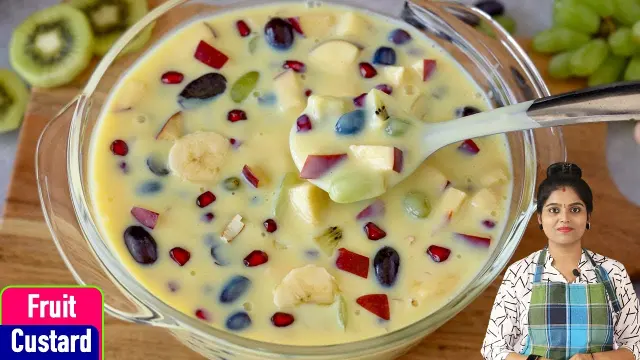 Quick and Easy Homemade Mixed Fruit Custard
Get new #Fruit Custard ideas by email
Every Thursday: the week's best ideas, with the newest from #Fruit Custard.
Related tags
Fruit Custard: A Simple, Evergreen Dessert Guide
Fruit custard is a chilled dessert built on a simple idea: a smooth, pourable custard sauce, a handful of fresh fruit, and enough time in the fridge for the two to settle into something greater than either. It is one of those dishes that needs no special skill, no oven, and no long list of ingredients, which is exactly why it turns up on so many tables across the year.
What it is
At its heart, fruit custard is milk thickened with a starch-based custard powder, lightly sweetened, cooled, and then folded together with chopped fruit just before serving. The result is soft, creamy and barely sweet, with the fruit doing most of the flavour work. Unlike a baked custard or a crème brûlée, this one is stirred on the stovetop and never set firm. It is served in bowls with a spoon.
The dish is a familiar sight in South Asian home cooking, especially in Pakistan and India, where custard powder is a pantry staple and fruit custard is a standard offering at family gatherings, iftar tables and informal dinners. Its close relatives are the British pouring custard, the French crème anglaise and, with a little gelatin or cream cheese added, the many fruit-and-cream desserts found across Europe.
Read more
The building blocks
Three parts carry the whole dish.
- The milk base: whole milk gives the richest texture. Simmer it gently and stir constantly once the custard mixture goes in, so the starch does not catch on the bottom of the pan.
- The custard powder: it is mostly starch with colouring and vanilla flavouring. Whisk it into a few spoonfuls of cold milk before adding it to the hot pan; adding the powder dry is how lumps happen.
- The fruit: firm and soft fruits in the same bowl give the best contrast. Banana, mango, apple, grapes, pomegranate, orange segments and berries all work. Cut pieces roughly the same size so each spoonful tastes balanced.
Practical tips
Sweeten the custard slightly less than you think you should. The fruit adds its own sugar, and a base that tastes a little under-sweet when warm will taste right once chilled.
Let the custard cool completely before the fruit goes in. Warm custard softens and dulls fresh fruit, especially banana and berries.
Add delicate fruit at the last moment. Apple, grapes and pomegranate hold up well if mixed in earlier, but banana browns and soft fruit collapses.
A pinch of salt and a drop of vanilla lift the milk flavour considerably. A spoon of cream stirred in at the end makes the texture silkier without making it heavy.
If the custard thickens too much in the fridge, loosen it with a splash of cold milk rather than whisking hard.
Serving and keeping
Fruit custard is best eaten cold, within a few hours of the fruit going in. Kept covered in the fridge, the custard base alone will hold for a day or two, so it pays to make the base ahead and add the fruit when you are ready to serve. Offer it in small bowls, perhaps with a scatter of chopped nuts or a few seeds on top for texture.
#Fruit Custard: frequently asked questions
What exactly is fruit custard, and how is it different from baked custard?
It is a chilled dessert made from milk thickened with custard powder, lightly sweetened, cooled, and then combined with chopped fresh fruit. Unlike a baked custard or a caramel-topped custard, it is stirred on the stovetop and stays soft and spoonable rather than setting firm, so it is served in bowls rather than turned out of a mould.
What do I need to make fruit custard, and how do I avoid lumps?
You need whole milk, custard powder, a little sugar, and a selection of fruit. The key step is whisking the powder into a few spoonfuls of cold milk first and only then stirring that slurry into the gently simmering pan, since adding the powder dry is what causes lumps. Keep stirring once it goes in so the starch does not catch on the bottom.
Which fruits should I choose, and how do I get the texture right?
Combining firm fruits with soft ones gives the best contrast in every spoonful, so things like apple, grapes and pomegranate sit happily alongside banana, mango and berries. Cut the pieces to roughly the same size so each bite tastes balanced. Delicate fruits are better added at the last moment, because banana browns and soft fruit collapses once it sits in the custard.
How far ahead can I make it, and how should I store it?
The custard base on its own keeps covered in the fridge for a short while, so making it in advance and adding the fruit when you are ready to serve is the practical approach. Once the fruit is in, it is best eaten cold within a few hours. If the chilled custard has thickened more than you like, loosen it with a splash of cold milk rather than whisking vigorously.
What are the most common mistakes people make with fruit custard?
Sweetening the base as much as you would a dessert eaten warm is the usual one, because the fruit brings its own sugar and a slightly under-sweet base tastes right once chilled. Putting the fruit into custard that is still warm is another, as the heat softens and dulls fresh fruit. Finally, skipping the small touches such as a pinch of salt and a drop of vanilla leaves the milk flavour flatter than it needs to be.
How can I serve fruit custard for a gathering or special occasion?
Offer it in small individual bowls rather than one large dish, which keeps it cold and makes it easy to hand around. A scatter of chopped nuts or a few seeds on top adds texture and a little contrast to the soft custard. It works well as a light ending to a family meal or a festive spread, and a spoon of cream stirred in at the end makes it feel richer without weighing it down.
Videos come from YouTube and posts from Instagram; titles and summaries are our own. All rights belong to their creators.