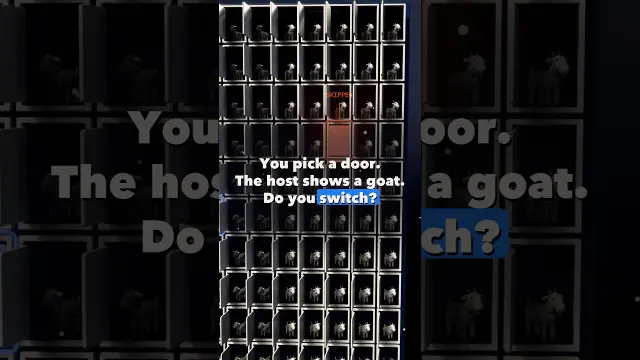
 The Monty Hall Problem Explained with Three Doors
#Game Show
1 ideas
The Monty Hall Problem Explained with Three Doors
Get new #Game Show ideas by email
Every Thursday: the week's best ideas, with the newest from #Game Show.
Related tags
Game Shows: How They Work and How to Play Them
A game show is a programme built on a simple bargain: ordinary people enter a staged arena, answer questions or complete challenges under pressure, and leave with a prize, a title, or nothing at all. The appeal is the same whether you are half-watching while folding laundry or shouting answers at the screen — you get to play without risking anything.
Where the format comes from
The genre grew out of radio quiz broadcasts and the panel shows of early television, borrowing from parlour games, pub quizzes and fairground contests. Its structure has stayed remarkably stable for decades: a host, a set of rules, contestants, and an audience that knows the answers. What changes is the dressing — the lighting, the music, the tension built around a single decision.
The main kinds
- Quiz and trivia formats, where knowledge decides the outcome.
- Word and number puzzles, which reward lateral thinking as much as recall.
- Physical or stunt challenges, often played for laughs rather than precision.
- Panel shows, where a group of guests competes for points and the comedy matters more than the score.
- Prize-gathering formats, in which contestants choose boxes, doors or envelopes and luck plays a large part.
- Dating and lifestyle formats, which trade factual questions for personal ones.
Why they are built the way they are
A good game show is engineered for suspense. Rules exist to make the stakes legible: you can see exactly how much is being risked and how little time remains. The host guides the rhythm, the questions are vetted in advance so that answers are unambiguous, and the editing stretches the moment before a reveal. Even a purely luck-based game feels tense because the programme gives you time to imagine losing.
Read more
If you want to play along
Read the rules before you answer. Most formats reward a specific kind of thinking — locking in early, banking a score, or knowing when to stop — and players who ignore that lose on strategy rather than knowledge. On trivia rounds, answer quickly but not first: a wrong guess often costs more than a moment's hesitation. If you are unsure, say what you do know out loud; it sometimes jogs the missing piece.
If you want to apply
Watch a full run of the show, not clips, so you understand its pacing. Practise the specific skill it tests, whether that is recall under time pressure or staying calm while being watched. Answer honestly on the application — producers are looking for people who are clear and engaging, not rehearsed. And read the terms before you sign anything, particularly what happens to a prize if the episode never airs.
Above all, remember that the show is designed to be more interesting than you are. Play the game it is actually playing.
#Game Show: frequently asked questions
What should I do before applying to be on a game show?
Watch complete episodes of that specific show rather than highlight clips, so you absorb its pacing, its rhythm and the way its rounds actually unfold. Fill in the application honestly and let your own personality come through, since producers are choosing people who are clear and engaging rather than word-perfect. Read the terms carefully before signing, especially the part about what happens to a prize if your episode never makes it to air.
How do I pick which kind of game show to try out for?
Match the format to what you are actually good at: trivia rounds reward recall, word and number puzzles reward lateral thinking, and stunt or panel formats reward quick wit and composure more than knowledge. If you are strong under time pressure but shaky on obscure facts, a format where contestants choose boxes or envelopes lets luck carry part of the load. Choose the one whose skill you can genuinely practise, not the one with the most exciting set.
Do I have to be a trivia expert to enjoy game shows?
Not at all. Panel formats are scored almost as an afterthought and comedy matters more than the points, while prize-gathering formats turn on choices and chance rather than what you happen to remember. Watching is also its own pleasure: you get to play along from the sofa without risking anything, which is much of why the genre has lasted.
How can I play along at home and get better at it?
Learn the rules of the round first, because most formats reward a particular strategy such as locking in early, banking a score or knowing exactly when to stop. On trivia, answer quickly but not first, since a wrong guess usually costs more than a moment's hesitation, and say out loud whatever you do know when you are stuck. Treat it as practice in thinking under pressure rather than a test of how much you have memorised.
What mistakes do first-time contestants tend to make?
The most common one is playing the game they imagined rather than the one in front of them, ignoring how the rules actually shape the stakes and the timing. Others over-rehearse their answers until nothing sounds natural, or rush to buzz before they have heard the whole question. Overlooking the paperwork about prizes and broadcast is another easy thing to regret later.
Why do game shows feel so tense even when nothing is really at stake for me?
Every rule is there to make the risk legible, so you can see exactly what is being hazarded and how little time is left to decide. The host controls the rhythm, the questions are checked beforehand so answers are unambiguous, and the edit stretches the pause before a reveal. Even a purely luck-based round works because the programme gives you room to imagine losing.
Videos come from YouTube and posts from Instagram; titles and summaries are our own. All rights belong to their creators.