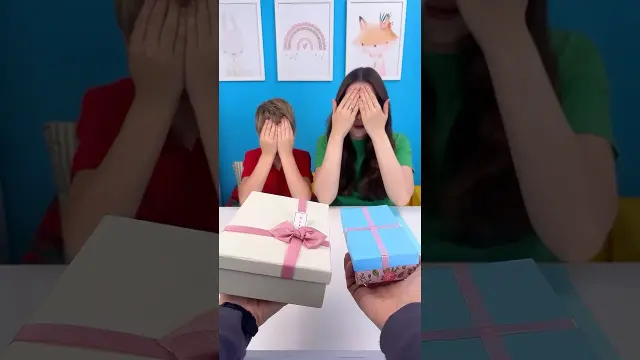
 Fun Blind Drawing Game and Kids Art Activities
#Games
1 ideas
Fun Blind Drawing Game and Kids Art Activities
Get new #Games ideas by email
Every Thursday: the week's best ideas, with the newest from #Games.
Related tags
Games: A Guide to Playing, Learning and Having Fun
A game is a structured form of play: a set of rules that creates a small world with its own goals, its own obstacles and its own kind of fun. That definition covers an enormous range, from a card game at a kitchen table to a football match, a puzzle solved alone on a rainy afternoon, or a group chasing each other around a garden. What they share is a voluntary agreement to follow rules for a while, and the pleasure of not quite knowing how it will end.
Games are as old as human societies. Board games, dice, ball games and guessing games appear in the oldest cultures we know of, and many of them have travelled and changed shape across centuries while keeping the same basic idea. Some were used for teaching, some for settling disputes, some for passing long evenings. Today people still play for the same reasons: to be together, to laugh, to compete gently, to switch off from ordinary tasks, and to feel the particular satisfaction of a problem solved or a lucky turn.
The main kinds of games
- Board and tabletop games: played on a surface with pieces, tokens or a board, relying on strategy, luck or a mixture of both.
- Card games: flexible, portable and endlessly varied, from quick matching games to long strategic ones.
- Party and social games: designed for groups, often built on acting, guessing, drawing or talking.
- Word and pencil games: played with paper, pen and language, easy to start anywhere.
- Physical and outdoor games: running, throwing, chasing and ball games, where the body is the main instrument.
- Video and digital games: played on screens, ranging from short puzzles to long collaborative adventures.
- Role-playing and storytelling games: where players invent characters and shape a shared story together.
Read more
What beginners should know
The first step is matching the game to the people and the moment. A game that needs long concentration suits a quiet evening; a fast, noisy one suits a gathering where people drift in and out. When you are learning something new, read or watch the rules once, then play a practice round with the rules open on the table. Nobody remembers everything the first time, and most groups are happy to explain as they go.
Do not be afraid to adapt. Many families and friend groups keep house rules, and small adjustments — a shorter playing time, an easier version for younger players, a handicap for experienced ones — are part of how games survive. What matters is that everyone agrees to the change before it starts.
Practical tips
Explain the goal before the rules; people follow details much better when they know what they are aiming for. Keep turns reasonably quick, and help anyone who is struggling rather than letting them sit out. Teach children to win without gloating and to lose without sulking — the polite phrase "good game" exists for exactly that reason. Take breaks in long sessions, and remember that not every game needs a winner: cooperative games, where the group plays against the situation rather than each other, are a gentle way to include mixed ages and abilities.
Above all, choose games you actually enjoy. The best ones are the ones people ask to play again.
#Games: frequently asked questions
How do I choose a game that suits my group?
Start by thinking about the setting rather than the game itself: a quiet evening calls for something with depth and patience, while a gathering where people come and go works better with a fast, talkative option. Consider how many players you have, how much space and table room is available, and how much explaining people will tolerate before they lose interest. When in doubt, pick something light that finishes quickly, since a short game that goes over well is easier to repeat than a long one that drags.
What do I need to get started with games as a beginner?
Very little beyond willingness to learn: most games need only a table, a few pieces or a deck, and a group of people who agree to the same rules for a while. Read the rules through once or watch someone play a round, then run a practice turn with the instructions kept open nearby rather than trying to memorise everything first. Expect the first play to be a bit clumsy and treat it as a warm-up instead of the real thing.
What are the most common mistakes beginners make?
The usual one is diving into the rules without first saying what the players are trying to achieve, which makes every detail hard to follow. Another is letting one person's turn stretch on while everyone else drifts away, or leaving a confused player to sit out instead of helping them back in. It also helps to agree on any changes to the rules before play begins, since adjusting things midway causes more friction than the change itself.
How do I keep games enjoyable for mixed ages and abilities?
Shorter turns, simpler goals and small handicaps for the more experienced players go a long way towards levelling things out. Cooperative games, where everyone works against the situation rather than against each other, are especially good for groups with a wide range of ages because nobody is left behind. The point is that everyone has something to do, so build the group around that rather than around who usually wins.
How should I handle winning and losing, especially with children?
Model the behaviour you want: congratulate the winner, say a genuine good game to the person who came last, and keep the mood light whatever the result. Praise good decisions and clever attempts rather than only the outcome, so the game stays about playing well rather than about being beaten. A short debrief afterwards, where people mention a moment they enjoyed, softens a disappointing loss nicely.
Which kinds of games work well for a party or a family afternoon?
Party and social games built on acting, guessing, drawing or talking are the easiest fit, because they need little equipment and let people join in as they arrive. Pencil and word games are similarly portable and can be set up on any flat surface. If the group is mixed, keep a cooperative option in reserve for the moment when competition starts to wear thin.
Videos come from YouTube and posts from Instagram; titles and summaries are our own. All rights belong to their creators.