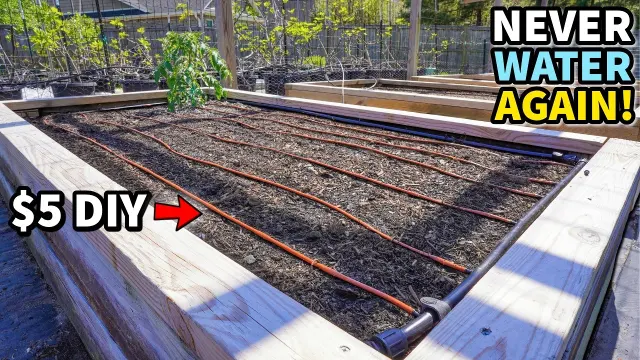
 Building an Easy DIY Drip Irrigation Grid for Raised Beds
#Garden Grid
1 ideas
Building an Easy DIY Drip Irrigation Grid for Raised Beds
Get new #Garden Grid ideas by email
Every Thursday: the week's best ideas, with the newest from #Garden Grid.
Related tags
Garden Grid: A Simple Guide to Square-Foot Planting
A garden grid is exactly what it sounds like: a bed divided into equal squares, usually about one foot (roughly 30 cm) on each side, marked out with string, thin wooden slats, twine stapled to the frame, or even lines painted on the timber. The idea comes from square-foot gardening, a method that replaced long conventional rows with compact blocks, and it has stayed popular because it makes an abstract plan visible in the soil.
Why gardeners use grids
Sowing in rows wastes space and seed. A grid lets you see at a glance how much room each plant has, so you can sow a pinch of carrots in one square and set a single tomato in the next. It also makes succession planting much easier: when a square finishes, you know precisely where the gap is and what can follow. Weeding, mulching and record-keeping all become simpler when the bed has structure, and a sketch of the grid is one of the most useful notes you can keep from one year to the next.
Kinds of grids
Read more
- Planting grids mark out growing space on a raised bed or open ground.
- Irrigation grids run drip tubing or soaker hose in a lattice across the bed, with a timer doing the watering.
- Support grids, such as netting or mesh panels, give climbing crops something to hold on to.
- Paper or digital grids let you plan rotations and spacing before anything goes in the ground.
Setting one up
Keep the bed narrow enough to reach the middle from either side, so you never have to stand on the soil. Four feet across is a common choice, and a four-by-eight bed suits most gardens. Level and settle the soil first, then fix the grid over the frame. Plan your paths before you build, and place taller crops on the side that will not shade their neighbours.
Planting by the square
The grid is a guide, not a rule book. Large plants such as tomatoes, peppers or brassicas generally take a whole square. Medium crops like lettuce, chard or bushy herbs often fit several to a square. Small things, carrots, radishes, spring onions, can be sown much more thickly. Always read the spacing on the seed packet and trust it over any general figure.
Watering on a grid
A drip or soaker layout laid in loops or a zigzag covers a bed evenly and keeps foliage dry. Run lines along the soil surface, pin them down, and cover with mulch. Check emitters now and then for blockages, and water long enough to reach the roots rather than just damping the surface.
Start with one small bed, keep a simple sketch of what went where, and rotate your crops between squares each year. Leave a square or two empty for whatever you want to try next.
#Garden Grid: frequently asked questions
How do I start a garden grid for the first time?
Begin with a single bed small enough that you can reach the middle from either side without stepping on the soil, then level the soil and mark even squares over the frame with string, twine or thin slats. Plant only a few squares at first, sketch what went where, and leave a square or two free for experimenting. Keeping that sketch from year to year makes the whole method far easier the second time around.
What do I need to set up a garden grid?
You mainly need a bed with a sturdy frame, settled and level soil, and something to mark the lines, such as string, twine stapled to the timber, thin wooden slats or a painted grid. A seed packet for each crop, a trowel and a simple drip or soaker line if you want even watering round it out. None of it has to be expensive or bought new, since the grid is just a guide drawn over the soil.
Which type of garden grid should I choose?
It depends on what you want the grid to do: a planting grid marks out growing space, an irrigation grid lays drip tubing in a lattice, a support grid gives climbers netting or mesh to hold, and a paper or digital grid lets you plan rotations before planting. Many gardeners combine two of these in the same bed. Start with the planting grid, since spacing and rotation decisions come first.
How many plants fit in each square of a garden grid?
Large crops such as tomatoes, peppers and brassicas generally take a whole square, medium ones like lettuce, chard or bushy herbs often fit several to a square, and small crops such as carrots, radishes and spring onions can be sown much more thickly. Treat the grid as a guide rather than a rule and follow the spacing printed on the seed packet, which is more reliable than any general figure. Sowing a pinch of seed in one square is usually enough.
How do I care for a garden grid through the season?
Water with a drip or soaker line laid in loops or a zigzag so the bed is covered evenly and the foliage stays dry, pin the lines down and cover them with mulch, and check the emitters occasionally for blockages. Weed and mulch square by square while the structure is still visible, and replace a crop as soon as its square finishes. At the end of the season, rotate crops between squares so the same plants do not follow each other.
What mistakes should I avoid with a garden grid?
The most common ones are making the bed too wide to reach across, building before planning the paths, and putting tall crops where they shade their neighbours. Overcrowding is another trap, so trust the seed packet spacing rather than squeezing in extra plants. Finally, skipping the sketch of what went where makes rotation and succession planting much harder next year.
Videos come from YouTube and posts from Instagram; titles and summaries are our own. All rights belong to their creators.