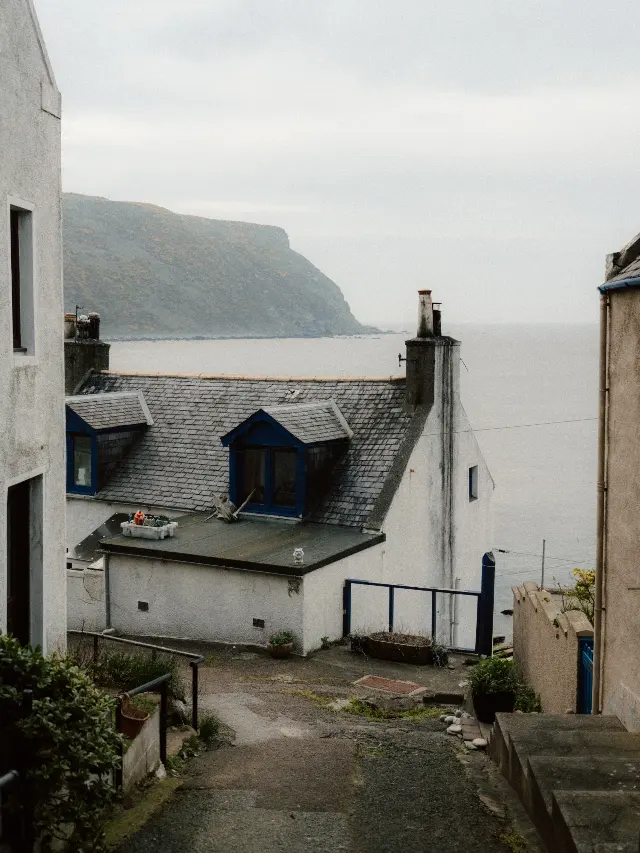
 A Photo Collection from Gardenstown on Scotland's East Coast
#Gardenstown
1 ideas
A Photo Collection from Gardenstown on Scotland's East Coast
Get new #Gardenstown ideas by email
Every Thursday: the week's best ideas, with the newest from #Gardenstown.
Related tags
Gardenstown: A Guide to the Village in the Cliffs
Gardenstown sits on the south shore of the Moray Firth in Aberdeenshire, on the north-east coast of Scotland. The village is pressed into a narrow fold at the foot of high cliffs, and it has been known locally as Gamrie for centuries, after the old parish in which it stands. It is not a seaside resort and never set out to be one: it grew as a fishing village, and its shape still follows the water.
A village of two levels
The older part of the village occupies the flat strip along the shore, where houses sit close together and are turned with their gable ends towards the sea. Above, a road climbs between the cliffs to reach the newer streets and the parish church on the hill. That two-tier arrangement is the thing to understand before you look at a picture of Gardenstown: everything you see is either down by the water or stacked on the slope, with almost nothing in between. The result is a warren of lanes, outside stairs and short flights of steps, and houses that appear to be built on each other's roofs from certain angles.
Harbours, walls and weather
Read more
The harbour is small and sheltered by a stone breakwater. It was shaped by the herring fishing that once sustained the north-east coast, and today it holds a handful of small boats rather than a fleet. Much of the village's character comes from plain materials used well: rubble stone, slate, white render, tarred timber and stone sea walls that bear the brunt of winter storms. In heavy weather, spray carries over the harbour wall and the sea turns a dense grey-green. In calm light, the water in the bay is clear enough to show the stones beneath.
Photographing Gardenstown
The village rewards patience rather than gear. Its chief subject is compression: the way roofs overlap, chimneys rise against the cliff, and lanes disappear between walls. A long view from the cliff path above the village, or from the shore looking back, gives the clearest sense of the whole. Down in the lanes, look for the small things — net stores, painted doors, washing lines, the worn steps between one level and the next.
Weather does most of the work here. Grey skies flatten everything, so use them for texture and detail. Low sun picks out the stone and throws the cliff face into shadow, which is when the village reads best in silhouette.
Practical notes
Wear shoes with grip for the steep lanes and the cliff paths, and take care near unfenced edges. The coast here is exposed, so a calm morning can turn quickly. Bring a waterproof layer rather than an umbrella. Parking is limited in the narrow streets, and residents need access, so it is better to leave the car above the village and walk down.
One last thing worth knowing: the neighbouring village of Crovie, a short walk west along the shore, is a single row of houses at the cliff foot with no room for a road. Seen together, the two villages explain each other.
#Gardenstown: frequently asked questions
What kind of place is Gardenstown — is it a seaside resort?
No, it is a working fishing village on the Aberdeenshire coast that grew around its small harbour, and it has never been laid out as a holiday resort. The village splits into two levels: an older row of houses tight along the shore and newer streets stacked up the slope, joined by steep lanes and flights of steps. Understanding that before you arrive explains almost everything about how it looks.
Where should I leave the car when visiting Gardenstown?
Leave the car in the upper part of the village and walk down rather than trying to drive into the lower lanes. The streets by the harbour are narrow, parking is very limited, and residents need to get through. The descent on foot is also the best introduction to the place.
What should I wear and watch out for on the cliff paths?
Bring shoes with real grip for the steep lanes and cliff walks, and a waterproof jacket instead of an umbrella, since the coast is exposed to wind. Take care near unfenced edges above the village. Conditions here can change quickly, so a still morning does not guarantee a still afternoon.
When is the light best for photographing Gardenstown?
Overcast grey skies are worth going out in, because they bring out texture and detail in the stone, slate and tarred timber. Low sun is the other good option: it picks out the buildings while putting the cliff behind them into shadow, so the village reads clearly in silhouette. The middle of a bright day flattens the overlapping roofs that make the place distinctive.
What are the usual mistakes people make when photographing the village?
The common one is chasing a single wide shot and missing the subject entirely, which is compression — roofs overlapping, chimneys against the cliff, lanes disappearing between walls. A long view from the cliff path or from the shore looking back gives the overall shape; then get down into the lanes for net stores, painted doors, washing lines and worn steps. Carrying too much gear is rarely the fix.
Is there anything else worth seeing near Gardenstown?
Crovie is a short walk west along the shore, and it is a single row of houses pressed against the cliff foot with no room for a road at all. Seeing the two villages together makes each one clearer, since they grew from the same fishing economy and the same cramped geography. Allow time to walk between them rather than driving.
Videos come from YouTube and posts from Instagram; titles and summaries are our own. All rights belong to their creators.