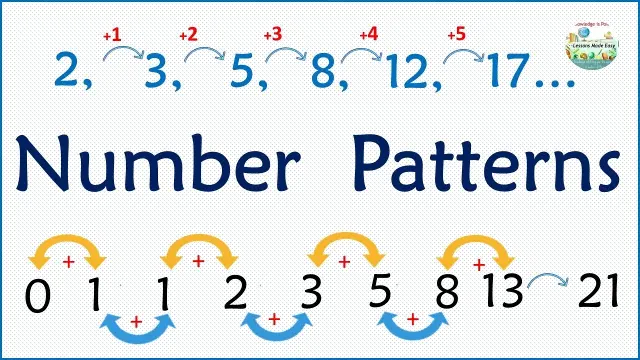
 Comprehensive Guide To Arithmetic And Geometric Number Patterns
#Geometric Sequence
1 ideas
Comprehensive Guide To Arithmetic And Geometric Number Patterns
Get new #Geometric Sequence ideas by email
Every Thursday: the week's best ideas, with the newest from #Geometric Sequence.
Related tags
Geometric Sequences Explained
What a geometric sequence is
A geometric sequence is a list of numbers in which each term is found by multiplying the previous term by the same fixed number. That fixed number is called the common ratio. For example, if each number is doubled, the sequence grows quickly; if each number is multiplied by a fraction, it gets smaller each time.
Geometric sequences appear in many areas of mathematics because they describe repeated multiplication. They are closely related to patterns of growth and decay, from simple number exercises to more advanced calculations.
How to recognise one
Read more
The easiest way to spot a geometric sequence is to compare each term with the one before it. If the ratio stays the same throughout, the sequence is geometric.
For example:
- 2, 6, 18, 54
- 81, 27, 9, 3
- 5, 10, 20, 40
In each case, every term is multiplied by the same number. In the first sequence the ratio is 3, in the second it is 1/3, and in the third it is 2.
If the difference between terms stays the same instead, then the sequence is arithmetic, not geometric.
Common uses
Geometric sequences are useful whenever something changes by a constant factor rather than a constant amount. That makes them important in algebra, patterns, and problem-solving. They can help describe repeated multiplication, scaling, and proportional change.
You may also meet geometric sequences when working with:
- number patterns
- compound growth models
- scale drawings and repeated designs
- probability and some counting problems
Even if the setting changes, the key idea stays the same: each step is based on multiplying by the same ratio.
The main parts of a geometric sequence
A geometric sequence usually has:
- a first term, which starts the sequence
- a common ratio, which is the number you multiply by each time
- later terms, which are generated from the rule
If you know the first term and the common ratio, you can keep extending the sequence. This makes geometric sequences especially useful for predicting terms far into the pattern.
What to keep in mind
When you are working with a geometric sequence, check carefully that the ratio is the same between every pair of consecutive terms. A sequence may look regular at first glance but still not be geometric.
It also helps to think about whether the ratio is greater than 1, between 0 and 1, or negative. A ratio greater than 1 makes the terms grow. A ratio between 0 and 1 makes them shrink. A negative ratio changes the sign each time, so the terms alternate.
For beginners
If you are just starting out, try these steps:
- look at two neighbouring terms
- divide the later term by the earlier one
- repeat this for several pairs
- if the answer stays the same, you have a geometric sequence
Practising with short sequences is the best way to build confidence. Once you can recognise the common ratio, geometric sequences become much easier to understand and use.
Videos come from YouTube and posts from Instagram; titles and summaries are our own. All rights belong to their creators.